Published: : September 4, 2026, 11:59 PM
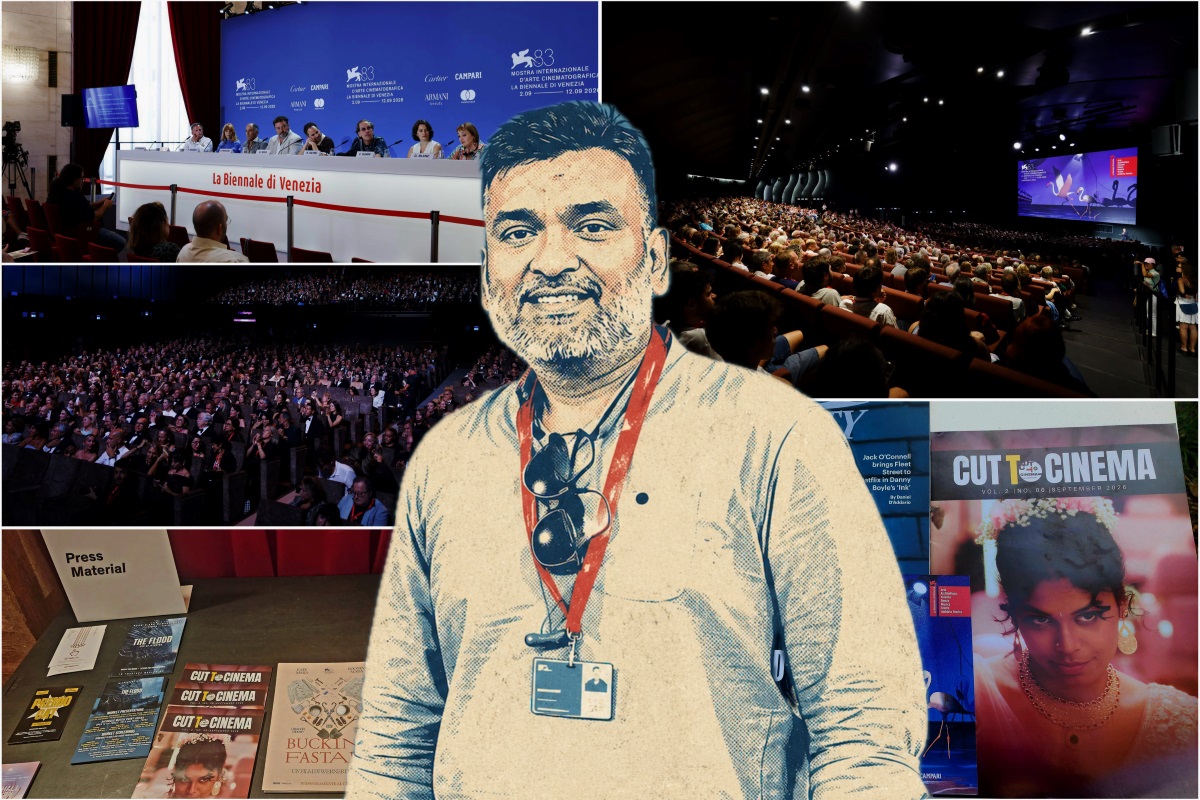
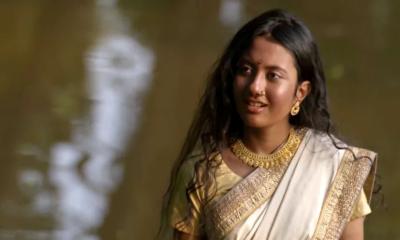
Venice Film Festival is glorified by its own grandeur. It is the oldest film festival in the world. Coming here from Dhaka for the 83rd edition, I feel that the journey has been rewarding, for many reasons. To me, the greatest achievement is that, for the first time, a Bangladeshi feature-length film has found a place in the competitive section, Horizons, of Venice. The second major gain is the abundance of new works by established filmmakers at this year’s event. Alongside that, there are also astonishing works by new filmmakers. There is another reason too, though it is not directly related to cinema, but to Bengali literature. It concerns Rabindranath Tagore’s visit. He travelled to Italy for the second and final time in 1926. This year marks the centenary of that visit. So it is clear that my bag of gains is already filled to the brim. And if Bangladesh’s film, Rubaiyat Hossain’s The Difficult Bride, manages to receive an award, then there is nothing more to say. That would become an unforgettable event for a lifetime.
No, I have not come here as an entertainment journalist. In fact, I have never practised entertainment journalism. I have not come this time either in the role of a critic jury member, as I did at Cannes in 2022 or Berlin in 2025. This time, I have come primarily as a film critic. In 2023, I was associated with the Toronto International Film Festival simply as a film critic. This time, my responsibility is a little greater, because I am also the editor of Cut to Cinema. I have brought the magazine with me. I have submitted it to the Venice Film Festival authorities. They have accepted it as press material.
As always, I am writing a journal this time too, titled: Venice Vitascope. It would not be entirely correct to call it a pure journal. Because, for the past few years, I have been trying to write a new kind of prose in Bengali. A form of writing where film criticism blends with travelogue and history. Broadly speaking, it can be described as film and travel writing. I am exploring the city. I am talking about people. I am sharing the atmosphere of the festival. At the same time, I am briefly discussing the films I am watching. I am adding my own analysis and feelings. I am creating literary value. So that this prose can continue to be read in the future as well. More importantly, writing on film festivals is limited across the world, and in Bengali it is almost completely absent. I am trying to fill that void.
Meanwhile, two books have already been published based on my experiences at the Cannes Film Festival and the Toronto International Film Festival, titled Kanantar and Toronto Talkies. Two more books, titled Bioscope in Berlin and Film Festivals: History, Theory and Practice, are about to be published. The latter book will include the history of the Dhaka International Film Festival. So, after the Venice Film Festival ends, these writings too will be published in book form. The writings in these books are, at once, creating a form of film-travel prose, while also presenting a city and the aspects of that city’s cinematic culture to readers from another linguistic world. In many ways, it resembles ethnographic work.
Therefore, beyond the achievements and experiences of the Venice Film Festival, what I truly want to do is present to readers how film festivals are an inseparable part of the cinematic ecosystem of the world. And before the people of a country like Bangladesh, which is gradually falling behind, I want to present this message: look, how many diverse and courageous films are being made across the world. And you want to shut down cinema. Therefore, I want to make my work multidimensional and turn it into a catalyst for thought. I hope that through reading my writings, the reader’s intellect and imagination will expand further.
Through my writings, one message emerges clearly: Bangladesh alone is not the world; there is a world beyond it as well. We need to know how they speak, how they make films. Only then can we bring cinema, the most powerful medium of the twenty-first century, into our thoughts and practices.
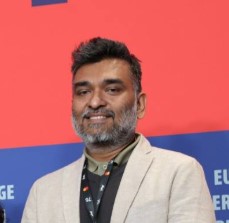
Bidhan Rebeiro is the editor of Cut to Cinema.
Send your reviews, articles, and pitches for Cut to Cinema to [email protected]. Check out our submission guidelines for more details.