Published: : September 25, 2026, 01:07 AM
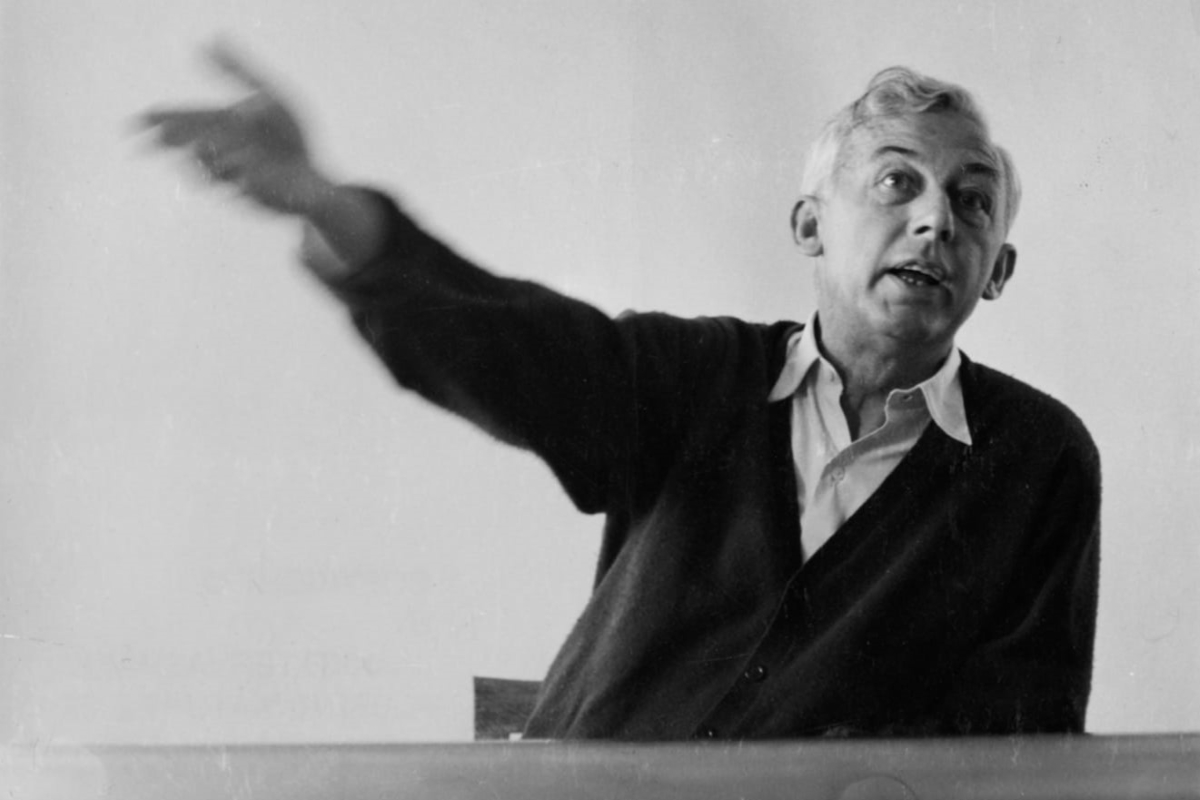
“He is French cinema, as Dostoevsky is the Russian novel and Mozart is German music.” — Jean-Luc Godard
Earlier this year, I made a one-minute poetic visual film called “Pa (Feet).” The idea came to me on a random day while I was looking at a rickshaw puller’s feet. I was returning home from campus by rickshaw, a pedal rickshaw. I often like to quietly observe my surroundings while travelling. For a long time, I kept looking at the rickshaw puller’s feet, continuously pushing the pedals. Even after becoming tired, his feet seemed unable to stop because if his feet stopped, the rickshaw would stop too.
I asked him, “Mama, Tumi dine kotokkhon rickshaw chalao?” (How many hours do you ride this rickshaw in a day?) He replied, “Jotokkhon paye kulay” (As long as my feet can carry me). That small sentence became the starting point of my film about feet, where I showed the feet of many different people in many different ways, along with a monologue about my own experience. At that time, I had not yet discovered Robert Bresson. In one of the classes of my film direction course, my teacher gave us an assignment to watch several films. One of them was A Man Escaped by Robert Bresson. I started watching the film.
The film begins by showing a man’s hands — two free hands, without handcuffs, in a close-up shot. A car is moving. Slowly, one hand moves toward the handle of the car door, carefully testing it. After a while, he turns the handle and opens the door very carefully. The camera pans, and we see the character Fontaine. Right beside him are two other prisoners, their hands restrained with handcuffs. The camera pans again toward their hands. Fontaine reaches toward the door handle once more, and as soon as he gets an opportunity, he tries to escape from the car and runs. The camera remains still. Fontaine is brought back and placed in his previous position. The scene ends.
In film theory, there is a concept called Semiotic Theory. Semiotics is the study of how signs and symbols create meaning. It explains how a physical object, word, or image (the signifier) connects to a mental concept (the signified) in our minds. For example, a red rose (signifier) may represent love (signified) because of cultural associations. However, after watching Bresson’s film, I began to experience this hand as a character throughout the film. If I think of the hand as a signifier, then throughout the film, this hand became a symbol of freedom. Slowly, these hands physically move a man in captivity toward his own freedom. This was when I began to fall in love with Bresson’s cinematic style. That is when I discovered Bresson.
Robert Bresson was born in 1901 in Bromont-Lamothe, France. Before entering cinema, he was involved with painting, photography, and philosophy. In the 1930s, he began working as a screenwriter and assistant director, and in 1934, he made his first feature film, Les Affaires publiques. The transformation in his cinema became especially significant after World War II. Bresson himself experienced imprisonment as a French prisoner of war during the war, but A Man Escaped was not an autobiographical film. It was based on André Devigny’s real escape from Montluc Prison. However, Bresson’s own experience of captivity gave the film a deeply personal understanding of imprisonment, discipline, and survival.
I began watching more of Bresson’s films. I watched Pickpocket (1959). Michel is a pickpocket who slowly becomes deeper involved in a world of crime. Bresson does not present this crime as a conventional action sequence. Instead, he transforms the movements of the hands into a kind of choreography. A wallet moves from one hand to another, fingers search through pockets, and objects are quickly passed from hand to hand. The face is often outside the frame. As a result, I experience Michel’s character not through facial expressions, but through the skill, rhythm, and movement of his hands. I am simply mesmerized by this dance of hands. Here, the hands are not merely tools for stealing. Bresson himself described Pickpocket as beginning with “the adventure of the hands,” where these hands lead their owner toward an inner journey.
What Michel’s hands do seems connected to where his inner self is moving as well. This is how I watch Au hasard Balthazar (1966), where hands can be read as symbols of possession, desire, and cruelty. In Diary of a Country Priest (1951), hands become spiritual gestures. Through moments such as the confession, the passing of the letter, and the blessing of the Countess, Bresson isolates the hands and transforms physical actions into expressions of faith, grace, and human connection. Here, a hand becomes more than a physical action; it becomes a visual gesture of belief, blessing, confession, and compassion.
The more I watched, the more fascinated I became. These thoughts made me remember my one-minute film, “Pa.” Perhaps, in the beginning, I created it simply from a single personal experience. But later, I began to understand that, like Bresson’s hands, feet can also signify a person’s class, the journey of life, and the road they are travelling. People of different backgrounds, wearing different coloured shoes, are all moving forward. Perhaps they stop somewhere, but not for long. As if moving forward itself is the rhythm of life.
I discovered that the emotion we usually try to express in traditional cinema through a close-up shot of a face can also exist in a foot, a hand, an eye, or any other part of the body.
And once again, I return to Bresson’s cinema. Slowly, I also begin to understand minimalist filmmaking, where not everything needs to be shown all the time. Like the first scene of A Man Escaped, after Fontaine escapes, we are not shown how he is captured and brought back. We only hear the sound. This is where one of the central aspects of Bresson’s filmmaking appears. He does not move the camera around simply to show everything. Instead, sound itself becomes information. For me, Bresson gives us enough to make us look, listen, and imagine the rest.
I stop here. I began with a pair of feet, without knowing that Bresson had already taught cinema how much a pair of hands could say. Today, 25 September, marks the birthday of this remarkable filmmaker. For now, a lyric from a Beatles song is playing in my head: “Words are flowing out like endless rain into a paper cup…”
Omar Faruk Khan is a student of the Department of Film and Television at Jagannath University, Dhaka.
Send your reviews, articles and pitches for Cut to Cinema to [email protected]. Check out our submission guidelines for more details.