Published: : September 8, 2026, 12:39 AM
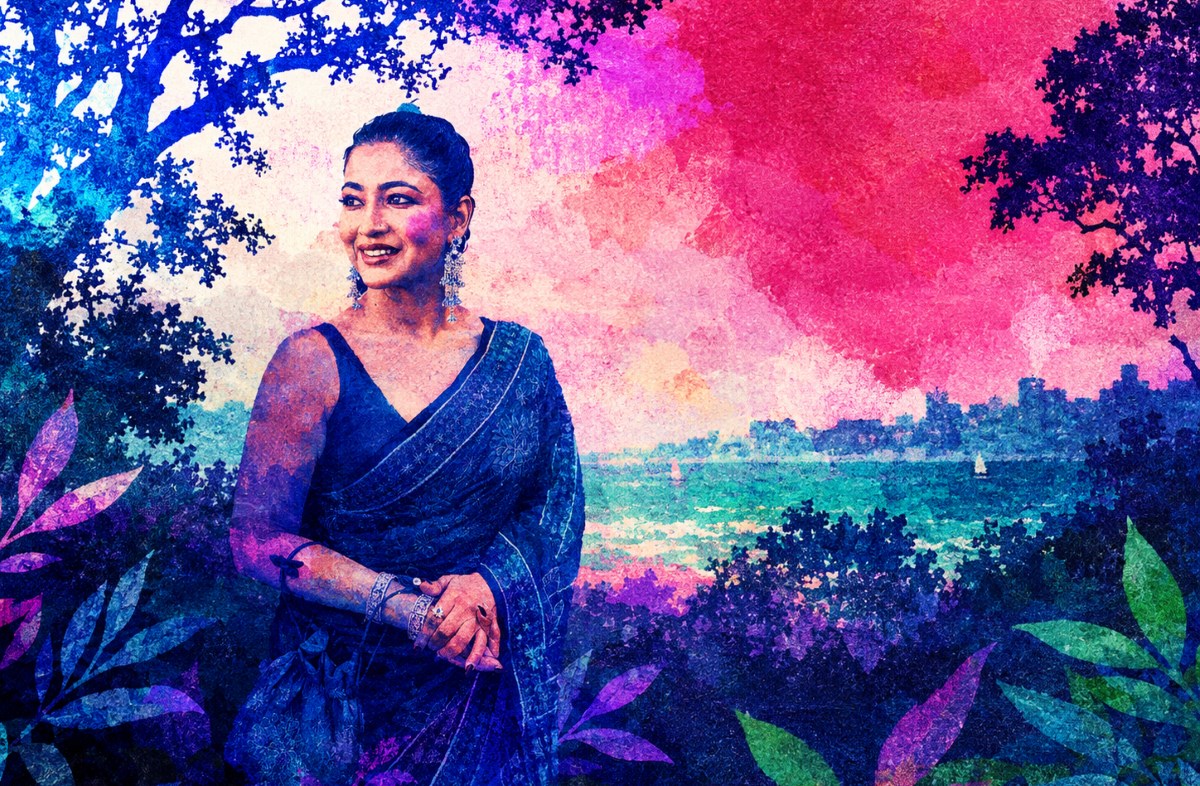
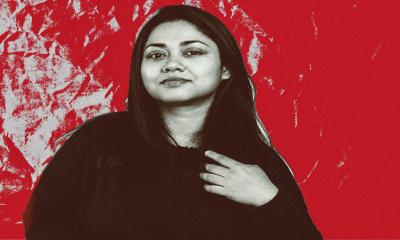
Azmeri Haque Badhon is an acclaimed Bangladeshi actress known for her powerful performances in films such as Rehana Maryam Noor and The Master. She has represented Bangladeshi cinema on several international platforms and recently appeared in Rubaiyat Hossain’s The Difficult Bride at the Venice Film Festival. During the festival, Bidhan Rebeiro, editor of Cut to Cinema, spoke with Badhon about her journey as an actress and her aspiration to write and direct films in the future.
People’s applause, appreciation, and especially the reaction of foreign audiences who are not very familiar with Bangladeshi culture. How did they respond? What was your reaction after seeing their response?
When our film ended, everyone started clapping as soon as the title appeared on the screen. When we stood up, everyone also stood up and showed us respect. It was a very beautiful feeling. We have several songs in our film, and when the song “Dhaka Love” was playing during the title sequence, everyone was dancing along with the song and applauding. Personally, I feel very proud of this film because I am happy that I became a small part of it. I am also happy that I made the decision to work on this project.
When Rubaiyat first approached me with this film, she initially asked me to appear as a guest in one scene. Later, the duration of my character increased slightly. However, my presence in the film is still not very large. Even so, I feel extremely proud to be part of this project.
The first reason is that Rubaiyat Hossain is an excellent director. Among her previous films, my favourites are “Under Construction” and “Made in Bangladesh.” I also really like the concept of “Meherjaan.” Since this is her first cinema, I do not think it became exactly like “Under Construction” or “Made in Bangladesh,” and it is also different from “The Difficult Bride.” However, I really appreciate seeing her growth as a filmmaker.
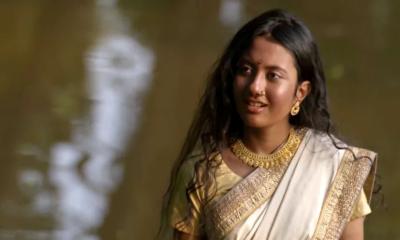
I am also very proud of Zaineen because she is completely new. She joined our team as an assistant director, and eventually she played the lead character in the film. She performed incredibly well. Both Zaineen and Rubaiyat were very nervous at that time. I was slightly less nervous because I have a lot of previous experience. I could understand their emotions and their nervousness.
I remember when I went to Cannes with “Rehana Maryam Noor.” Our premiere was scheduled for 9 a.m. I could not sleep the entire night. I started getting ready at 5 a.m. and by 7 a.m. I was already sitting downstairs waiting for the event. So, I understand what that feeling is like. This time, I did not feel the same pressure. This time, I was able to enjoy the experience more. I felt that we were bringing our film to the world and representing Bangladesh. Our entire crew wore Bangladeshi traditional clothing. They wore sarees and panjabis throughout the day. They enjoyed the experience so much.
When the film ended, I saw that all of you were celebrating together and dancing with excitement.
Yes, we were dancing. The reason is that the name of our film itself is “The Difficult Bride.” Our film has many songs and many eventful moments. The entire mood was connected with the idea of becoming the difficult bride. Every cast and crew member was representing that feeling together. When there is music and celebration, it naturally creates a different atmosphere. Since I was relaxed after the screening and later Rubaiyat also became more relaxed, I felt very happy seeing both Zaineen and Rubaiyat enjoying the moment.
Many Bangladeshi viewers were also present to watch “A Difficult Bride.” How did you connect with the excitement and emotions they expressed?
When we were leaving the hall after the screening and everyone was coming out while clapping, I could hear many people speaking Bangla behind me. Many journalists were present there, including local journalists and Bangladeshi journalists living abroad. Many general audience members also came. They were Bangladeshis living there who simply came to watch our film.
It gave me a very special feeling because when we take our films to international festivals, we usually do not get this kind of opportunity to connect with our Bangladeshi community. But here, people came after hearing about our film because they wanted to support us. Later, I gathered all the journalists who came and introduced them to Zaineen. I asked them to interview her. I also thanked everyone for coming.
I believe that when we travel abroad with a project to represent our own country, that work no longer belongs only to us. The work becomes something that belongs to everyone. I have experienced this through many of my films, especially “Rehana Maryam Noor” and “The Master.” Now I am experiencing the same thing with “A Difficult Bride.” When our work represents Bangladesh on the global stage, it becomes something that belongs to everyone.
I really love this feeling because people often say that I have a deep love for my country and its people. I truly love the people of Bangladesh. I also deeply appreciate all Bangladeshis who live outside the country. I want to thank everyone for their support. To all the Bangladeshi expatriates who came to watch our film at the Venice Film Festival in Italy, especially at the world premiere of “A Difficult Bride,” I send my love and gratitude.
You were talking about your desire to enter filmmaking and directing. Could you share more about that journey?
Actually, my journey of bringing my films to international festivals began with Cannes Film Festival. Let me start from there.
Of course, please continue.
I went to the Cannes Film Festival with my film “Rehana Maryam Noor.” After that, we went to Rotterdam with our film “The Master.” Then we came to the Venice Film Festival with our film “A Difficult Bride.” In all three of these films, I was an actress. I want to say “our films” repeatedly because whether I call them our films or my films, the reality is that they are collective efforts. I came as an actress, travelled, experienced these festivals, and connected with audiences. This included international audiences as well. Even when my films are released in Bangladesh, I interact with many viewers.
Through these interactions and through all the experiences I have gathered in my life, I started feeling that maybe I want to tell my own stories. My vision is that I want to show people how I see society through my own eyes. Perhaps I can do that as a writer. However, I still do not know exactly how to write. But I have the desire to write screenplays and also direct films.
Honestly, whenever I travel with my work or when my films are released in Bangladesh and I interact with audiences, I feel that I want to tell my own stories and see how people respond to them. I want to bring change to society.
Through the characters I portray, I try to create some kind of impact. However, maybe as a director and screenplay writer, I will be able to create an even greater impact and contribute more to society. Many people ask me whether I want to enter politics. The thing is, what is the goal of politicians in life? Their goal is to do something for their own country, Bangladesh, and for the world.
I believe every person has a responsibility, regardless of which country they belong to or what profession they are involved in. Creating an impact in society or bringing change is not only the responsibility of politicians. They have their own responsibilities, and we have ours. Through my profession, through my passion, and through the things I love and continue to learn, I will try to create an impact and bring positive change to society. That is my vision.
Now, I do not know how much I will be able to achieve in the future. But I hope people will keep me in their prayers, stay with me, and support me. I do not think people will have to tolerate too much when my films are released. However, I request everyone to continue supporting me.
Could you talk about the work of women filmmakers in Bangladesh and why we need more women filmmakers?
First of all, I feel extremely proud of the women in Bangladesh who are trying to tell stories through a female perspective and bring those stories to audiences. The number of women doing this is still very small, and sometimes that makes me feel very sad. I believe that for society to progress and for a country to function properly, there needs to be balance. Women and men should contribute together.
When we look at our film industry, we see that there are very few female producers and female directors. Even the actresses who are working in this industry do not always have the kind of voice they deserve. There are only a few films that attempt to present stories from a female perspective. However, sometimes even those films are made by men.
So, we also want to see how female directors view men and how they see society as a whole. I believe bringing this balance is extremely important. I can now see that many young women are becoming interested in joining our industry. However, I believe that both the state and the industry need to ensure a safe working environment for women. I feel that many women cannot enter this field because of the uncertainty and insecurity they experience. This concern is not only about their present situation but also about their future.
Because of this uncertainty and lack of security, many women do not have the courage to enter this profession. But now many women are stepping forward, and I feel very hopeful. What gives me the most hope is that Rubaiyat Hossain’s film became the first Bangladeshi film made by a woman director to be officially selected for the Venice Film Festival. I hope the film will also receive an award. That film was made by a woman. Some people may ask, “Are you highlighting her separately because she is a woman? Are you giving her importance because she is a female director?”
No, I am not separating women and men here. What I am saying is that a woman has shown the world how talented Bangladeshi women are and how talented Bangladeshi people are. I feel proud of this achievement. I hope more women will come forward and create more work in the future. I also want to share something about Rubaiyat that I really appreciate. I have always believed in sisterhood.
Rubaiyat is not someone who only focuses on making her own films, travelling with them, attending festivals, and releasing her own work. She also supports many young female directors. She supports male directors as well. She is someone who believes that there is no real happiness or satisfaction in growing alone. She wants to grow together with everyone. I really appreciate this attitude and this approach. I believe that if more senior people in our industry come forward with this kind of mindset, then newcomers, both men and women, will be able to move forward.
For women, I hope that in Bangladesh they will not only enter the field of directing but also become producers and take a much stronger role in the film industry.
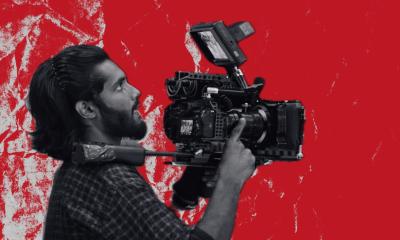
Bidhan Rebeiro is the editor of Cut to Cinema.
Send your reviews, articles, and pitches for Cut to Cinema to [email protected]. Check out our submission guidelines for more details.