
Published: : June 18, 2026, 02:46 PM
When someone is born naturally different from others in society, they have to face untold struggles. But being different was not their choice; we are all born the way nature made us. The most we can do is not give up and try our absolute best.
Ulya, directed by Viesturs Kairišs—one of Latvia's most important filmmakers—tells exactly this kind of story. It is not just about a girl's struggle to survive; it is a powerful psychological and visual journey. This film is based on the real life of Ulyana Semyonova, one of the greatest legends in basketball history.
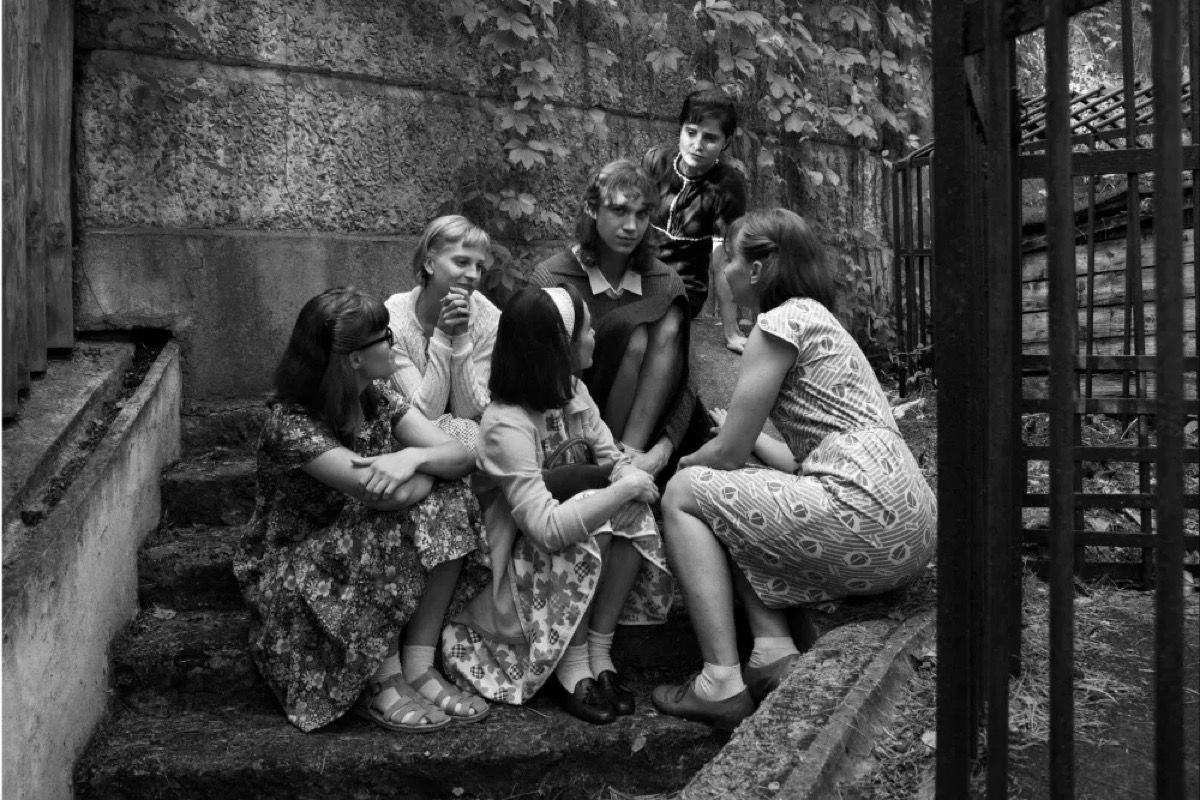
The first half of the film takes us to a remote, wild village in Eastern Latvia. Time seems to have stopped there in the 17th century. This isolated world belongs to the 'Old Believers'—a strict religious community untouched by the modern world. Here lives a giant teenage girl named Ulya. This wild, ancient nature is her safe home. Here, she is not seen as a strange creature, but as a natural part of her environment.
The main conflict starts when the modern world invades this quiet village. Elite basketball coaches from Riga see her school photo and track her down at her family farm. This is where Ulya's tragedy begins. She is literally dragged away from her familiar home, her family, and her peaceful life into the robotic, mechanical world of professional sports.
In the Middle Ages, people with unusual bodies were locked in cages and displayed in circuses to entertain the crowd. Director Viesturs Kairišs uses this dark metaphor to show the early years of Ulyana Semyonova's life. This is not a typical sports story about success. It is a story about how a modern, commercial world tries to control a person from a simple, isolated culture, and how she fights back with sheer willpower.
The director shows the professional sports world of the 1960s in a way that is uncomfortable and eye-opening. He makes it clear that the mindset back then was no different from a medieval circus. Ulya was not picked because she was an athlete; she was chosen only for her giant height to shock the opponents and entertain the audience. The sports academy acts like a machine, draining every bit of human mental and physical energy. Ulya has no basic knowledge of basketball, and the way she is broken down physically and mentally during training feels like how wild animals are tamed in a circus.
However, Ulya does not end as a tragedy, thanks to Ulya's incredible willpower. This is where the director turns the story around. The same body that society mocked, and the sports world tried to use as a mere tool, becomes Ulya's greatest weapon alongside her natural talent.
In the second half of the film, Ulya does not just adapt to this cruel new world—she rules it with her talent. Her adaptation is not a surrender; it is a fierce battle to survive and create her own identity. In the end, her giant image on the court changes from an object of ridicule into a glorious symbol of victory in front of her exploiters.
Despite showing the dark side of exploitation, the film falls into the predictable pattern of a feel-good sports drama toward the end. This slightly weakens the serious psychological tone built during the first half.
We know Ulyana Semyonova is not just a star in Latvia, but a global sports legend. She proved that when society labels someone as an 'outsider' or 'abnormal,' that person can use their unique traits to conquer the world if they have enough determination. Director Viesturs Kairišs captures that greatness in rich detail.
However, the most shocking and amazing part of the film is the acting. Kārlis Arnolds Avots plays the role of Ulya. It is truly unbelievable how he, as a man, completely transforms into Ulya. His performance leaves the audience speechless.
In short, Viesturs Kairišs's Ulya is a visual story about the complex relationship between the human body, society, and commercial greed. Watching a marginalized woman stand up against a cruel system to become an Olympic legend inspires the audience. At the same time, it points a finger at the ugly truth hidden inside modern civilization.