
Published: : June 16, 2026, 11:30 AM
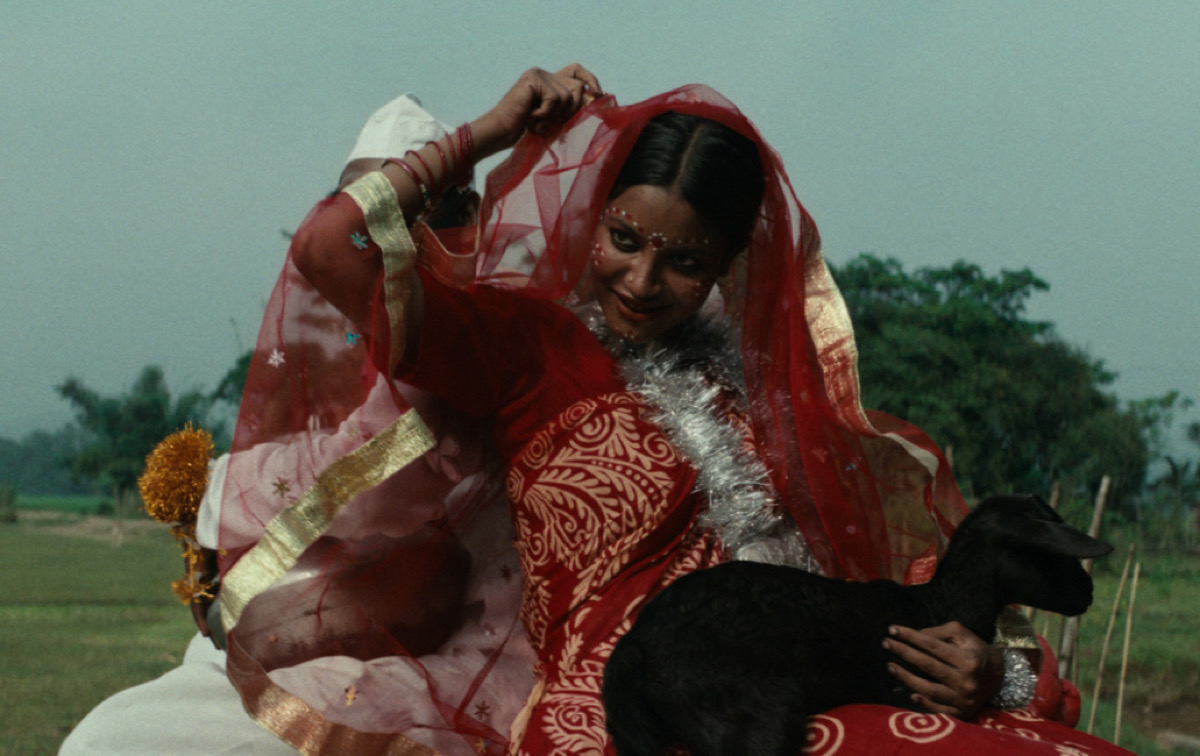
A woman whose name no one in the film ever learns. A man who rows her deep into a forest in the middle of the night and abandons her there. A palmyra tree whose falling fruit marks the turning points in their marriage. Each time a fruit drops, something shifts between them. The fruit does not cause these changes, but the film frames it as though nature is keeping score.
Roid, the second feature from Mejbaur Rahman Sumon, handles these elements with the quiet confidence of a filmmaker who knows exactly what kind of story he wants to tell. Some viewers may look into its symbolic layers. Others may simply take it as a rural love story. Both responses are valid. The film does not demand a single reading. What it does ask for is patience - more, at times, than it has fully earned.
Sumon comes to this after Hawa, a film that was both a commercial success and a work of real artistic interest. Where Hawa used a strong story and genre energy to pull viewers forward, Roid does something different. It slows down. It turns inward. It builds its world through atmosphere, silence, and symbol rather than through plot. The story is set in a Bengali village with no clear time markers. It could be twenty years ago, or more, or less. Sumon is not interested in fixing a date. He is interested in something that feels like it happened before history began. This is an ambitious choice, and it does not always pay off. The film's refusal to anchor itself in a specific time or place sometimes makes it feel unmoored rather than mythic.
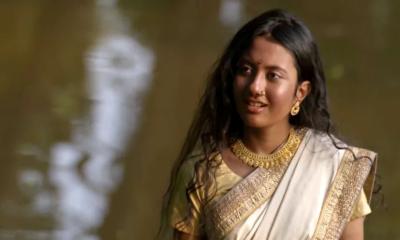
At the centre are Shadhu, a quiet and hardworking tenant farmer, and his wife - a woman the village considers mad, who has never shared her real name with anyone; maybe society never gave her one either. Their marriage was arranged by Shadhu's master, who needed Shadhu to stay and manage a fish project. The arrangement was made as much for the master's business interests as for Shadhu's companionship, giving the marriage an uneasy foundation the film never quite forgets. The detail carries the texture of Bengali rural folklore: ordinary on the surface, uneasy underneath. Still, the film does not develop this power dynamic far enough. The master remains thin, and the economic reality of Shadhu's dependence on him is raised and quietly dropped.
The film builds an allegorical layer around the Adam and Eve story. It also seems to echo Michelangelo's 'Creation of Adam', and the parallel is visible. Shadhu is Adam before the fall - passive, unhurried, not yet awake to desire or consequence. The palmyra tree becomes the forbidden tree, its fruit falling at moments that feel less like coincidence and more like fate. The goat, the flute, the act of eating meat - none of these feel accidental. They form a quiet, image-based language the film uses in place of explanation. The risk is that symbol can become a way of avoiding drama rather than deepening it, and there are moments in Roid where the film does not quite avoid that risk.
But the wife does not fit neatly into the Eve template, and that is where the film becomes most interesting. She is loud and unpredictable, capable of real anger and real warmth within the same scene. She withholds her name as though giving it away would mean giving something essential of herself away too. This is where the figure of Lilith enters - not announced, but felt. In the medieval Alphabet of Ben Sira, Lilith appears as Adam's first wife, formed from the same earth and therefore unwilling to be treated as lesser. She was not made from his rib, as Eve was. She saw herself as equal, refused to submit, and was driven out. The wife in Roid carries that echo: in the withheld name, the refusal to be controlled, the behaviour the village calls madness but which the film treats with care and sympathy. It is a compelling reading, but one that requires the viewer to bring outside knowledge. A film should be able to carry its own meanings, and Roid occasionally leans too heavily on what its audience already knows.
Cinematographer Joaher Musavvir Jyoti fully meets Sumon's trust in the camera. The rain sequences are among the finest in the film, each downpour its own event. The night scenes are shot in actual darkness, a single lantern carrying the full emotional weight of a scene. Nothing is pushed to look more beautiful than it is, and this restraint makes the beauty feel earned. The second act, however, loses its rhythm. The accumulation of images turns repetitive before the film recovers, and several scenes could have been trimmed without much loss.
Sound receives the same attention as image. The film's world is built through what we hear as much as what we see - rain on tin roofs, birds at dusk, a flute coming from somewhere just out of frame. The sound design by Sajib Ranjan Biswas, along with Rasheed Sharif Shoaib's work as sound mixer and music composer, fits the film's pace without announcing itself. Sumon, a longtime member of Meghdol, brings real sensitivity to how sound and silence work together. The film earns its quieter moments, even if it occasionally stays in them too long.
Nazifa Tushi anchors the film. In the scene where she bursts into sudden laughter and falls just as quickly into silence, she makes the shift feel lived rather than performed. Mostafizur Noor Imran as Shadhu works almost entirely through restraint - his face in the night rowing sequence communicates something dialogue could not have carried. Both performers are very strong individually, but the film gives them too few scenes of real confrontation. We understand them separately more than we understand them together, and that distance is felt.
In the end, Roid is a rare thing in Bangladeshi cinema: a film that thinks in images and earns its silences. Its best sequences will stay with a viewer long after it ends. But the central relationship could have used more friction, the supporting characters more weight, and the second act more momentum. For the right audience, it will land deeply. For others, it may remain beautiful but remote. What stays is exactly what the title promises: warmth that has already passed, still felt in the skin.