
Published: : July 14, 2026, 10:44 AM
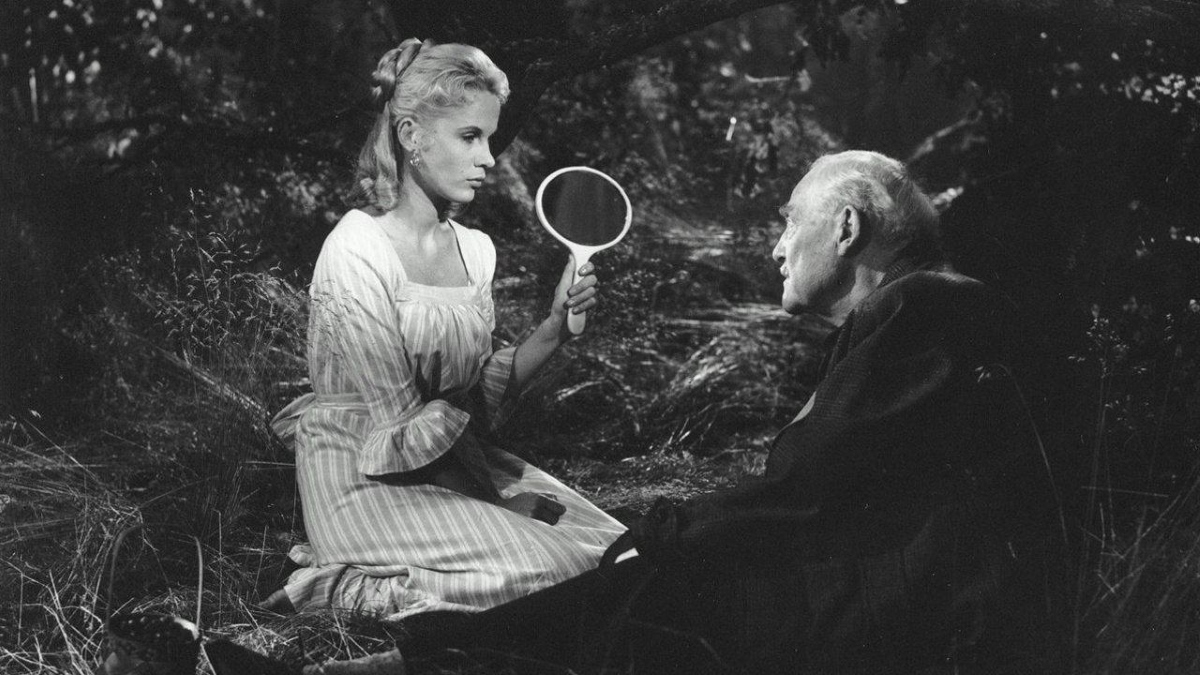
Ingmar Bergman’s film Wild Strawberries is one of the finest classical examples of psychoanalytic cinema. Ingmar Bergman was deeply concerned with the human mind. He adorned the world of cinema with his oeuvre, almost like a psychologist. Although he was not one, in the book Psychoanalytic Perspectives on the Films of Ingmar Bergman: From Freud to Lacan and Beyond, edited by Vanessa Sinclair, Robert Samuels argues that “Bergman’s works reveal an important insight derived from a combination of Freud and Shakespeare which concerns the ethical status of the unconscious.” In his works, the Freudian perspective suggests that humans are often delusional, suppress their dreams, and act according to traditional morals, ethics, and principles. Most of the time, humans pretend rather than being openly driven by their desires and dreams. This process of human action and the long usage of pseudo-human actions affects individuals differently. Some may face severe psychological problems, and some may face minor ones. When his cinema is perceived by the audience, one can assume that his film, Wild Strawberries, is an endeavour to represent how unspoken feelings and desires impact a highly successful man.
Isak Borg, the protagonist of Wild Strawberries, is a 78-year-old professor and physician travelling to Lund to receive an honorary degree. Throughout his whole life, he was a self-centred, principle-driven, egoistic, and isolated person. His education, society, and family acknowledged him as a good doctor, but beyond that, he is a sufferer of his own thoughts. His ideology and insights make him a vulnerable, disturbed, and isolated old man. Now he faces many things as a result of those fears, such as guilt, regret, and emotional emptiness. These impulses repeatedly come to his dreams. They do not appear only in night dreams but also in daylight, in the midst of conversation and regular activities, immensely disturbing him. His regret and nostalgia come to him over and over. The film commences with the scene where he is terribly frightened by a weird, surreal dream. In the dream, he sees a corpse in a coffin that appears to be himself. The dead body from the coffin comes to him and pulls his hand, as if asking him to go with it. This dream gives him an immeasurable amount of fright. He always avoids potential harm. Beyond his mental crisis, he protects himself from every unwanted situation if he can. But here is the irony: though he protects himself from harmful outward things and situations, he cannot save himself from his thoughts. Rather, he is perplexed by them. After waking up, he remembers that he must attend an honorary ceremony at Lund University. He also remembers that he has a flight to go there. But due to the surreal, weird dream and fear, he decides to go there by car. He prepares himself; at that time, his daughter-in-law comes and wishes to go with him to the place he is going because there she lives with his son, Evald.
On the road, Isak stops at his childhood summer home where he spent his sunny days. He goes there. Ingmar Bergman, in interviews, said that Isak’s visit to his childhood home and the strawberry patch was inspired by his own habit of visiting his grandmother’s old flat in Uppsala to find emotional security when he felt unhappy or insecure. His lush childhood memories shaped the film as his own omnibus of life. Isak encounters a vision there that is about his first love, Sara. He sees Sara picking strawberries. He recalls the memory that he could not marry Sara and the eternal quintessential regret of love. After the first love scene, he encounters many family get-together scenes that show how Isak and Ingmar Bergman are connected with their childhood. Bergman very frankly shows his vivid childhood dreams in a movie rather than making a documentary.
When Isak’s vivid dreams bring him back to his long-lost realities, he sees a group of three young people, two of whom are boys in love with a girl named Sara. It should be remembered that his first love’s name was also Sara. Isak is constantly confused between his dreams and reality. Bergman skillfully combines space and time, exposing the duality of life that results in overwhelming guilt at various points in time. Bergman shows that reality often sabotages dreams. That is why he picks particularly vivid memories and places them in the dreams, and that is how he blends dreams and reality in cinema. His goal is to bring it to life as much as it can be rather than create a random cinema. The audience views these scenes as closely as possible rather than from a distance.
During their journey, Isak and Marianne visit his ninety-six-year-old mother, a meeting that reveals the complex layers of Isak’s affection and reserve. The elderly mother, waiting in solitude, reveals her loneliness and emotional coldness, while Marianne quietly witnesses the emotional distance that defines his family. Afterwards, as they drive on, Marianne confides that Isak’s son Evald mirrors his father: solitary, contemplative, and unwavering in his morals. She admits their relationship is strained. Marianne longs for a child, feeling the weight of years spent together, but Evald refuses, haunted by the belief that life is filled with suffering and doubts. He questions the morality of bringing a child into such a world, believing it will bring misery. Marianne, however, insists on her yearning for life and motherhood. Through these scenes, Ingmar Bergman highlights human suffering not as an anomaly, but as an essential part of existence, shaped by the passage of time and the realities we face.
In another dream, Isak Borg sees an examiner conducting his examination. He relentlessly tries to satisfy the examiner, but in every way he fails to do so. Bergman demonstrates the examiner as Isak Borg’s judgmental conscience. The dream continues, and Borg gets disheartened by seeing his inability to cure patients. He sees that his ideologies and thoughts put him in a place where excessive sensibility, cynicism, and self-centeredness lead him to become an isolated man. After examining him, the examiner gives his verdict about Isak Borg, which is also made by his wife: that he is callous, selfish, and ruthless. He cites them as minor but serious offences. Isak’s subconscious mind is all about the past and nostalgia, with dreams and perplexing realities. But he cannot share these impulses, as he is lonely, and he moves with them, and the same dreams appear like a loop. After giving the verdict, the examiner also pronounces the punishment, and that is eternal loneliness. Borg tries to absorb the sentence strangely, as if he has known about the punishment for a very long time. The way he looks, it feels like he is within the punishment and suffering terribly. The moment the verdict is pronounced, he does not get any shock, which indicates that he is familiar with it and has accepted the inescapable reality as a member of human society.