
Published: : June 22, 2026, 08:58 AM
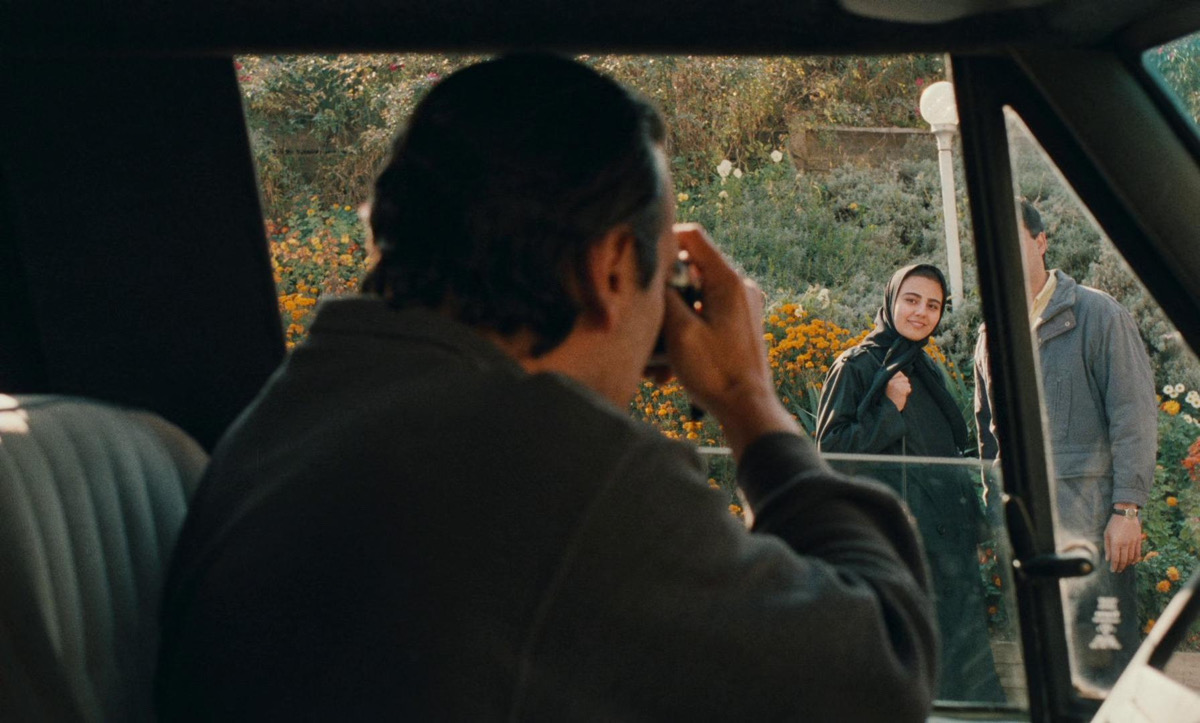
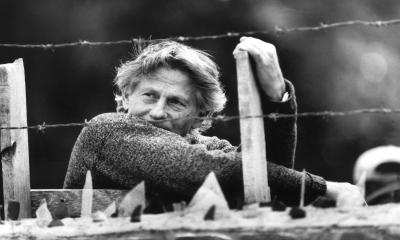
Abbas Kiarostami, who was more than a storyteller, when we talk about him, scenarios come to mind. A man lies beneath the tree, watching nothing but the blowing winds, some sparrows chirping, and, with a camera, he is only observing details. No music, no complex dialogue, nor any tough thing that will unintentionally disrupt or divert the audience’s perception about the scene. The scene is so full of elements that create ease and make it poetic. Besides being a director, he was also a good poet and a photographer. His experience of humans, society, class, and beliefs appears through an exceptionally realistic approach in his creation.
A car is moving slowly on the mountains. A wide frame is composed, but as the conversation grows in the car, the camera frame changes. Characters casually discuss existence, death, life, joy, and misery, as if these are not so complex human experiences. They engage with the conversation naturally. Kiarostami uses the car as a strong symbol of life, literally and metaphorically. His characters are almost constantly on a journey. The car depicts human life as a middle ground between home and destination. From Kiarostami’s belief, this earthly experience is not the final destination but a journey. It has a past from which humans came and the future to which all are going. It is moving in the winding mountains, as life moves in loops. That can be experienced but cannot be escaped. Still frames of a moving car become pleasing by the time characters are discussing their inner conflicts and beliefs.
The road encourages the characters to tell their life. They cannot liberate themselves as they might at home, workplace, or shop; rather, the car moves forward and they just adapt to it. The forced intimacy creates a confessional space. Because they are in a car and they look at the road, there is no chance of constant eye contact. Characters get free from communication through their eyes. This creates a psychological shield, allowing characters to speak with their most vulnerable and deepest thoughts without being judged by the eyes.
In Taste of Cherry (1997), this happens with the protagonist Mr. Badii and his three passengers who sit in the car at different times. Mr. Badii, who does not want to live anymore, decides to commit suicide. But he searches for someone to bury him after his intended suicide, or to help him if he survives. The first passengers do not agree to do that. Instead, everyone reacts differently from their perspective. The car becomes a chamber of many thoughts. The car itself is a small world of Kiarostami’s insights. Mr. Badii tastes the flavour of his decision against the admissions of the strangers and patiently drives through the winding mountains. What happens to Mr. Badii is always intriguing. At the end, his death is not clearly expressed in the film. Kiarostami ends the film in a place where the audience can opine. It is his strategy not to tell the audience the character’s fate, but to release and see what fate does. In the open field of fate, characters endeavour to find the meaning of existence, and again lose and endeavour to find the meaning of existence.
In Ten (2002), the whole film was almost entirely shot in a car. Ten conversations happen among the protagonist Mania, played by Mania Akbari, and her passengers, while her son Amin and other distinctive characters engage in long conversations. Here, Kiarostami uses a car as a strong metaphor of life itself. The thought of existence gets meaningful through new experiences with an open heart, not biased or rooted in something. He mounted two cameras on the dashboard so that the scene feels much more real. The audience connects as an observing third passenger. Non-professional actors and real conversations without exaggerating reality make the audience invisible passengers. When the car is moving, the scenes outside the window change by the moment.
The city lights, strangers, vehicles, buildings, and many other things pass by. As the characters’ thoughts, emotions, rage, regret, and faith, all just pass by without any strong breach of impulse. The car bears their stories, and over time, these stories fade when new passengers sit in the car, just like life. Characters come and go, but the protagonist must go on. Here, life and car are synced like a beautiful melody by Abbas Kiarostami, while the melody spreads the thought that life must go on like an eternal poem.
The juxtaposition of the car gets more interesting when the outer world is full of chaos, and the characters in their inner world are alone. In an interview with Geoff Andrew, Kiarostami spoke about his fascination with his car. He said that his car is his best friend, his office, his home, and his place. If someone sits beside him, he feels intimidated, yet the seats become comfortable because people are not sitting face-to-face but side by side. They do not look at one another, but glance only when they wish to. Before them, a wide screen is always present, along with the views to either side. In that moment, the silence does not feel so heavy. They are not under anyone’s possession, and this experience holds many further perspectives. Above all, the car moves them from one place to another.
About the car, the anonymity of the road is particularly memorable because the characters are some kind of lost or trying to find something. But those things are not the kinds of things we randomly find in ordinary cinemas. His characters are always charged with some philosophical insights. As we look through Mr. Badii or Mania, we see the inner miseries, conflicts, and strivings to get free from sufferings. But what is common to the characters is that they are all true, persistent, tolerating the chaos, and somehow they are surviving.
If we look through Taste of Cherry, it becomes explicitly understandable when the last passenger, Mr. Bagheri, tells Mr. Badii that he also once wanted to commit suicide. He climbed a mulberry tree to hang himself, but after tasting the mulberries, he found himself wanting to live rather than die. And he asks Mr. Badii if he truly wants to give up on simple pleasures like the joy of living. But the film ends there and raises many questions about life, existence, and death. These cardinal questions make the audience think based on their experiences, and in a poetic manner these questions do not irritate them but console them, as a good poem does to any reader.