
Published: : July 22, 2026, 12:06 PM
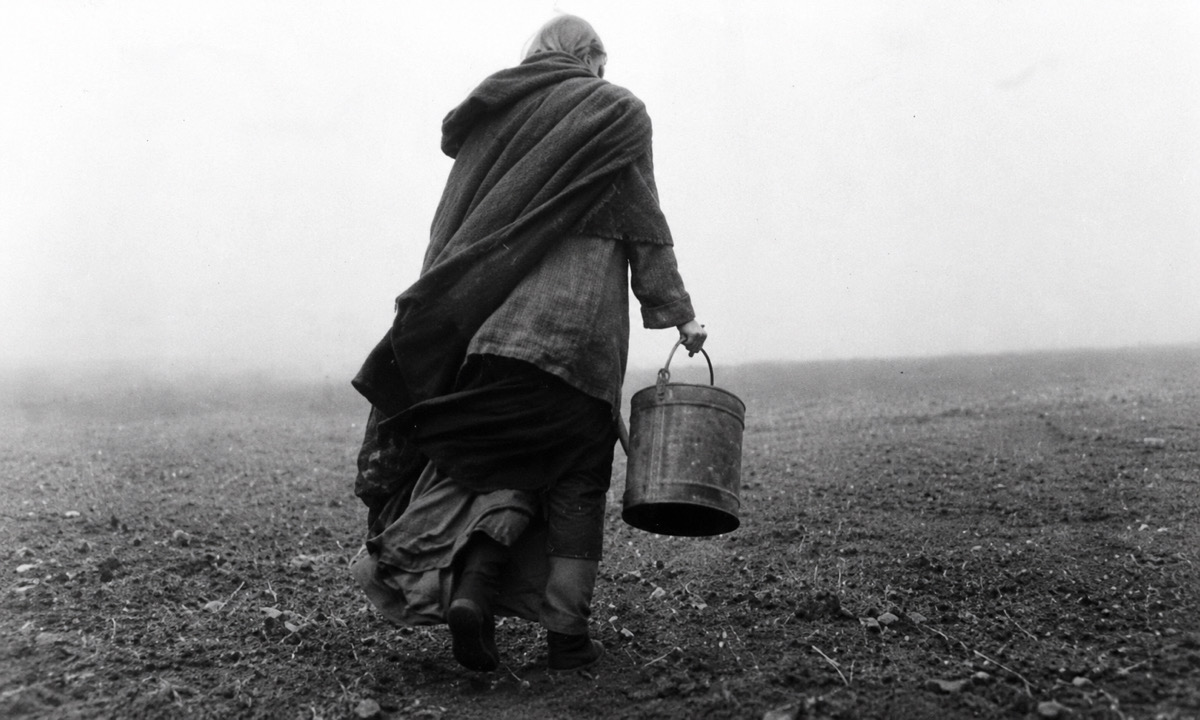
Some films imagine the end of the world as an event. Buildings collapse, cities burn, and someone usually arrives to tell us what has gone wrong. Béla Tarr’s The Turin Horse does something much more unsettling. It imagines the end as a process. Nothing explodes. No authority appears with an explanation. Instead, the world begins to withdraw from ordinary life. A horse refuses to work. A well runs dry. A lamp will not remain lit. Two people continue with their daily routine because routine is the only thing they have, even as the conditions that make that routine possible slowly disappear.
This is what makes Tarr’s apocalypse so frightening. It does not invade the world from somewhere outside. It seems to have been waiting inside the world all along.
Released in 2011, The Turin Horse was Tarr’s final feature film. It was co-directed with his longtime collaborator and editor Ágnes Hranitzky, and written by Tarr and the Hungarian novelist László Krasznahorkai. Fred Kelemen was the cinematographer, while Mihály Víg composed the film’s mournful, repetitive music. By then, Tarr had developed one of the most recognizable styles in European cinema. Films such as Damnation, Sátántangó and Werckmeister Harmonies had turned long takes, repetition, harsh weather and patient observation into a cinematic language of their own. Tarr called The Turin Horse a “closing movie” because he believed it gathered together the central concerns and recurring obsessions of his filmmaking.
The film begins with a famous story associated with Friedrich Nietzsche’s mental collapse in Turin in January 1889. According to the familiar version, Nietzsche saw a coachman beating a horse that refused to move. He ran towards the animal, embraced its neck and then collapsed. Soon afterward, he entered the severe mental decline from which he never recovered.
The story is powerful, but it needs to be handled carefully. Nietzsche’s breakdown in Turin is well documented; the horse-beating episode is not. The only known early report connecting his collapse to a horse appeared in 1900, eleven years after the alleged incident. It was written by an anonymous journalist who claimed to be passing on information from Nietzsche’s landlord and unnamed police officers. That account says Nietzsche was found clinging to a horse’s neck, but it does not mention a coachman beating the animal. The whipping, the tears and the dramatic collapse appear in later retellings. It is therefore safer to describe the story as a famous but historically uncertain anecdote rather than an established event.
Tarr’s film does not try to prove that the story happened exactly as people tell it. It begins from the story’s imaginative force. The opening narration recounts the legend and then ends with a much simpler question: what happened to the horse?
That question came from Krasznahorkai. At a public reading in Hungary in 1985, he presented the text that would eventually become the film’s prologue. When he reached the end, he asked what had happened to the animal. The change in perspective is crucial. People usually hear the story because they are interested in Nietzsche: his philosophy, his illness and his final years of silence. The horse remains an anonymous object in the philosopher’s tragedy. Tarr turns his attention towards this forgotten creature and towards the people whose survival depends on her.
This is also where some readings of the film become too eager to assign symbols. The horse has been interpreted as humanity, nature, labour, civilization and even God. These readings may be useful, but Tarr resisted reducing the animal to a convenient metaphor. He spoke of the horse as an individual being with a history and an identity. She has weight, exhaustion, appetite and dignity. She does not exist merely to carry an abstract message for the audience.
That attitude tells us a great deal about Tarr’s filmmaking. Where some filmmakers arrange images around an argument, Tarr often seems to proceed from physical existence itself. Hunger comes first. Cold comes first. Work, tiredness and dependence come first. Philosophy arrives later, through the experience of watching these things endure.
That is why The Turin Horse spends so much time on ordinary actions. The daughter dresses her ageing father, Ohlsdorfer. She walks to the well, draws water and carries the heavy bucket home. She boils potatoes, feeds the horse and helps prepare her for the cart. The next day, the routine begins again. Then it begins again after that.
On paper, this repetition may sound unbearable. On screen, it becomes hypnotic because the smallest changes gradually become more frightening than any sudden disaster. The film’s long takes are often discussed under the heading of “slow cinema,” but slowness alone does not explain their effect. Tarr restores the duration that ordinary labour normally loses through conventional editing. Most films would show the daughter fetching water once and shorten every later journey. Tarr refuses that shortcut. We feel the distance between the house and the well, the force of the wind, the weight of the bucket and the exhaustion of returning. Time becomes a physical burden.
The repetition also creates the film’s apocalyptic power. At first, nothing conventionally dramatic happens. Instead, the routine begins to fail. The horse refuses to pull the cart. Later, she refuses to eat. The well produces no water. Ohlsdorfer and his daughter attempt to leave, only to return. Finally, their lamp will not remain lit even though it contains oil. The world is not destroyed in one enormous event. It simply becomes unusable.
The film unfolds across six days, inviting a comparison with the six days of creation in Genesis. Here, however, creation appears to run backwards. Instead of light, water, animals and human life emerging from darkness, the things that sustain life disappear one after another. Tarr described the film as an “anti-Creation story,” although he resisted turning it into a rigid theological code. He returned instead to something more immediate: the difficulty of being alive and the daily pain involved in continuing.
The apocalypse in The Turin Horse is not presented as divine punishment. No voice declares that humanity has been judged. It arrives through practical failures: an empty bucket, an uneaten potato, a useless lamp. Cosmic collapse and domestic inconvenience become almost impossible to separate.
A neighbour’s visit makes this especially clear. He enters the house and delivers a long speech about corruption, degradation and the destruction of the world. It sounds like the grand philosophical explanation that an apocalyptic film is expected to offer. Ohlsdorfer dismisses it as nonsense. The speech changes nothing. The wind continues, the horse refuses to eat, and the well remains dry. The world does not owe human beings an explanation simply because they are frightened by it.
The wind functions almost like another character. It roars across the landscape, drives leaves through the air and presses against the walls of the house. Even indoors, the father and daughter cannot fully escape it. Alongside Víg’s repeated musical theme, the wind creates movement without progress. Something is always happening, but nothing advances.
If one image captures the film’s philosophy, it is not the final darkness but the horse standing still. Horses have often been made to represent movement, labour, conquest and civilization. Tarr’s horse refuses those assigned roles. She refuses work, then food, and finally participation itself. It is tempting to call this rebellion or prophecy, but the film gives no definite answer. Her silence prevents her from becoming a simple message that the audience can decode and then forget.
The horse can nevertheless carry several meanings without being reduced to any one of them. She is the forgotten creature behind a famous philosophical legend. She is a labouring body whose exhaustion exposes the violence hidden inside routine. She is also a necessary partner in human survival, proving that Ohlsdorfer and his daughter were never independent of the world around them.
Calling The Turin Horse depressing therefore misses its deepest achievement. Tarr is not merely trying to make us feel bad. He strips existence down to its most basic conditions and asks us to watch what happens when those conditions disappear. In this stripped-down world, even a boiled potato becomes meaningful.
Because this was Tarr’s final feature, its fading light also feels like the closing of a cinema. Movement slows. Speech disappears. The image approaches complete darkness. Yet the film is not entirely nihilistic. Its patient attention gives dignity to forms of life and labour that conventional cinema often shortens or ignores. Tarr’s world may be ending, but his camera refuses to look away.
The apocalypse in The Turin Horse is not measured by explosions or falling buildings. It is measured by an empty well, an uneaten potato and a horse that has finally said no. The film remains powerful because it does not imagine destruction as some distant event. It reminds us that every life depends on fragile connections, and that the end may begin quietly, with the disappearance of things we barely noticed until they were gone.

-20260706114936.jpg)