Published: : October 30, 2026, 11:34 PM
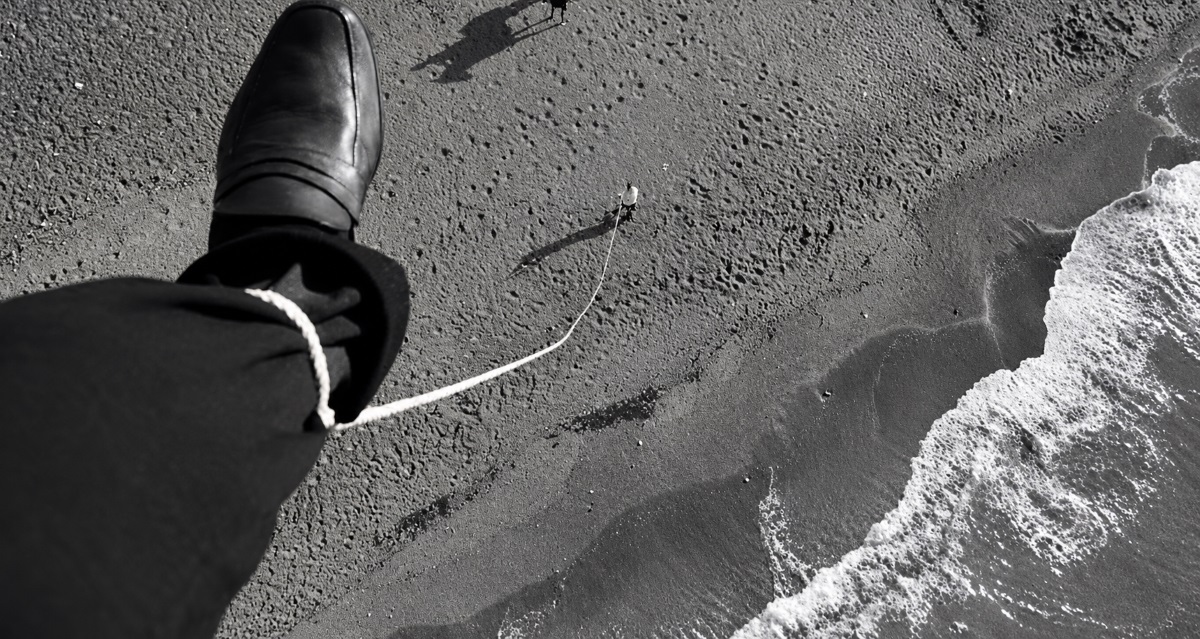
You surely remember the opening scene of Fellini’s 8½ (1963). I think this single scene is a summary of human life. I often think about this scene. I try to understand whether the negative conception of an individual’s existence could have been presented any better than this. However, this is not the only story in art and literature about the struggle with the self. Rather, the scales are tipped more heavily in this direction. Kafka, for instance, has told the story of a human being turning into an insect. In The Stranger, Camus says, “My mother died today. Or maybe yesterday, I don't know.” The poetry of Jibanananda says the same thing.
It is about the possibility of an individual becoming a ‘no’. In his diary, Jibanananda expressed regret over his own daughter being ‘ugly’. Cortázar tells the story of a man who, despite countless attempts, cannot put on a sweater. And all of these can be found together in the writings of Dostoevsky. The beginning of everything lies essentially in the crisis of an individual’s existence. When it is a reality that one day you will no longer exist, and nothing will remain, it is only natural for the idea of a ‘negative’ existence to emerge in a slightly sensitive person. And eventually, that idea becomes intense and destructive, most often self-destructive. Perhaps the same happens when life becomes a burden-bearing donkey. That is why the story Hemingway tells us of old Santiago returning with the skeleton of a fish seems like an outright lie to me most of the time. All stories of hope seem like lies. Ultimately, the freedom of the underground man from himself is the only truth.
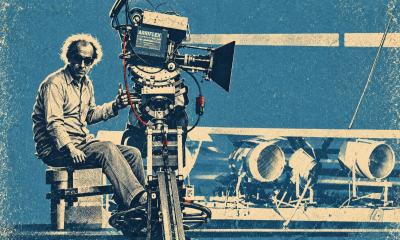
However, Fellini is somewhat different from the others mentioned here. What the others have demonstrated through writing, Fellini has done through cinema. As a result, this situation becomes even more terrifying for us. Our feet become stuck to the ground, and we begin to struggle. However, Fellini making such a film while sitting in the 1960s was not entirely a coincidence. His upbringing, as well as the society and realities of Italy at that time, also had a profound influence on his way of thinking.
Fellini was born in 1920 in the Italian city of Rimini. Before entering cinema, he was a cartoonist, caricaturist, and journalist. After arriving in Rome in 1939, he became associated with the satirical magazine Marc'Aurelio. Later, he began working as a screenwriter. He was involved with films such as Roberto Rossellini's Rome, Open City (1945) and Paisan (1946).
At that time, the Italian film industry was going through an unprecedented transformation. Neorealism was beginning to exert its influence on post-war Italian cinema. The craftsmen of celluloid sought to bring to the screen people’s real lives, poverty, social crises, and struggles for survival. Fellini, too, began his career along this path. However, gradually, he emerged from that shell. He began to explore the world beyond reality as well. Memories, dreams, magical realism, imagination, guilt and a shadowy world began to find their way into his films.
And this is how Fellini developed as a filmmaker through a gradual process. La Strada (1954) first brought him into the spotlight on a larger scale. Then Nights of Cabiria (1957), La Dolce Vita (1960), and 8½ (1963) established him as an influential filmmaker. However, among these, 8½ (1963) emerged as a film of an entirely different dimension. It took the language of storytelling in cinema to an extraordinary height.
At the very beginning, I spoke about the opening scene of 8½ (1963). This one scene has been etched in my mind for many years. Of course, a scene like this is not something one can forget after watching it once. Fellini captured on film, ahead of its time, the kind of world we live in. The endless crisis surrounding human beings and their existence has repeatedly emerged through this single scene. Even if Fellini had made nothing else and had made only this one film, he would have remained equally important to me. Very few directors have been able to portray the inner world of human beings so vividly.
The central character of this film, Guido Anselmi, is a film director who falls into a spiritual crisis while trying to make a new film. He has everything around him, all that he lacks is the ability to move forward with his work. The character is a reflection of Fellini himself. After the success of La Dolce Vita (1960), he, too, had fallen into a crisis over the idea for his next film. Instead of escaping that crisis, he made it the subject of his film. And in doing so, a masterpiece was created. It is the story of a man bowed down under the weight of existence. However, I become so trapped in the opening scene of the film that I can hardly enjoy the subsequent parts in the same way.
At the beginning of 8½ (1963), Guido is seen trapped inside a car. There is a traffic jam all around him, the car windows are closed, and the air is heavy. He wants to get out but he cannot. Eventually, he emerges from the car and rises into the sky as if he has been set free. But even that freedom does not last. After floating in the air, he has to return to earth. The scene is a dream but its discomfort is real. A person wants to escape from the life they are living, yet they know no way to escape from that very life.
Ultimately, we, too, know no way to survive, that is, to escape. As a result, we repeatedly find ourselves trapped in Fellini's cinema. And we continue to gasp for breath, endlessly.
Hasnat Soyeb is a writer and journalist.
This article has been translated from Bengali into English by Md Rabbi Islam.
Send your reviews, articles, and pitches for Cut to Cinema to [email protected]. Check out our submission guidelines for more details.