
Published: : November 2, 2026, 12:36 AM
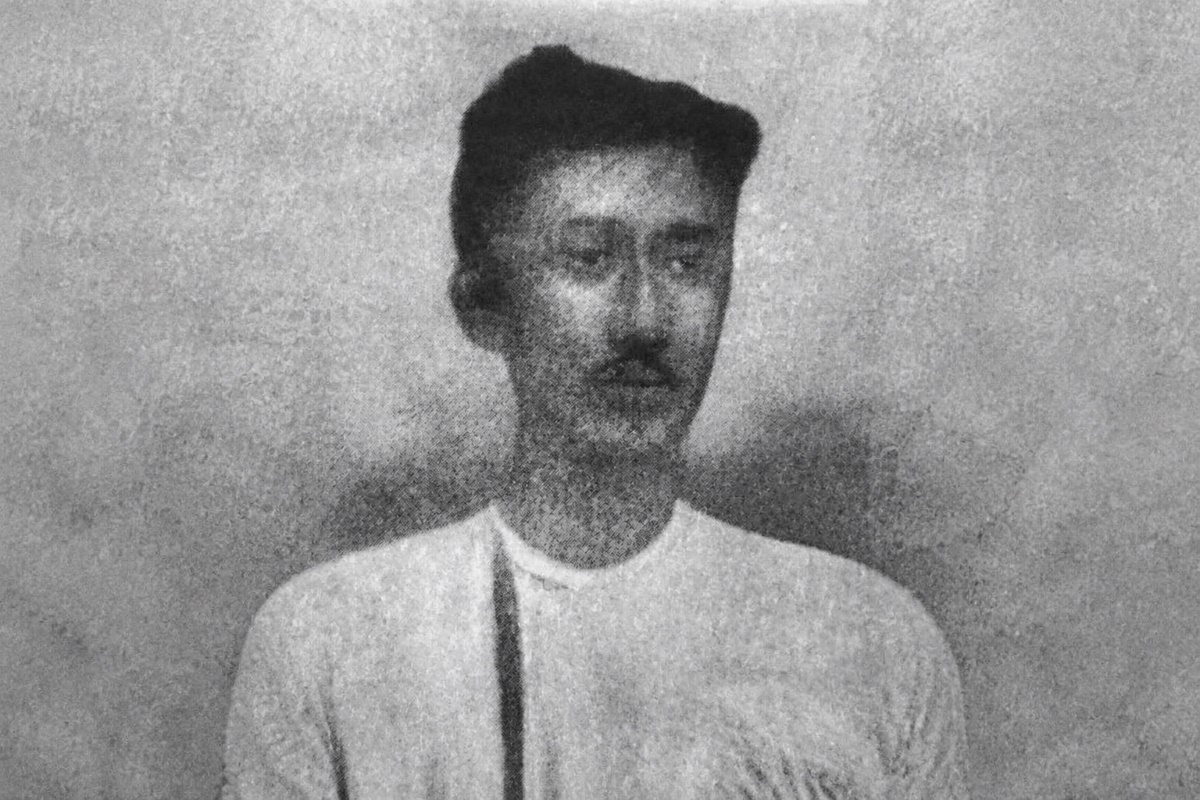
In October 1917, a devastating fire tore through a godown in Calcutta. It turned the surviving film collection of Hiralal Sen into absolute ash. Later that month, Sen himself succumbed to a long battle with cancer. His death was forever shadowed by the blaze that erased his cinematic legacy. As a documentary photographer working in Bangladesh today, I constantly grapple with the fragility of our visual archives. Sen’s loss represents an unparalleled, tragic erasure of a pioneer's vision.
Long before he became a filmmaker, Sen was a photographer with a meticulous eye. Born in Manikganj, though historical accounts frequently dispute whether his birth year was 1866 or 1868, he grew up utterly mesmerized by the intricate mechanics of childhood light and shadow plays. By 1890, he had already established his own photographic studio, eventually winning gold medals for his striking photographs. But capturing still images was only the beginning of his ambition. In 1898, an exhibition by Professor Stevenson in Calcutta introduced Sen to the mesmerizing power of the bioscope. The moving image captured his imagination entirely. It pushed him to move beyond the frozen, isolated frames of his acclaimed stills and step boldly into the kinetic potential of early cinema.
Driven by this revolutionary new medium, Sen founded the Royal Bioscope Company. While sources debate whether the company was officially established in 1898 or 1899, its impact was immediate. He began filming lavish stage productions at the Classic Theatre, collaborating deeply with Amarendra Nath Dutta. From Alibaba to Bhramar, these theatrical recordings are frequently debated by scholars as important early milestones in Indian cinema, with Alibaba and the Forty Thieves (1903) generally regarded as his longest known film.
He did not stop at theatrical adaptations. He pioneered the commercial advertising film, creating moving promotions for Jabakusum Hair Oil and Edwards Tonic. Perhaps his most historically significant work, however, was his documentation of the massive anti-partition rally in Calcutta. While some archival sources loosely date this rally film to 1904, others pinpoint the exact date as September 22, 1905. Regardless of the precise day, it is widely regarded as one of India's earliest political films and is often credited as the country's first political documentary.
In Arun Roy’s 2021 biopic Hiralal, there is a compelling, heavily dramatized moment where rival J. F. Madan asks Tarini Ukil what the main factors are in the bioscope business. While Ukil takes the question literally, Madan offers a philosophical take, answering, "It's dreams, endless dreams." Though a very filmic invention, it remains my favorite part of the film because it captures the vastness of a multibillion-dollar industry, envisioned at a time when the subcontinent had barely started it.
The film deliberately positions Madan not just as a fierce competitor, but implies a deeper, almost villainous complicity in Sen's downfall and the devastating godown fire. However, we must strictly separate cinematic invention from historical reality. While the biopic uses Madan as a convenient, narrative antagonist to heighten Sen's personal tragedy, the historical record provides no reliable evidence to support such a conspiratorial act of arson. It serves as a powerful thematic device regarding the death of dreams, but it is unequivocally not established history.
The true tragedy of Hiralal Sen requires absolutely no cinematic embellishment. The painful decline of the Royal Bioscope Company was rooted in the harsh business realities of early cinema, including fierce competition from better-funded rivals such as Madan’s Elphinstone Bioscope Company.
Today, the historical narrative surrounding Hiralal Sen often falls into a romanticized trap, asserting that his ultimate sacrifice single-handedly built the industry. This flattening of his complex life into a simplistic martyrdom obscures the cutthroat, difficult reality of early subcontinent cinema. The endless historical dispute over "whose first?" is severely exacerbated by a profound paper-trail problem. Because the fire consumed his surviving film collection, scholars and critics are left parsing secondary accounts, fragmented newspaper advertisements, and faded memories to verify his influence.
We must remember Hiralal Sen for how he began in the darkrooms of Bogjuri. He was, fundamentally, a photographer who looked at the world and saw a kinetic energy that a single frame could never contain. His vision was a brilliant flicker in the dark. When we reduce Sen merely to a victim of a fire or a tally of disputed firsts, we lose sight of the ambitious, innovative artist who recognized the profound cultural power of the moving image long before the infrastructure even existed to sustain it.
Mohammad Tasawar Islam is a Dhaka-based documentary photographer, visual artist, and visual journalist exploring urban narratives and visual anthropology.
Send your reviews, articles, and pitches for Cut to Cinema to [email protected]. Check out our submission guidelines for more details.