
Published: : November 20, 2026, 07:40 PM
It has been raining in Dhaka for the last few days. There is something particularly exhausting about rain in this city. The roads become flooded, rickshaw pullers struggle through waterlogged streets and traffic, and pedestrians crowd beneath the narrow awnings of roadside shops. From inside a CNG, the familiar sight of buses, tangled electric wires and people rushing across intersections becomes blurred by raindrops. Yet I have been thinking about how much I enjoy watching rain in films. I find this contradiction rather amusing. The same rain that makes me reluctant to leave the house can keep me absorbed in a scene for minutes. Perhaps cinema has taught us to see something extraordinary in an otherwise ordinary phenomenon.
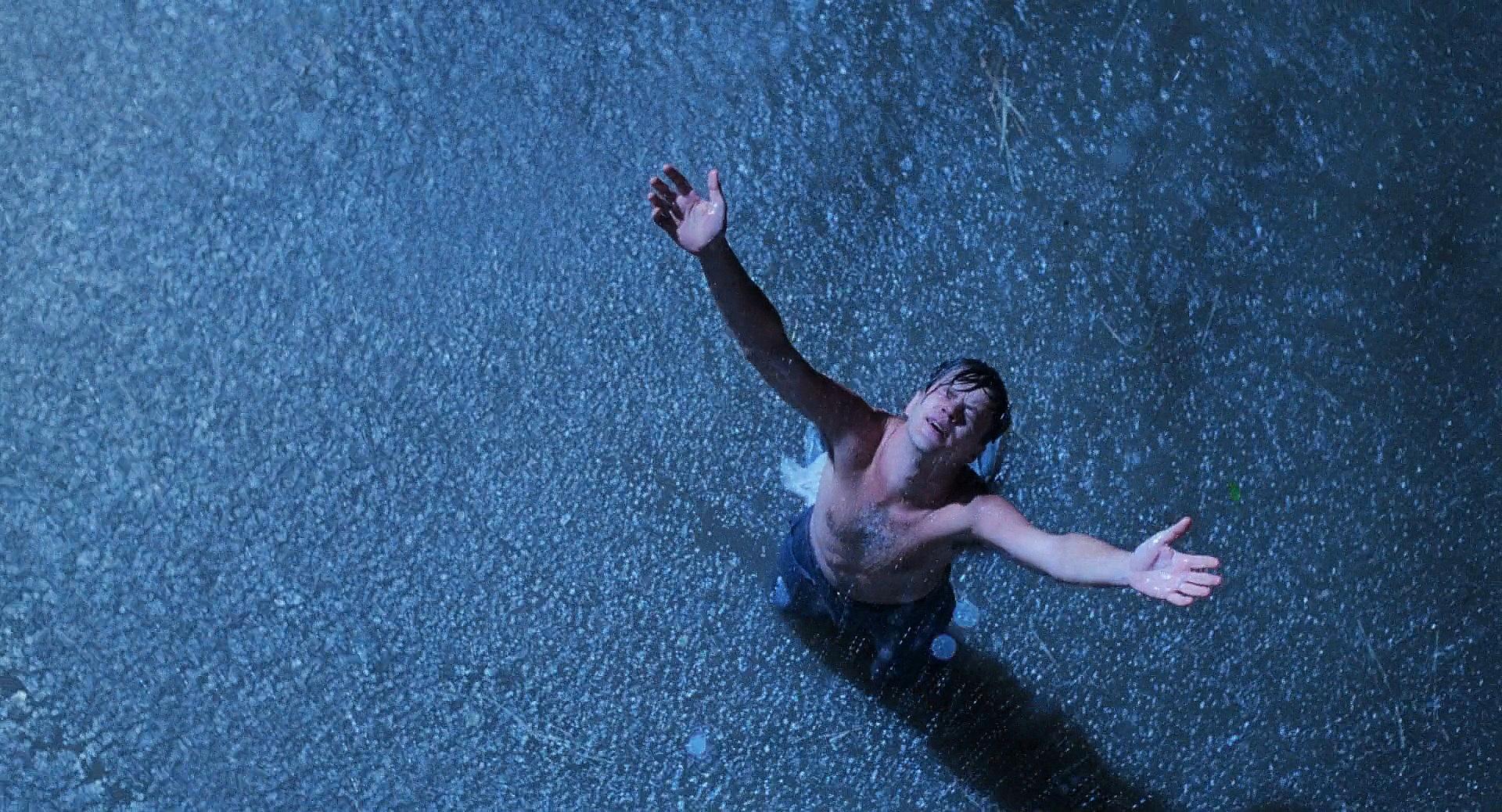
Whenever I think about cinematic rain, Andy Dufresne’s escape in Frank Darabont’s The Shawshank Redemption (1994) immediately comes to mind. After crawling through a sewage pipe, Andy stands beneath the pouring rain with his arms stretched towards the sky. I have always found this scene immensely satisfying. There is something almost religious about his posture, although the scene hardly needs a religious interpretation to work. The rain washes the filth from his body but we understand that something greater is happening. Years of imprisonment and suffering seem to dissolve in that downpour. He is finally free. Somehow, the image communicates his liberation more effectively than any speech could have.
There is a literary concept called ‘pathetic fallacy’, which describes the attribution of human emotions to nature. We speak of angry storms and mournful rain as though the weather has some interest in our affairs. Cinema has inherited this tendency, although rain does not necessarily exist to reflect a character’s feelings. Kristi McKim’s Cinema as Weather (2013) examines how weather shapes cinematic atmosphere and experience. Consider Akira Kurosawa’s Rashomon (1950), where relentless rainfall surrounds characters discussing contradictory accounts of a crime. The atmosphere becomes almost as uncertain as their stories. In Seven Samurai (1954), however, rain transforms the climactic battle into an exhausting struggle through mud. In one film, it contributes to uncertainty; in another, it physically changes the action.
One thing that bothers me about romantic rain scenes is how conveniently they overlook people for whom rain is anything but romantic. It is easy to admire a downpour from behind an apartment window, considerably harder when standing beside a waterlogged Dhaka road. Bong Joon-ho’s Parasite (2019) makes this distinction painfully clear. For the wealthy Park family, the storm is a passing inconvenience. For the Kim family, it floods their semi-basement home and destroys their belongings. I find their journey down endless staircases towards their submerged neighbourhood particularly unsettling. Someone enjoying the rain from an apartment in Gulshan and someone struggling through a flooded street may be looking at the same sky but they are hardly experiencing the same weather.
Rain also has a peculiar relationship with romantic cinema. We have watched so many lovers embrace beneath downpours that the imagery sometimes feels predictable. Yet certain filmmakers do something considerably more interesting with it. In Makoto Shinkai’s The Garden of Words (2013), rainy mornings bring two lonely individuals together in a garden pavilion. Their relationship develops because the weather repeatedly interrupts their ordinary routines. Wong Kar-wai's In the Mood for Love (2000) offers a different intimacy. Its wet streets, narrow corridors, lingering glances and prolonged silences create an atmosphere of unspoken longing. I have often felt that the film’s atmosphere carries as much emotional weight as its dialogue. Sometimes rain allows characters to communicate precisely because they cannot bring themselves to speak.
What fascinates me equally is how cinema makes us experience rain without actually getting wet. Vivian Sobchack’s The Address of the Eye (1992) and Laura U. Marks’s The Skin of the Film (2000) offer ways of understanding this through embodied perception and sensory memory. A rainy scene can almost make us feel the cold or the comfort of being sheltered from a storm. Sound contributes enormously to this experience. Michel Chion’s Audio-Vision (1994) examines how sound changes our perception of images. I sometimes think about this while listening to rain strike the corrugated metal roofs of roadside stalls in Dhaka. It sounds different from rain against an apartment window and both produce distinctly different feelings.
But perhaps no rain sequence feels as familiar to me as the one involving Apu and Durga in Satyajit Ray’s Pather Panchali (1955). Ray first allows us to notice the approaching monsoon through the changing landscape. Then comes the rain, and Durga welcomes it with almost uncontrollable happiness. She dances beneath the downpour while Apu, considerably less adventurous, watches from the shelter of a tree. Eventually, the siblings huddle together beneath its branches. I find their different reactions particularly moving. Durga seems determined to experience every moment of the rainfall, while Apu is more concerned with escaping it. There is something wonderfully recognisable about their relationship, especially for anyone who remembers childhood afternoons spent getting drenched despite being repeatedly warned against it.
Yet the beauty of that sequence becomes almost unbearable when we consider what follows. Durga falls ill and her eventual death changes how we remember her delight in the monsoon. What initially appears to be a celebration of childhood freedom becomes entangled with vulnerability and loss. I think Ray achieves something extraordinary here without making rain appear deliberately cruel. The monsoon brings life and joy, but human beings remain exposed to its dangers. It reminds me of Dhaka after the first heavy shower following days of unbearable heat. The sudden coolness feels wonderful, until streets begin flooding and people struggle to return home. Perhaps the most convincing cinematic rain is precisely this contradictory: beautiful without necessarily being kind.
There is also something fascinating about the way rain changes our experience of time in cinema. Gilles Deleuze, in Cinema 2: The Time-Image (1989), discusses images that allow us to experience time beyond the immediate demands of action. I find this relevant to those moments when filmmakers simply let us watch rainfall. Andrei Tarkovsky’s Mirror (1975), with its attention to memory and natural elements, comes to mind. Nothing particularly dramatic needs to happen for such images to remain memorable. I have caught myself watching water gather along the edges of rooftops during these rainy Dhaka afternoons. For a few moments, these ordinary sights acquire the quiet rhythm of a film. Perhaps cinema has changed how I observe them.
Of course, not every filmmaker who includes rain is attempting to communicate something profound. Sometimes it is simply weather, part of the physical world in which characters happen to exist. André Bazin’s writings on cinematic realism remind us that the visible world need not be reduced to symbolism to become meaningful. Perhaps we are too eager to discover metaphors in every cinematic raindrop. Looking outside my window, I realise that the rain falling over Dhaka has no interest in Andy Dufresne’s freedom, the Kim family’s suffering, or Durga’s childhood. It simply falls. Yet cinema has made it difficult for me to watch rain without thinking of stories. What liberates someone in one film destroys another person's home in another. What brings two people together elsewhere may leave someone completely alone. And that is why, at least when I am watching a film, I find it difficult to believe there is ever such a thing as just rain.
Md Rabbi Islam is a sub-editor of Cut to Cinema. He can be reached at [email protected].
Send your reviews, articles, and pitches for Cut to Cinema to [email protected]. Check out our submission guidelines for more details.