
Published: : October 5, 2026, 09:56 AM
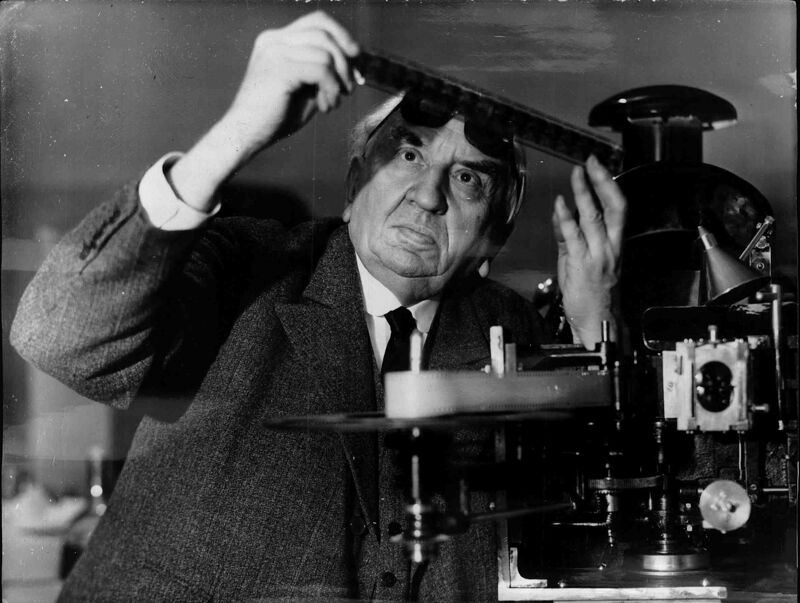
On 5 October 1864, Louis Lumière was born in Besançon, France. More than a century and a half later, his name is still closely tied to the earliest days of cinema. Together with his elder brother Auguste, Louis helped turn moving images from a technical experiment into something people could sit together and watch on a screen.
The Lumière brothers grew up around photography. Their father, Antoine Lumière, was a photographer who later built a successful photographic business in Lyon. Louis showed a strong interest in the technical side of photography from an early age and, while still a teenager, worked on improvements to photographic plates. Long before cinema entered their lives, the brothers already understood cameras, light, chemistry and photographic production.
By the 1890s, several inventors were experimenting with ways to record movement. Eadweard Muybridge had photographed motion in sequences, Étienne-Jules Marey had worked with chronophotography, and Thomas Edison and W. K. L. Dickson had developed the Kinetoscope, which allowed a single viewer to watch moving images through a viewing device.
In 1894, Antoine Lumière saw the Kinetoscope in Paris and encouraged his sons to explore the possibilities of moving pictures. Louis and Auguste began working on a system that could not only record movement, but also project it onto a screen for an audience.
Their work led to the Cinématographe, a compact, hand-operated machine that could function as a camera, printer and projector. One of its key features was an intermittent mechanism that moved film frame by frame, allowing each image to pause briefly before the lens. This made the machine practical for both filming and projection.
In March 1895, Louis used the Cinématographe to film workers leaving the Lumière family factory in Lyon. The short film, now known as Workers Leaving the Lumière Factory, showed nothing extraordinary by modern standards. People simply walked through a factory gate. But at the time, the ability to capture a real moment and bring it back to life on a screen was remarkable.
Later that year, on 28 December 1895, the Lumière organization presented a programme of short films to paying spectators at the Grand Café in Paris. The event became one of the defining moments in early film history.
Louis Lumière and his brother were not the only inventors involved in the development of cinema, and cinema cannot be credited to one person alone. But their contribution was crucial. They helped make moving pictures portable, projectable and accessible to a public audience.
Soon, Lumière cameramen were travelling around the world, filming streets, families, workers and everyday life. On Louis Lumière’s birthday, his legacy is worth remembering not because he single-handedly invented cinema, but because he helped give moving images a form that could be shared. And once those images began to move, the world never looked at pictures in quite the same way again.