Published: : August 15, 2026, 02:16 AM
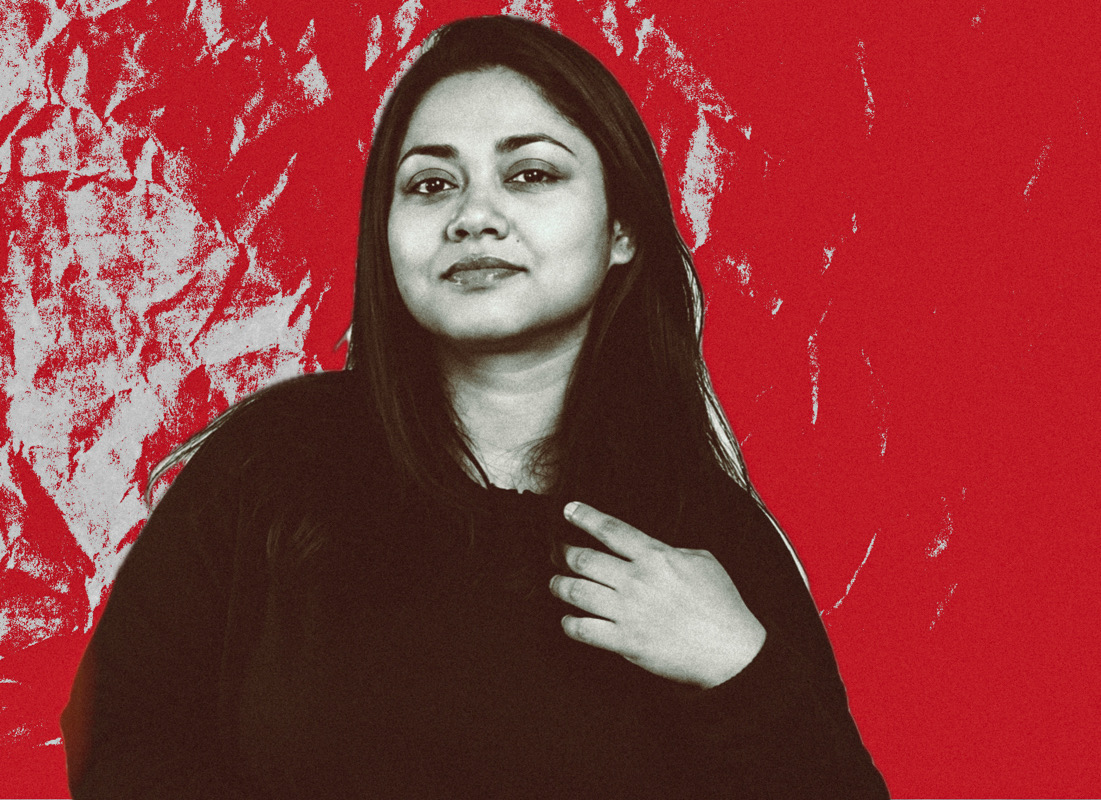
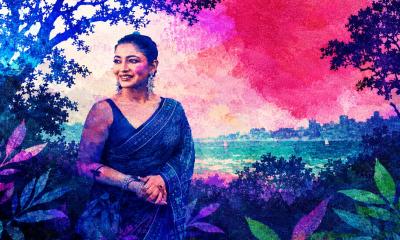
Rubaiyat Hossain is an acclaimed Bangladeshi filmmaker whose work explores social realities through a distinctly feminist perspective. Her films include Meherjaan, Under Construction and Made in Bangladesh, which earned international recognition and a National Film Award for Best Director. Her fourth feature, The Difficult Bride, marks another milestone as the first Bangladeshi film selected for the Orizzonti section of the Venice Film Festival. For Cut to Cinema, editor Bidhan Rebeiro spoke with Hossain about Venice, creative freedom and the growing international presence of Bangladeshi cinema.
1. Congratulations on The Difficult Bride being selected for the 83rd Venice International Film Festival and the 51st Toronto International Film Festival (TIFF). As a Bangladeshi filmmaker, what does this achievement mean to you?
It is a great joy and an honor to present The Difficult Bride at La Biennale this year. What makes this moment especially meaningful is that it comes during a remarkable period for Bangladeshi cinema. Over the past year, we have seen films from Bangladesh receiving important recognition at festivals such as Karlovy Vary, Shanghai, and Rotterdam. To me, that says something much bigger than the success of a single film. It shows that a new generation of voices is emerging, and the international film community is beginning to take notice.
People often mention that The Difficult Bride is the first Bangladeshi film selected for Venice’s official competition. While I appreciate the historical significance, I don’t dwell too much on being “the first.” Bangladesh is a young nation, so naturally there will be many firsts. I prefer to think of this not as an ending, but as the beginning of many more Bangladeshi films finding their place at the world’s major festivals.
2. Your filmmaking journey has involved both critical acclaim and public controversy. Yet you have continued making films with determination. What inspires you to keep going?
I’m a very private person, and my inner circle is extremely small. I spend a great deal of time alone, often in nature, so I don’t live my life in constant conversation with the outside world. Of course criticism can hurt—I’m human. When my first film was released, I was subjected to extremely vulgar and personal attacks, and that was painful. But my parents, especially my father, stood firmly by me. My family has always supported me, and growing up I was given the confidence to be myself. That has stayed with me.
I’ve also never been a people pleaser. Making a film demands years of emotional, physical, and spiritual commitment. If I’m going to dedicate that much of myself to something, it has to be a story that I genuinely believe in, not one shaped by other people’s expectations. Cinema, for me, is an act of creative freedom. It comes from within, and I feel an obligation to remain honest to that voice. Perhaps I’m also a little stubborn—but that stubbornness has allowed me to keep making the films I truly want to make.
3. What kind of cinematic language do you prefer in your films? Do you follow a particular narrative style, or does your approach change depending on the genre and the story?
For me, the content always defines the form. I don’t begin with a fixed cinematic language and then apply it to every project. Instead, I try to find the form that best serves the story.
For example, Made in Bangladesh was inspired by real lives and real experiences, so it demanded a socially realist approach. I also wanted it to be accessible to a broad audience, especially garment workers across Bangladesh, who could recognize themselves in the film. The Difficult Bride, on the other hand, is a deeply psychological story. It called for a more fluid, intuitive, and formally adventurous cinematic language that could express inner states rather than external reality. Each film teaches me how it wants to be made, and I try to listen to that.
4. In recent years, Bangladeshi films have been appearing regularly at major international festivals. Do you see this as the beginning of a new wave in Bangladesh cinema? Why or why not?
I think new wave is a very big term. I don't think we have what is called a new wave. But like I mentioned before, Bangladesh is a very young country. Our political history has been deeply conflicted, and there has been a lot of, you know, breaks in our culture, our national identity, as we became Bangladesh today. So I think that I wouldn't consider it a new wave, but if you think about it, the times of Tareque Masud, Morshedul Islam, and after that Mostofa Sarwar Farooki, those days, there were just one single name, very few filmmakers. Even when I started off, there was not a lot of Bangladeshi filmmaker in the international circuit.
But I think in the recent time, the numbers have grown. Our younger generations are making films. Digital medium has also made films much more accessible. And we are seeing more and more Bangladeshi films being made. What is significant to me is that despite the fact that we don't have any proper film school in Bangladesh, despite of any proper support from the government or the private sector, these filmmakers managed to make films that go to world-class festivals, that show something about their tenacity and our desire to make movies. For Made in Bangladesh and The Difficult Bride, the entire financing was raised by public grants from Europe. And the fact that European public money is being spent to make Bangladeshi films shows that our contents are interesting, our contents are competitive, and they deserve to be seen all over the world.
5. How challenging is it to enter the international film arena without the support of multinational producers or co-production partners? What advice would you give to young Bangladeshi filmmakers who aspire to reach international audiences?
It depends on what we mean by the “international arena.” If we’re talking about international film festivals, then yes, it is absolutely possible to reach them without multinational co-producers. Films like Rehana Maryam Noor reached Cannes with very limited foreign support, and Mostofa Sarwar Farooki built an international reputation while producing most of his films within Bangladesh. There isn’t a single path to making internationally recognized cinema.
The European co-production model is simply the one that has worked for me. It begins by participating in international script labs, co-production markets, and development programs. These are highly competitive, but if you’re selected, they provide an opportunity to develop your project, meet producers, and build long-term creative partnerships. That is the approach we took with Made in Bangladesh, The Difficult Bride, and the films we are currently producing.
For The Difficult Bride, we raised public funding from Norway, France, Germany, and Portugal. Those grants require producers from the respective countries, so international partnerships become essential. My advice to young filmmakers is to understand that there are many financing models. Find the one that suits your work, keep developing your craft, and don’t be discouraged by limited resources. Strong stories and persistence can open doors that initially seem impossible.
Send your reviews, articles, and pitches for Cut to Cinema to [email protected]. Check out our submission guidelines for more details.