Published: : September 20, 2026, 12:26 PM
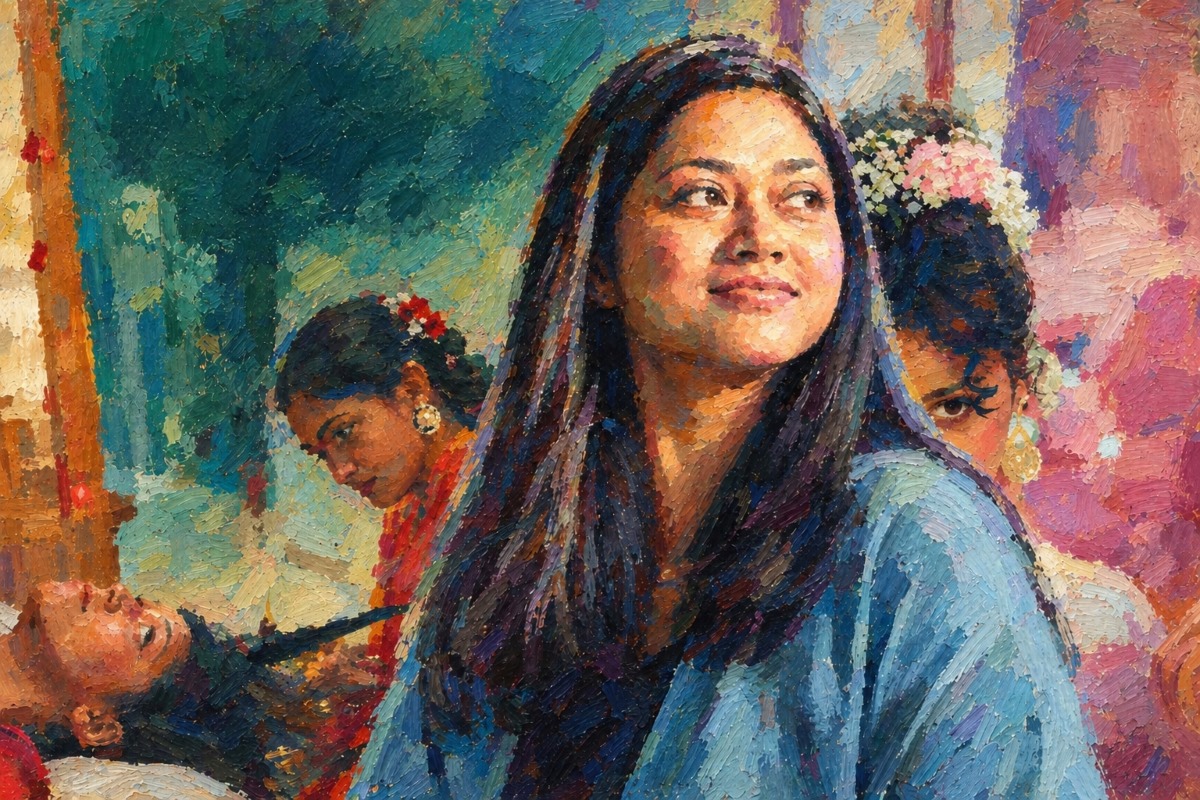
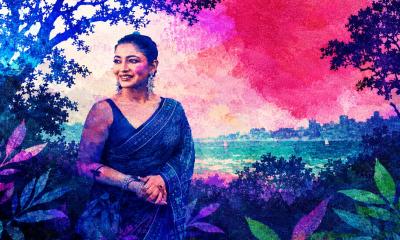
Rubaiyat Hossain is an acclaimed Bangladeshi filmmaker known for exploring women’s experiences, social realities and identity through her distinctive cinematic voice. Her films include Meherjaan, Under Construction and Made in Bangladesh. Her fourth feature, The Difficult Bride, became the first Bangladeshi film selected for the Orizzonti section of the Venice Film Festival. For Cut to Cinema, editor Bidhan Rebeiro spoke with Rubaiyat Hossain about her creative journey, the female gaze, representation in cinema and bringing Bangladeshi stories to a global audience.
To come to the 83rd Venice Film Festival, this is your fourth feature film, and there was a long journey behind it, a long period of preparation. But beyond all of that, what I want to understand is this: when a male filmmaker makes a film, it comes from a certain perspective. You have made a film from a female gaze. You have made a women-centered film, and if we take it further, perhaps a feminist film. You have spoken about ‘emancipation’ and women’s liberation through this film. Could you talk about that? Where did this thought come from? And secondly, after the premiere screening, what was your own reaction to the response you received?
I actually heard this story when I was very young. When I was seven years old, I used to go to Mayfair Beauty Parlour. You may know that there was a beauty parlour called Mayfair Beauty Parlour in Dhanmondi. That is where I first heard this story, that a bride died in this way. There was a snake hidden inside her hair bun. At that age, when I was seven, I already visualized the story. In my mind, it existed in sepia. Later, I wrote stories. I wrote short stories. Then, in 2006, I tried to make it into a short film. Because as I grew older, I started feeling that this story was very significant. It says something important: there is beauty, but there is danger behind beauty. That is what the story is about. And the fact that this story became an urban myth in Dhaka, that it circulated inside a salon, inside a very private women’s space, means something. It means women’s subconscious already knows that there is danger in beauty. There is death in beauty. Actually, it is not even just danger. There is death in beauty. So that idea was very interesting to me. That is where I started building from. And another thing is, if you look at today’s world, women actually have more choices than they ever had in history. It is not always that a man is directly oppressing her. Many times, she is being oppressed by her own mindset. Beauty is being sold as emancipation, as empowerment, as a choice. The message is: if you are beautiful, if you can attract the male gaze, if you can get attention, then you are powerful. That is such bullshit. It simply cannot be true. Because what it means is that I have reduced myself even further. If you look at what Simone de Beauvoir says, “We don’t want to be defined by our biology only.” So, if I prepare myself only for the male gaze, then I have already reduced myself to that. This film strongly critiques exactly that.
And beauty salons are also very interesting spaces. When a girl is born in nature, or when any human being is born in nature, society disciplines that person in certain ways. Society disciplines our bodies and our minds, and through that process we become social beings. But the female body is disciplined very intensely inside a salon. Removing body hair, shaping eyebrows, making the skin lighter, straightening hair, pulling, stretching, transforming. There is a real battle happening there. And I find it deeply ironic because salons are supposed to be spaces of solidarity and comfort. They are supposed to be all-women spaces. Maybe I go there for a massage, a head massage, a foot massage. But it becomes a space of torture. It becomes a space where the body is controlled, suppressed, and normalized. The idea that everyone’s body should look the same, everyone’s hair should look the same. That really disturbs me. When I see women, especially when I see women in the media, and how obsessed they are with their beauty, their appearance, their makeup, I feel that we are harming ourselves. So, perhaps this film is trying to create that awareness. And also, the fact that this story comes from an urban legend is very important. I did not create this story. It already exists in the women’s subconscious. I think that is extremely important.
After watching the film here, since this was technically the world premiere, how did you feel about the reaction you received? Do you think the situation of women in Venice is similar to the situation of women in Dhaka? What was your feeling?
Yes. I think, of course, I always say that women are not a homogeneous group. Depending on their social class, geographical location, religion, education, and many other things, women experience and deal with things differently. But there are certain universal experiences. Because we are all objectified by the male gaze. We also share the same biological reality. So, from that perspective, beauty is something very universal. There is probably no country in the world where beauty parlours do not exist, where women do not pluck their eyebrows, do facials, or remove body hair through waxing. So, in that sense, I think there is a universality. And about the audience reaction, I would say this. Yesterday, I was so nervous. Or maybe nervous is not even the right word. Yesterday, I felt like I was getting married. Honestly, I felt that way. You saw that I came wearing a red sari, a wedding sari. I also came wearing wedding jewellery. Honestly, I really felt like I was getting married. And later, when we had dinner with our producers, I felt like it was a wedding reception. The reason I say this is because, in our society, especially in Bangladesh, when we grow up, we understand, or we are made to feel, that as a woman the most important day of your life is your wedding day. That day is considered sacred. You feel like something extraordinary is happening to you. You feel like you are becoming yourself. You feel like you are receiving a gift. Everyone is celebrating you. So yesterday, I felt exactly that way. For me, I felt like a bride marrying cinema. Honestly.
And all of those things were there. We all came wearing saris. All my producers also wore saris. So, we wanted it to feel like a wedding party. I felt incredibly emotional yesterday. But I did not want to break down or cry during the Q&A because I am a very private person. I do not like showing my emotions. That is also why I did not actually watch the entire film during the screening. I stayed outside. So, about the audience reaction, I was numb. Later, I started watching the videos, and you all told me that the reaction was very positive. But I honestly do not remember much. At that moment, I think I was really focused on my crew. I was looking at my actors. I was looking at my cinematographer. I was looking at my producer. The people I made this film with.
Almost your entire cast and crew were women. You have made many films before but this was a very different scenario. This film is centered around women and even within the wedding, the focus is on the bride, the bride’s mother and the woman who is doing the bride’s makeup. The characters are women and almost everyone working behind the scenes was also a woman. So if I call it a sense of “sisterhood,” how did you experience that? How did you carry that feeling throughout the process?
I enjoyed it so much and I am very grateful that it happened. My producers made it happen. When I went to shoot Meherjaan, there were almost no women on the set except me, one assistant director and one person from the costume department. For me, it was not a comfortable set. When I started my film career, I was in my mid to late twenties. At that time, I was always working with middle-aged South Asian men. When I was in India doing the mixing, you cannot imagine how uncomfortable it could be. They could not really accept me as a director. There was a real struggle, a communication gap, and many other difficulties. There is also a matter of physical comfort. When I was working at Prasad Lab, I was the only woman in the entire lab. And filmmaking requires long hours. It often goes late into the night. Later, during Under Construction, I brought in a woman cinematographer. After that, I realized that I was much more comfortable working with women DPs. I saw that the collaboration was very strong. Made in Bangladesh also had a woman cinematographer. So slowly, my women crew started growing. I have tried. It is not easy. After fifteen years of trying, I have finally reached a point where, except for my composer, all the heads of departments were women. All my ADs and almost everyone working with me were women. And it created such a beautiful atmosphere. Because even if you are a woman sound mixer from France or a woman sound editor from Portugal, you are still a minority. You are still a woman in cinema who has struggled to earn her place. So all of us have gone through this struggle. We do this struggle because we love cinema so much. Therefore, when we come together to make something, there is a little extra that we put into it.
We have seen many great filmmakers, from Bergman to even our own Zahir Raihan, who have gone through a process of constructing and reconstructing women on screen. Even when we talk about feminist cinema or films about women, many of these filmmakers are men speaking from a male perspective. But if we reverse the question, you are a woman filmmaker. If you were to make a film about a male experience or a male issue, how would that work? Would you be prepared to deal with that?
I never make a film about a subject that I do not know deeply. I think male directors often have this arrogance. Actually, all male artists have this arrogance. If you look at the history of art, from the very beginning, male artists have studied women by making women stand nude in front of them. They have drawn them. They have represented them. They feel completely entitled. They think they are gods. They think they know what a woman is. Just because someone is Bergman, just because someone is Zahir Raihan... Of course, Bergman is an amazing filmmaker. The way Satyajit Ray created characters like Charulata and Bimala, of course, that is extraordinary. But not everybody can do that. It takes a very special filmmaker to represent a woman in that way, because it is not easy. It is a human condition. If you have not lived a woman’s life, or if you have not observed her very closely, it is not easy to understand.
So, is it something like women’s psychology? Because it is true that...
No, I always want to say this. If male painters, male poets, male filmmakers, especially poets, are told, “Do not write poetry about women,” I would honestly like to see what kind of poetry they would write.
No, what I mean is, I find this very unique. I respect that kind of thinking. The same subject receives different responses when I teach it in class. Boys respond in one way, and girls respond in another. For example, if I say, “The stove did not turn on today,” a boy might respond, “There may be a gas problem, a shortage.” But a girl might respond, “There will be no cooking today.” So, the way we look at something creates a fundamental difference in perspective. Now, in Bangladesh, many films are being called women-centered or feminist films, but in many cases women are still being heavily objectified. From this perspective, to change the situation of cinema in Bangladesh, do we need more women filmmakers, or do men need to become more sensitive?
We need both. And I would say that every filmmaker needs to become more sensitive. Because we are representing something. And I think we need to educate ourselves. The truth is, we do not know enough. We use words like “feminism.” We use words like “feminist.” But what is the history behind it? What does it really mean? What does empowerment actually mean? Many of these things we do not understand. And we also need to understand what gaze means, what the cinematic gaze means. That is why I created a mentorship program called Sultana’s Dream. There, we did not only teach filmmaking. We also read many texts together. I think it is extremely important for us to educate ourselves about cinema and the politics of representation. Simply placing a woman as the main character of a film does not automatically make it feminist or women-centered. We need to understand that. For example, I often talk about Rehana Maryam Noor. I think it is one of the films from Bangladesh that truly presents a real woman, with all her anger, complexity, and everything that makes her human. But why did that happen? What makes a representation of a woman feel authentic?
Because there was a genuine collaboration between Badhon and Saad. Badhon brought a lot of herself and her personal struggles into the film. She collaborated with Saad for two years. Saad was open enough, humble enough, to allow her to influence and shape the character. That is why the film happened. Because there was active and real participation from the female protagonist. So, I think it is possible. But it requires that kind of work.
My last question has two parts. First, can you tell us about the feeling you had on the day you received the news that your film was coming to Venice for the first time? And if something happens on the 12th, something positive that becomes good news for Bangladesh, how would you look at that moment? I know it is difficult to answer beforehand, but I wanted to ask you in advance.
The thing is, we received the official letter from Venice much earlier, on April 8. So we had known for quite some time. At that time, I was still in the middle of mixing and grading. So, honestly, it was good. It was good because we felt, okay, now we have a little more time. Because we were wondering, are we going to be in Cannes? Where are we going to be? Are we going to be in Venice? You see, there was already a lot of interest around the film. There was already a lot of buzz. We were at Les Arcs. We received the Prada Fund, and our film was selected from more than 1,500 submissions. So, there was already a lot of attention around it. We knew we might be in Cannes or Venice. But at that point, we said, okay, at least we have some time. We organized our schedules, when we would do the mixing, when we would complete everything else. But of course, we were very happy. I was very happy. And I finished that post-production process with a very happy feeling. Because for a director, it is actually a very painful thing when you finish a film, submit it, then sit and wait, and sometimes receive rejections. So I was very lucky that we were selected even before the film was completely finished. Before the grading was done, before the mixing was done, even before the sound edit was completed, we were already selected. So that was wonderful.
And the second part of my question was this: suppose the film receives an award. What kind of achievement would that be for you and for Bangladesh? And for those who are making films now, especially young filmmakers and women filmmakers, what kind of aspiration would this create?
I think the fact that we are here itself is an award. For me, honestly, yesterday during the Q&A, I do not know if you were there or not, but I said that making this film was a gift. I actually made this film completely for myself, to be honest. So getting the opportunity to make it was already a gift. And on top of that, bringing it to Venice is another gift. Then we are going to TIFF, then BFI, then Chicago. We are travelling all over the world. So after this, if something more happens, I will simply think that it is nothing but god’s blessing. Because I am already very happy. And there is another thing I want to say. Festival selections, awards, and juries, these things are very subjective. I have also been on juries myself. I know how it works. The jury members are also human beings. It is based on their personal taste. It does not actually reflect the quality of my film. I am very happy and proud of my film.
Send your reviews, articles, and pitches for Cut to Cinema to [email protected]. Check out our submission guidelines for more details.