
Published: : May 23, 2026, 06:06 PM
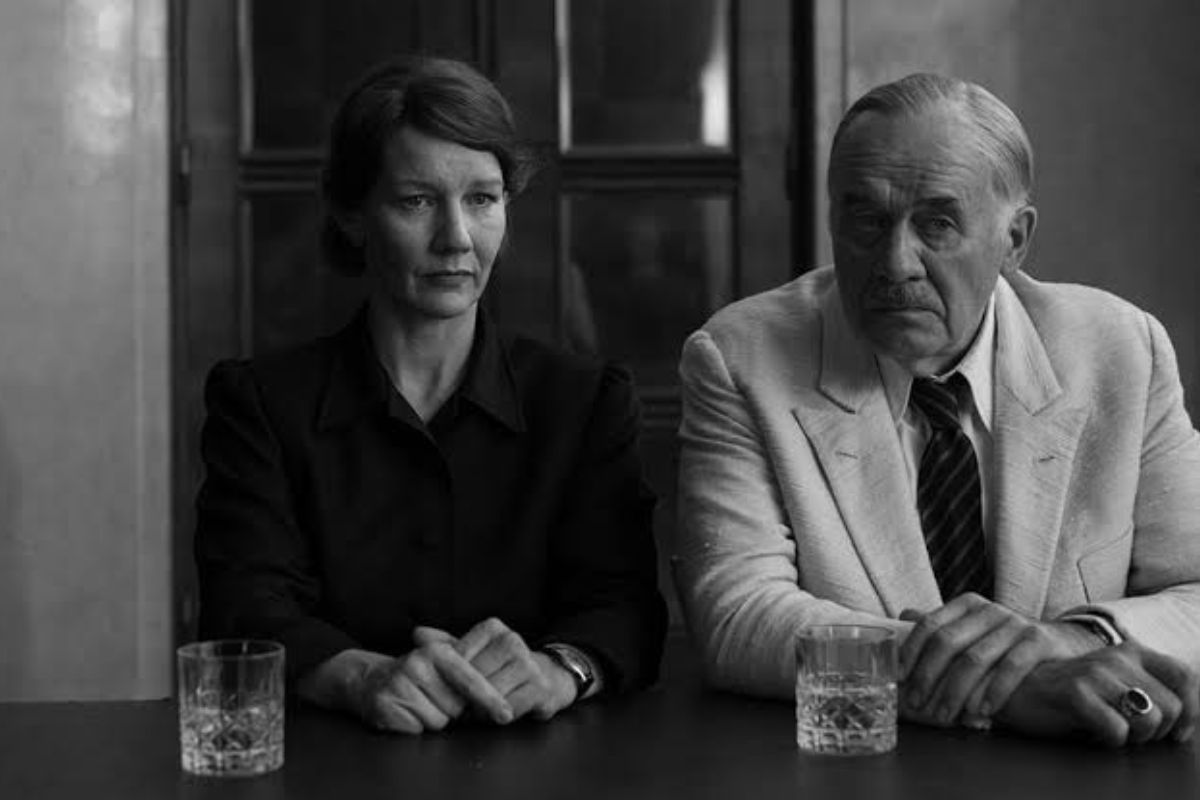
The renowned Polish director Paweł Pawlikowski presented his latest film Fatherland in the main competition of the 79th Cannes Film Festival. Pawlikowski had previously won the Oscar for Ida and then took home Best Director at Cannes for Cold war in 2018, so anticipation for his newest film was immense, not only because of those accolades, but because he is a filmmaker with a unique style and vision.
With Fatherland, Pawlikowski returns once again to the era of World War II and its aftermath. The film follows the German novelist and writer Thomas Mann and his daughter Erika after their return from exile in the United States to Germany in 1949, following the defeat of the Nazis and the end of the war.
So what does Pawlikowski tell us about Germany through this journey? How can the film be seen within a continuous thread alongside his previous two works? And most importantly: what remains of the meaning of the word itself, and of art?
Nazism Unremoved, a New Fascism
The film opens with what is perhaps its strongest scene: a phone call between “Klaus,” Thomas Mann’s son living in France, and his sister Erika. We witness the entire conversation from Klaus’s side alone, played with remarkable precision by August Diehl.
Through this scene, and through a static frame, we come to understand Klaus’s profound despair toward Germany. He refuses to join his father and sister on their journey. He describes Germany as a vile country inhabited by a vile people, then says that perhaps the best solution would be for all Germans to kill themselves, just as Hitler, Hermann Göring, and the rest of the Nazi leadership did.
This scene serves as Pawlikowski’s gateway into the ugly world we encounter in postwar Germany. The father and daughter begin their journey in West Germany, under Allied rule, in what is supposed to be a “new” Germany. Yet Nazism appears entirely untouched, having merely changed its outer clothing.
At a reception held in honor of her father, Erika meets her ex-husband. Through their conversation, we realize he had been a prominent actor in Nazi propaganda films. He explains that he had been forced into it, and continues living an entirely ordinary life, untouched by consequence.
From her hotel window, Erika hears drunken German youths singing a Nazi song about raping Polish women on the road to war. Erika’s screams and slaps in those scenes feel like punches thrown into the air, without any real effect.
When the father and daughter later travel to Weimar, in the Soviet-controlled half of Germany, fascism becomes classical and explicit. The Nazi flag has simply been replaced with new slogans. Pawlikowski once again displays extraordinary visual mastery through recurring hierarchical compositions gathering groups of people, some children, some soldiers, all worshipping the power and authority of the state. This part of the film exists in the same world as his previous film Cold War: folk music, choir songs, and matching uniforms.
Journey and Death
Pawlikowski’s three films (Ida, Cold War, and Fatherland) share the fact that they revolve around journeys undertaken by people in the aftermath of World War II, in a black and white world. Every journey begins with doubt in the possibility of a new meaning: a new life for the nun outside the convent in Ida, a freer life for lovers in a Cold War, and a new Germany after the fall of Nazism in Fatherland.
The result, in all three cases, is despair and death.
Death appears as spiritual salvation, as a means of escape, and as an expression of the failure of all attempts at change. Pawlikowski’s films seem entirely burdened by a pessimistic vision of a world in which everyone carries the guilt of being unable to change what happened.
“Do You Know the Meaning of the Word?” … Nothing
The danger of Fatherland lies in how closely it mirrors the Germany of today: complete complicity in supporting a genocide in Gaza, claims of innocence regarding antisemitism, the shifting of guilt onto immigrants, and above all, endless rhetorical games by the majority to justify all of it.
The film places the Nobel Prize winning German writer Thomas Mann at the center of the story. He believes he can create a new Germany through his words, through his writings and his readings of Goethe. But he becomes nothing more than a performer of ineffective noise. He is invited to deliver speeches that receive applause within the backdrop of a state in which nothing has truly changed.
Literature, art, and the word itself become tools of entertainment, tools of distraction with no effect, and no meaning.