
Published: : May 11, 2026, 12:40 PM
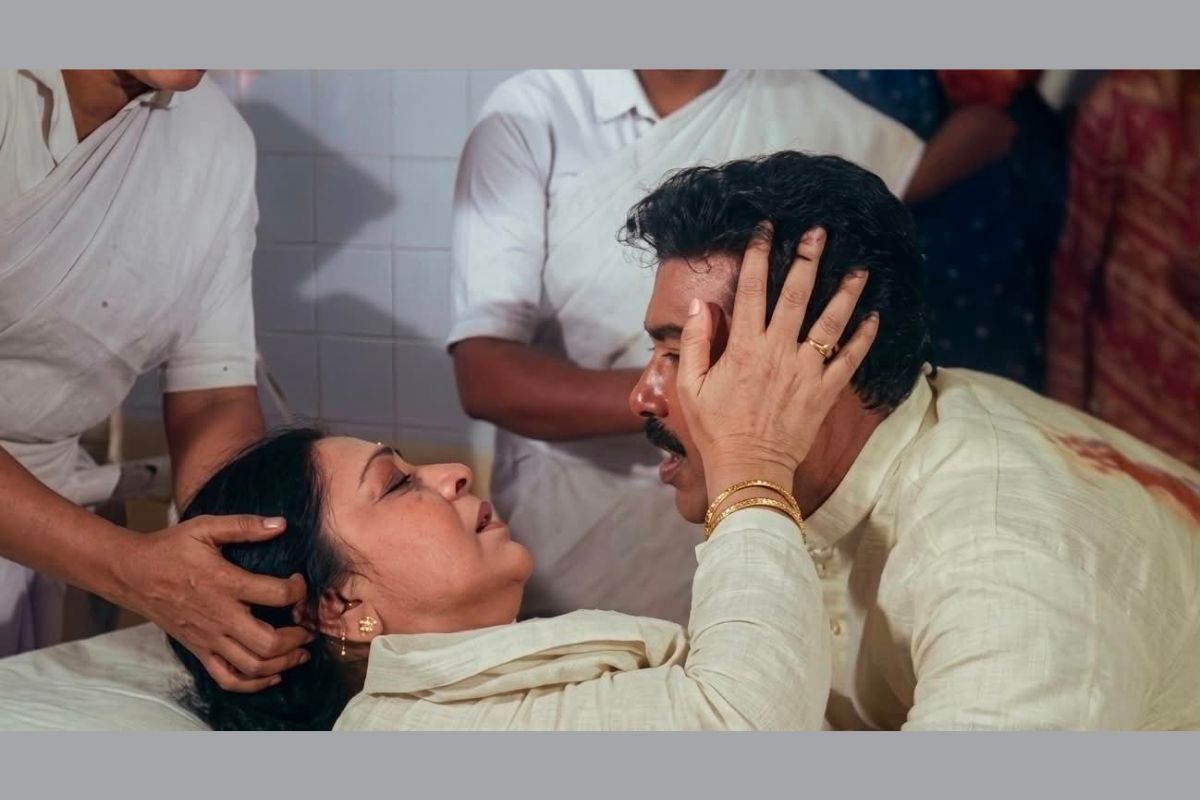
I want to tell the story of a Bangladeshi gangster. A feared man. A killer. A man many would call a psychopath. One day his mother asked one of his men to bring “some fruit.” She did not mention apples, bananas, or oranges. So Badsha bought every fruit in the shop and brought them all home. The story is absurd, but it tells us everything we need to know about the world of Ammajan. In this film, love is never simple. It is excessive, possessive, and often destructive. Badsha, played by Manna, loves his mother with such intensity that he cannot see her as an ordinary human being. To him, she is not a woman with her own desires, fears, and contradictions. She is an absolute idea, a sacred figure who must be protected at any cost. That love gives the film its emotional force, but it also reveals its deepest contradiction.
The central event of the film takes place when Badsha is still a boy. He witnesses his mother, played by Shabnam, being raped. This moment freezes his life. He grows up unable to erase the image from his mind. The trauma shapes his entire personality. Whenever he hears about a rape, he hunts down the rapist and kills him. In this sense, Badsha is less a conventional hero than a psychologically broken man. He is trying to destroy, again and again, the memory that destroyed him. At the same time, he lives in constant fear that his mother will take her own life. He surrounds her with people, keeps watch over her, and tries to make her happy. His violence becomes a strange gift. By killing rapists, he believes he is offering her justice and revenge. But what he is really doing is trying to heal a wound that cannot be healed. His devotion becomes a form of control, and his care becomes a prison.
This is where the film becomes more interesting than it first appears. Ammajan looks at women through two opposing but equally limiting ideas. On one side, women are treated as objects to be violated and consumed. On the other, they are elevated into pure, sacred figures. Both positions come from the same patriarchal imagination. In both cases, women are turned into symbols rather than recognized as full human beings. The mother in this film is the clearest example. She has no personal name. She is simply “Badsha’s mother.” Her identity is entirely defined by her relationship to her son. She is glorified as Ammajan, the eternal mother, but this glorification also traps her. She is allowed to embody mercy, sacrifice, and suffering, but she is not allowed to exist outside that role. If she were to become anything more than a mother, the ideal would collapse. This is the paradox at the center of the film: the woman is worshipped, but she is not free.
The film also raises a larger question about honor. In South Asian culture, honor is often attached to women, yet it is usually controlled by men, by fathers, husbands, and sons. Once a woman becomes the bearer of family honor, she is placed on a pedestal. That pedestal appears noble, but it is also a trap. Ammajan understands the emotional power of this idea, but it also shows its limits. What happened to Badsha’s mother is not simply a loss of honor. It is a profound injustice for which there is no true compensation. Killing the rapist does not restore what was taken. Revenge cannot erase trauma. The wound remains. This is why the film feels so tragic. Badsha cannot move forward because he is trying to solve something that has no final solution. In the film’s moving conclusion, he dies in his mother’s lap, returning to the only place where he ever felt safe. It is a poetic image, but also a deeply sad one. The son who dedicated his life to protecting his mother ultimately becomes a child again, seeking comfort rather than closure.
Director Kazi Hayat does not offer an intellectual solution to this dilemma, and perhaps no solution is possible. A film does not need to answer every question it raises. Sometimes its power lies in the emotions and images it leaves behind. Yet Ammajan also reflects a broader tendency in Bangladeshi cinema. In trying to preserve moral purity, these films often rely on scenes of violation to justify male revenge. The result is a cycle in which obscenity becomes necessary in order to prove virtue. Even so, the emotional achievement of the film is undeniable. Shabnam’s performance gives real human weight to what might otherwise have remained a mere symbol. Her trembling breath, haunted eyes, and fragile silence communicate a lifetime of pain. She may be called only Ammajan, but through Shabnam’s performance she becomes more than an emblem. She becomes a deeply wounded woman. That is why the film continues to resonate. Beneath its melodrama and contradictions lies a raw and sincere portrait of grief, devotion, and the impossible desire to undo the past.

-20260603051450.jpg)