
Published: : September 1, 2026, 10:47 PM
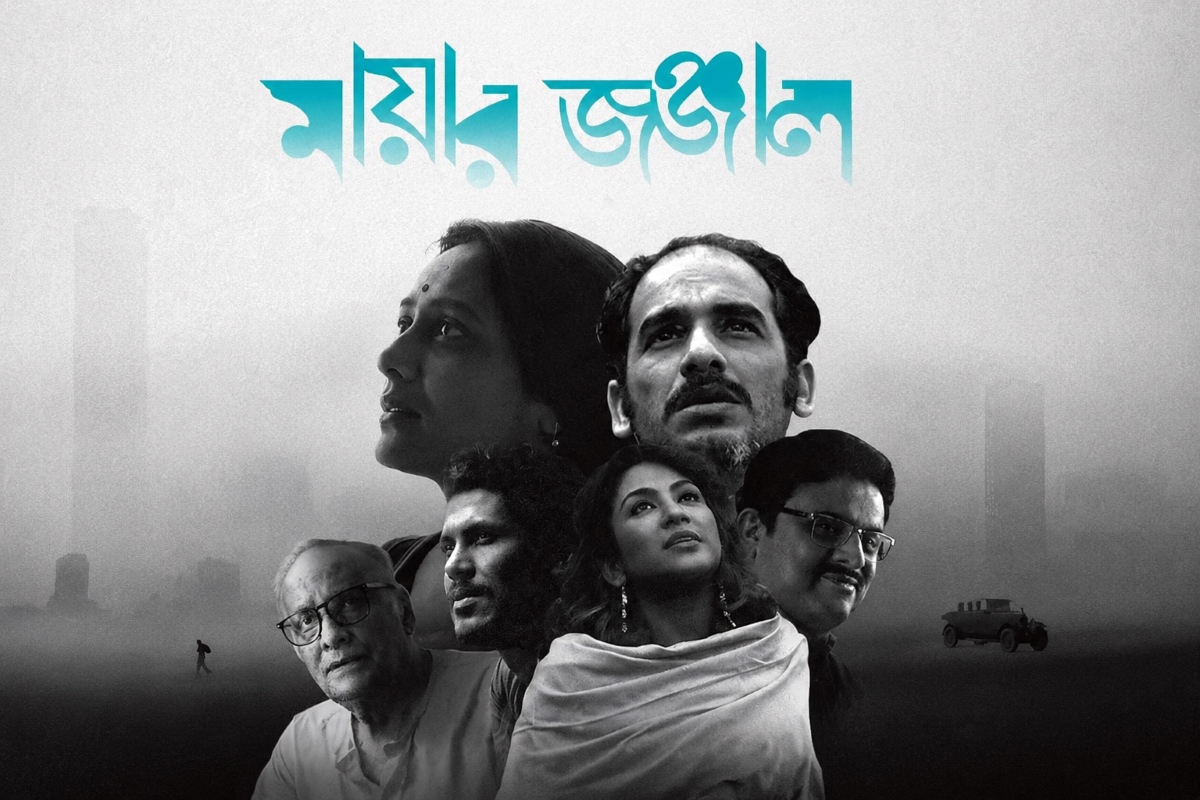
Legendary Bengali writer Manik Bandyopadhyay’s two short stories, Bishakto Prem (Poisonous Love) and Subala, inspired the film Debris of Desire (Mayar Jonjal). In the movie, two stories run parallelly and start and end in the same place with a similar result. It is a story of day-to-day lower-middle-class life in present-day Kolkata. The same people who we see or may know around us. They are everyday people, struggling for survival, earning money in different ways to secure their future. The filmmaker Indranil Roychowdhury has been working in the film industry with sensitive subjects in Kolkata. His 2017 film Bhalobashar Shohor (The City of Love) was appreciated by audiences, both online and offline. In the Dhaka International Film Festival 2022, Mayar Janjal won the Best Screenplay award by the jury in the Asian Film Competition section. The whole film is from the perspective of lower-middle-class people, which is not a common approach in mainstream Indian subcontinent cinema. That is why this film can make middle-class and upper-middle-class audiences uncomfortable. The characters are ordinary people who work as maids, drivers, or in courier services in our cities. They are part of our everyday lives, but we often ignore their human struggles. Most of them are treated like machines or animals, expected to perform the same work every day without opinions or desires. We may not even bother to talk about or think about their lives.
There is another parallel story where Beauty, a Bangladeshi woman, was brought to Kolkata by her husband and later forced into sex work. In Kolkata, she meets Satya (Shohel Mondol), and they find themselves as friends who can share their past and future. But at the end of the film, we find both Satya and Chandu (Ritwick Chakraborty) trapped in the same situation. Many may see their actions as crimes, but does the social structure, society, and system have no responsibility in creating such circumstances? Are they also not responsible in some way? Who pushes them towards such a life? How does money become the source of everything? Are good and bad, human nature, and survival all connected with money? Mayar Jonjal raises these questions in the minds of the audience. Chandu does not even care about what he is carrying as long as it supports his family’s needs and helps his son study in a better school. Soma (Aupee Karim) also has no option but to work as a full-time maid in a high-end condominium in the city. They are all running for something they believe they need to survive and to give their children a better life. Nothing beyond this can enter their thoughts. There is not even an iota of peace or happiness left in their lives. Still, they find themselves among the debris. Their desire is not an unnecessary desire, but only the minimum requirement to live and to hold on to some hope.
Ritwick Chakraborty is already on the way to becoming one of the legendary actors of Bangla cinema. No matter which character he plays, it becomes difficult to separate him from that character. Aupee Karim is one of the famous actresses from Bangladesh, who was active on stage since her childhood. After more than 15 years, her return to the big screen is important news for us. A character like Soma is beautifully portrayed and shows her strength. The representation of Bengali middle-class thoughts is masterfully presented onscreen by Bratya Basu. With few words, subtle expressions, and proper dialogue delivery, he makes the middle-class audience rethink themselves. When the police find Chandu and take him to jail, I strongly believe this is the best way the film could be completed. As this is a story that will continue to appear, this will keep happening for many more years. The film should stop at that point because the cycle will continue.
This story will repeat year after year. The director does not want to provide a solution. He wants to show us what is happening and what will continue to happen while many of us ignore it or are unable to see what we need to see. So just watch the film and notice what you may not have noticed before. This film will make us observe what we deliberately do not want to observe. It will make us watch what we deliberately do not want to watch. The film makes us think about something that we deliberately avoid thinking about. The main character of this film is the society we live in itself. Such a society and such imbalance can continue producing characters like Satya, Beauty, Soma, and Chandu. They are everywhere. They are being born every day in different forms, through different professions and different circumstances. That is why it becomes a never-ending story. The director also makes his final shot in the same way because the story demands it. The audience begins to watch the real cinema, the cinema of life around them, which starts after the projection ends and the lights come on for the audience at the Bangladesh Shilpakala Academy's Chitrashala Auditorium during the Dhaka International Film Festival 2022.
Send your reviews, articles, and pitches for Cut to Cinema to [email protected]. Check out our submission guidelines for more details.