
Published: : July 3, 2026, 12:48 PM
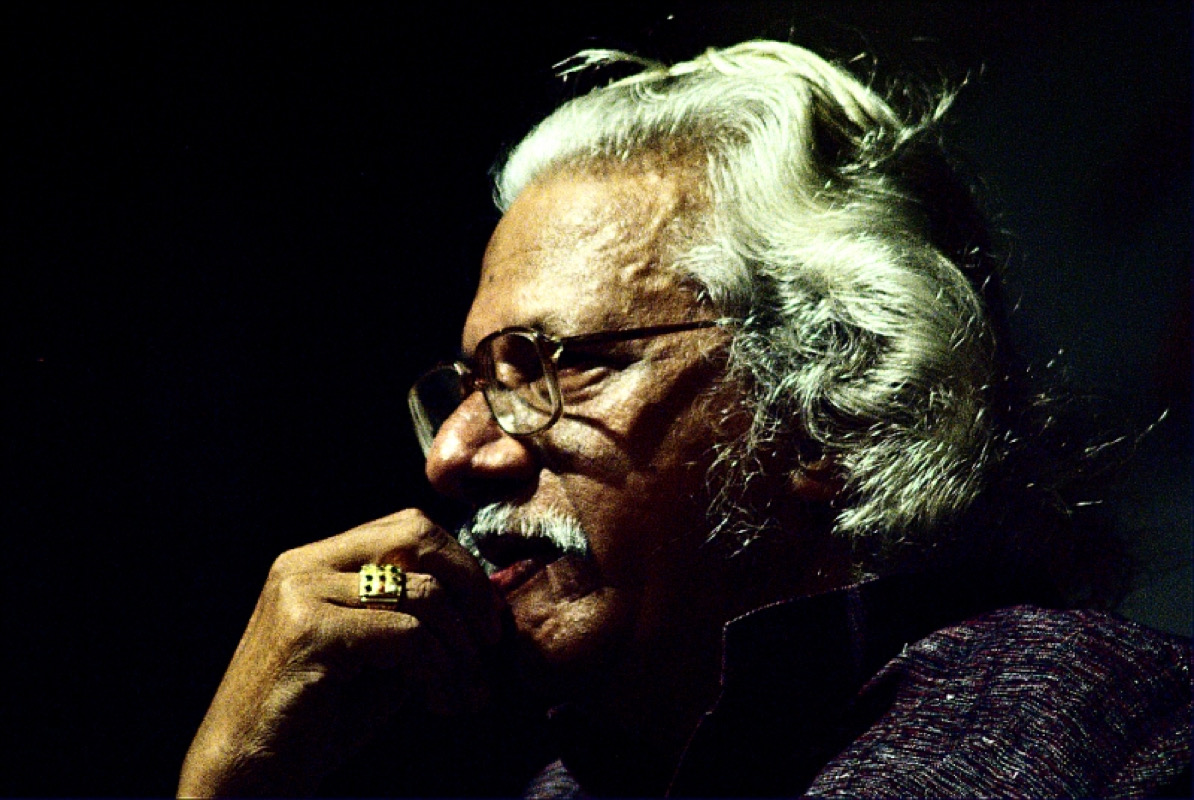
Adoor Gopalakrishnan holds a very special place in the history of Malayalam cinema. He wasn’t the only person behind the Malayalam New Wave, but he played a major role in shaping its voice, its direction and its lasting identity. Through his films, his efforts in building institutions and his thoughtful approach to cinema, Adoor helped change how Malayalam films could be made, experienced and understood.
Adoor Gopalakrishnan came from Kerala’s cultural world. He was born in 1941 into a family that supported Kathakali and other classical performing arts. He began acting on the amateur stage when he was eight and later wrote and directed plays as a student. He studied economics, political science and public administration at Gandhigram Rural University and graduated in 1960. After working as a government statistical investigator, he left that job to study cinema at the Film Institute of India in Pune. He graduated in 1965 with specialisation in screenplay writing and advanced film direction.
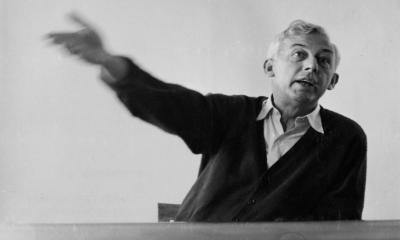
Film school changed Adoor’s understanding of cinema. He learned to treat cinema as a language made from images, sound, movement, editing, silence and rhythm. Ritwik Ghatak, who served as a professor in direction and vice-principal at the institute, strongly shaped this learning environment. Adoor later described how Ghatak explained scenes through shots, music and visual choices rather than through theory alone. This training helped Adoor move away from theatre-based storytelling and develop a cinematic style rooted in observation.
After returning to Kerala, Adoor did not wait for the commercial industry to accept him. In 1965, he helped start the Chitralekha Film Society in Thiruvananthapuram and also helped form a film cooperative. Adoor himself later confirmed that the film society and the cooperative both began in 1965. These institutions screened serious Indian and international films, encouraged discussion and supported non-commercial filmmaking. They helped create the audience and production culture that Malayalam parallel cinema needed.
The Malayalam New Wave belonged to the wider Indian parallel-cinema movement, but it developed its own character in Kerala. Adoor Gopalakrishnan, G. Aravindan and John Abraham created a new idiom in Malayalam cinema. They did not follow one common formula. Adoor worked through controlled composition, psychological detail and social observation. Aravindan often used a more poetic and philosophical style. John Abraham brought radical politics and collective energy into filmmaking. Together, they proved that Malayalam cinema could matter without depending on stars, songs, melodrama or predictable emotional resolutions.
Swayamvaram made this new direction clear. The film follows Vishwam and Sita, played by Madhu and Sharada, after they leave their families and try to build an independent life together. The opening bus journey does not explain everything through dialogue. It observes faces, gestures and movement. The film then follows the couple through unemployment, financial pressure, illness and emotional strain. Adoor does not turn their suffering into loud melodrama. He shows it through rooms, routines, silence and small changes in behaviour.
Swayamvaram also changed the technical language of Malayalam cinema. The film used outdoor locations and synchronised sound at a time when studio-based production dominated the industry. Adoor carried the camera and Nagra recorder outside the studio and used real locations and live sound to make the world of the film feel immediate and believable. This gave the film a texture that commercial Malayalam films of the period rarely achieved.
The film did not become a major public success immediately. Its first theatrical response was weak. National recognition changed its position. At the National Film Awards for films released in 1972, Swayamvaram won Best Feature Film, Best Director for Adoor Gopalakrishnan, Best Actress for Sharada and Best Cinematography for Mankada Ravi Varma. After this recognition, public interest increased and the film returned to theatres with stronger response.
It would be inaccurate to say that realism began in Malayalam cinema with Swayamvaram. Earlier Malayalam films had also dealt with ordinary life and serious social themes. But Swayamvaram brought several important changes together: cooperative production, location shooting, synchronised sound, restrained acting, minimal music, social observation and national recognition. That combination made the film a decisive moment in the Malayalam New Wave.
Adoor’s later films deepened this achievement. Kodiyettam studied a careless man’s movement towards maturity. Elippathayam examined the decay of the feudal system through a collapsing household. Mukhamukham questioned political memory and the decline of communist idealism in Kerala. Anantaram explored unstable narration and divided identity. Mathilukal, based on Vaikom Muhammad Basheer’s work, created a love story between two prisoners separated by a wall. Vidheyan examined domination, fear and servitude. These films show Adoor’s lasting interest in individuals trapped inside family, class, property, politics and inherited social habits.
Adoor’s cinema works through restraint, but that restraint does not mean emptiness. A pause, a doorway, a recurring sound or a character’s movement through a room often carries the emotional weight of a scene. His films do not tell viewers what to feel at every moment. They ask viewers to watch carefully, connect details and understand how social forces shape private lives. This method gives his films their moral seriousness.
The Malayalam New Wave grew from Kerala’s larger culture of literature, theatre, political debate, public education and film-society activity. Many people helped create it. Adoor’s role, however, remains central. Through Chitralekha, he helped build the conditions for serious film culture in Kerala. Through Swayamvaram, he showed what an independent Malayalam film could look and sound like. Through his later work, he developed a cinema of discipline, social insight and moral complexity. He did not create the Malayalam New Wave alone, but he gave it one of its clearest beginnings.