
Published: : November 3, 2026, 11:22 PM
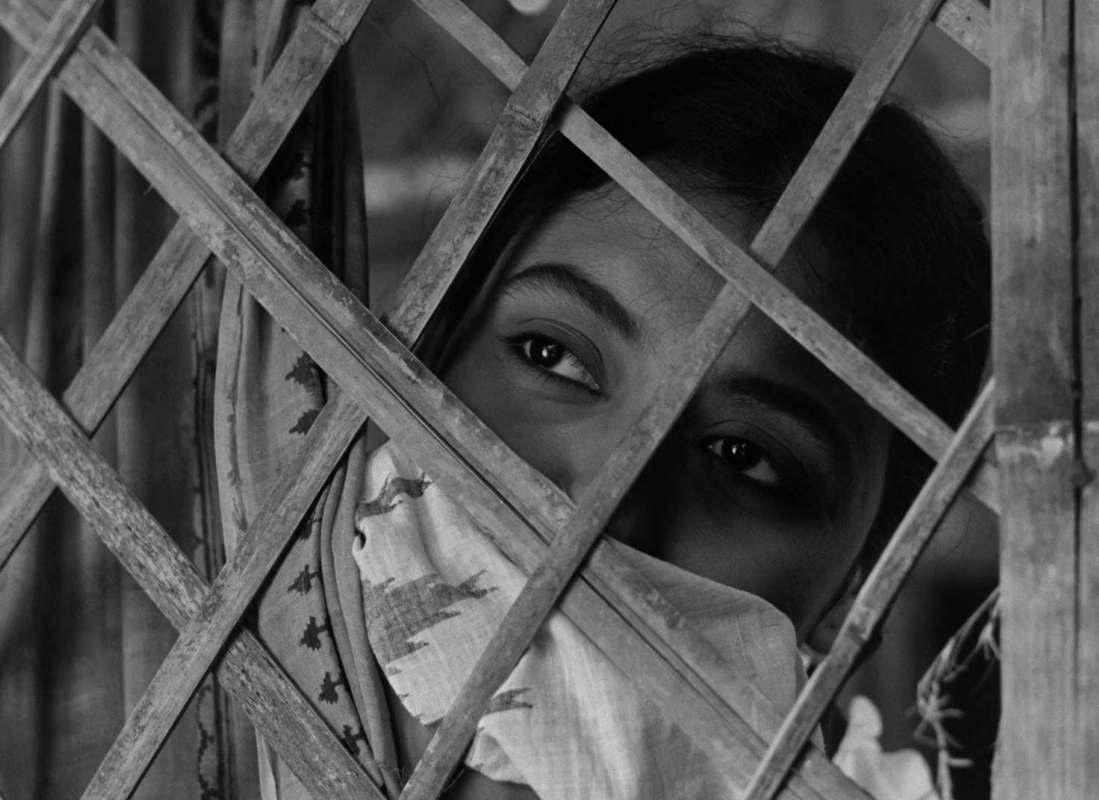
There is a particular kind of loneliness that comes from being needed by everyone but understood by no one. It is the loneliness of those who become so important to their families that their own desires gradually cease to matter. In Ritwik Ghatak’s Meghe Dhaka Tara (1960), Nita lives with this loneliness. She is a daughter, a sister, a lover and, above all, the person who keeps her family alive. Yet the more she gives, the less she seems to belong to herself. Through her life, Ghatak asks an uncomfortable question: what happens when a woman’s value within her family depends on how much she can sacrifice?
Set in the aftermath of the 1947 Partition of Bengal, Meghe Dhaka Tara follows a refugee family struggling to survive near Calcutta. Nita, played by Supriya Choudhury, becomes the family’s principal earner while continuing her studies. Her elder brother Shankar dreams of becoming a classical singer, her younger siblings pursue their own futures and her parents depend increasingly on her income. Nita supports them without demanding much in return. But her generosity becomes a trap. What begins as an act of responsibility slowly turns into an expectation she cannot escape.
Ghatak places this family drama within a larger historical tragedy. For him, Partition was not simply the division of territory; it was the destruction of a familiar world. Film scholar Ira Bhaskar explains that Ghatak’s cinema repeatedly returns to the emotional and cultural losses experienced by displaced Bengali communities (Bhaskar). In Meghe Dhaka Tara, these losses enter the household itself. Poverty changes how family members treat one another and survival begins to take priority over affection. Nita becomes indispensable because everyone needs what she earns, but this dependence rarely develops into genuine concern for her future.
This contradiction lies at the centre of the film’s feminist argument. Nita earns money, yet she cannot exercise meaningful control over her life. She carries responsibilities usually associated with the male breadwinner while remaining bound by expectations of feminine obedience and sacrifice. Patriarchy, in this context, operates not simply through the authority of men but through a family structure that places a woman’s needs below those of everyone else. Nita’s independence is therefore painfully incomplete. She can work for others, but she is not free to live for herself.
Her situation also becomes clearer through social reproduction theory. Feminist scholar Tithi Bhattacharya describes social reproduction as the work required to create, sustain and care for human life (Bhattacharya). This work often takes place within families, where its value is easily overlooked. Nita’s contribution extends beyond her income. She provides security, support and the possibility of a better future for everyone around her. Yet these contributions do not give her greater freedom. Instead, her family’s dependence grows. Her labour sustains their lives while gradually consuming her own.
Perhaps the film’s most unsettling relationship is between Nita and her mother. Worried that Nita’s marriage to Sanat would endanger the family’s finances, her mother begins to regard her daughter’s happiness as a threat to their survival. Ghatak communicates this anxiety through an extraordinary domestic image: rice boiling on the stove, its steam surrounding the mother’s face. As Bhaskar observes, this image connects the mother’s actions to her fear of economic insecurity (Bhaskar). She is not merely an unkind mother; she is also a frightened refugee struggling to protect her household. Yet her fear produces a cruel decision. To preserve the family, she is willing to sacrifice the daughter who sustains it.
Nita’s relationship with Sanat reveals another dimension of this injustice. She hopes that love might offer a future beyond her family’s demands. Instead, Sanat eventually turns towards her younger sister, Geeta. When Nita discovers the betrayal, Ghatak does not depend on dialogue to communicate her pain. As she descends the stairs, a sharp, whip-like sound tears through the soundtrack. The effect is startling. Ghatak makes an emotional wound audible, turning a private moment of heartbreak into an experience of violence. Her silence is as important as the sound: even in betrayal, Nita struggles to claim space for her own suffering.
Shankar, meanwhile, offers a more complicated picture of familial love. Unlike others, he shares a genuine emotional bond with Nita. Yet his freedom to pursue music is partly made possible by her earnings. He can imagine a future built around his talent because she continues supporting the family. Their relationship shows that exploitation does not always arise from an absence of affection. People can sincerely love someone while benefiting from arrangements that limit that person’s freedom. Shankar’s later concern for Nita makes this contradiction more painful, not less.
This is where the film also invites a Marxist reading. Economic hardship changes the relationships within the family, making Nita’s labour essential to everyone else’s survival. In their study of Ghatak’s film, Eşref Akmeşe and Alper Erçetingöz examine how paid work, unpaid care, and physical exhaustion connect gendered exploitation with the family’s material circumstances (Akmeşe and Erçetingöz). Nita is not exploited by an employer alone. Her own household becomes a place where labour is demanded and sacrifice is treated as a natural duty. Ghatak exposes how economic inequality can survive within relationships that appear to be built on love.
Yet Ghatak does not reduce Nita to a victim of poverty. He gives her suffering a cultural and symbolic meaning through the figure of the Mother Goddess. Nita sustains her family like a nurturing divine presence, but those who benefit from her care fail to protect her. Bhaskar connects this symbolism to the film’s criticism of a culture that celebrates feminine divinity while denying ordinary women the freedom to live fully (Bhaskar). The contradiction is striking: the woman who gives life and security to others is gradually deprived of both.
The film’s emotional climax arrives when Nita, weakened by illness and separated from her family, cries out to Shankar: “Dada, ami banchte chai”—Brother, I want to live. By this point, the words carry the weight of everything she has lost. She has been a provider, a daughter, and a sister, but she has rarely been allowed to exist simply as Nita. Her cry is therefore more than a plea for survival. It is a demand to be recognized as a human being with desires of her own. Ghatak lets her voice echo across the mountains, giving her private suffering an almost unbearable scale.
The final image of another working woman following Nita’s familiar path refuses to leave the tragedy in the past. It suggests that Nita’s experience belongs to a larger pattern in which women’s sacrifices are accepted while their individuality remains overlooked.
More than six decades later, Meghe Dhaka Tara continues to disturb because its central injustice is so recognizable. Families often speak proudly of those who give everything for others, but rarely ask what those people have been forced to give up. Ghatak does not ask us simply to admire Nita's sacrifice. He asks us to question the conditions that made it necessary. Nita was not entirely unloved. Her tragedy was that love, when measured against her usefulness, so often came second.
She wanted to live. The people around her needed her to provide. Between those two desires lies the enduring heartbreak of Meghe Dhaka Tara.
Sanjida Parven Noishi is a student of Bangla Literature at the University of Dhaka.
Send your reviews, articles, and pitches for Cut to Cinema to [email protected]. Check out our submission guidelines for more details.