Published: : April 6, 2026, 10:42 PM
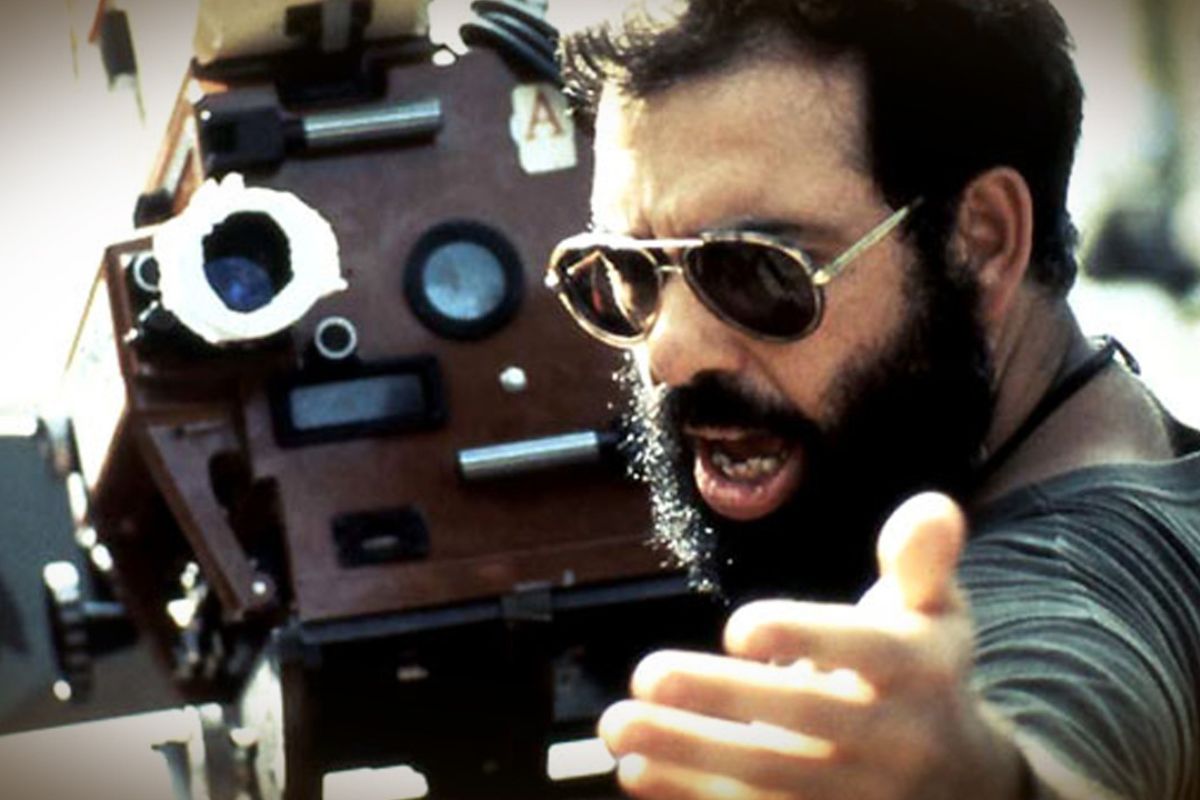
“When I was sixteen or seventeen, I wanted to be a writer. I wanted to be a playwright. But everything I wrote, I thought was weak. And I can remember falling asleep in tears because I had no talent the way I wanted to have.”
―Francis Ford Coppola
Francis Ford Coppola represents the ultimate gamble in cinema. He is a filmmaker who has risked his personal fortune, his health, and his reputation to ensure that his vision remained uncompromised. To look at his career is to see a man who refused to be a mere employee of a studio. Instead, he treated the movie set as a site of revolution. He moved away from the safe, stage-bound traditions of old Hollywood and brought a gritty, operatic realism to the medium. He did not just direct movies; he built worlds.
Whether it was the dark, wood-paneled rooms of the Corleone estate or the psychedelic nightmare of the Vietnam jungle, Coppola understood that the environment of a film must breathe as much as the actors do. He is the patriarch of a movement that proved the director is the true author of the image. His work is defined by a restless search for grander themes, deeper human truths, and the courage to fail while chasing something magnificent.
It is impossible to discuss his legacy without starting with The Godfather. When he took the project, he was a young director under immense pressure. The studio wanted a cheap gangster movie. Coppola wanted a tragedy about a family. By demanding a somber, shadow-heavy style and insisting on actors like Marlon Brando, he changed the genre forever. In this film, Coppola mastered the art of parallel editing. The famous baptism sequence is the greatest example of this. By cutting between the holy ritual of a child’s initiation and the brutal assassination of rivals, Coppola made a profound statement about the duality of power. He showed that blood is shed to keep the family sacred. This was not just a story about crime. It was a story about the American Dream and the moral cost of protecting a legacy.
Coppola’s greatest achievement was his ability to control how an audience understands morality. Usually, we hate villains because they are distant from us. Coppola bridged this distance by keeping the camera almost exclusively within the Corleone world. By rarely showing the perspective of the law, he forced the audience to adopt the family’s viewpoint. If the only order we see comes from Vito Corleone, we begin to value his version of order over the chaos of the outside world.
He also used aesthetic seduction to make us love these characters. The deep shadows and golden hues gave the characters a regal quality. When a man is framed with the dignity of a king, we instinctively treat him with respect. The music by Nino Rota is not dark or menacing; it is melancholic and romantic. The music tells us that these men are part of a grand, sweeping history rather than a simple police report. We do not love them because they are good. We love them because Coppola made us feel like part of their family.
If The Godfather proved Coppola was a master of structure, Apocalypse Now proved he was a force of nature. The production of the film is legendary for its chaos. Sets were destroyed by typhoons and the budget spiraled out of control. Yet, out of this madness, Coppola emerged with a film that captured the psychological horror of war better than any documentary ever could. He used cinema as a sensory experience. The use of sound, the heavy orange smoke, and the lingering shots of the river created a feeling of drifting into the unconscious mind. He took the themes of Joseph Conrad’s Heart of Darkness and moved them to Vietnam, showing that war is not just a physical conflict but a spiritual collapse. Coppola’s willingness to stay in the jungle until he found the right ending shows his devotion to the truth of an image. He was not interested in being efficient; he was interested in being right.
Coppola’s contribution to film theory often focuses on his use of time and rhythm. He treated the editing room as a laboratory. In The Conversation, he explored the ethics of technology and privacy through the meticulous assembly of sound fragments. The film is a masterclass in tension, showing how a single line of dialogue can change its meaning depending on how it is heard. He was also a pioneer of new technology. Long before digital filmmaking became the standard, Coppola was experimenting with new workflows at his studio, American Zoetrope. He wanted to give directors more control over the creative process. He envisioned a future where filmmaking was more like painting or composing music, where the artist could manipulate the frame with immediate feedback. Although he faced financial ruin for some of these ambitions, the industry eventually followed exactly where he led.
What makes Coppola truly unique is his vulnerability. Many directors become more cautious as they age, but Coppola became more experimental. Films like Rumble Fish and One from the Heart show a man bored by traditional storytelling. He played with black-and-white photography, theatrical lighting, and stylized sets. Even his latest projects are funded by his own money because he refuses to let a studio dictate his imagination. For anyone who studies the craft, the lesson of Coppola is clear: cinema is an art of decisions. Every frame in a Coppola film is there because he fought for it. He taught us that a director is not just a manager of a crew, but an author who writes with light and sound. He proved that a movie can be a massive success while still being a deeply personal work of art.
As we look back at his contributions, we should look beyond the awards and the box office numbers. Coppola’s real legacy is the courage he gave to other filmmakers. He showed that it is better to fail while being brave than to succeed by being safe. His career reminds us that the best movies are often the ones that were the hardest to make. Francis Ford Coppola did not just make movies; he defined what a movie could be.