
Published: : August 16, 2026, 04:12 PM
In neighborhood cable rooms across South Asia, a rented VCD often mattered as much to Titanic’s legacy as any multiplex screen. For many millennials across the region and much of the Global South, Titanic (1997) was not remembered primarily as a theatrical event. Multiplex distribution was still scarce, and many younger viewers encountered the film later through television and disc culture. As the early-2000s satellite boom took hold, Titanic became an inescapable presence on regional television, returning repeatedly through movie channels and holiday programming.
Alongside these broadcasts, an informal network of local cable operators brought the epic into everyday homes. In many suburbs, neighborhood control rooms ran rented VCDs or VHS tapes through analog cable loops. Because conservative living rooms demanded modesty, these broadcasts were often heavily edited. Mainstream television versions trimmed nudity and other material considered unsuitable for family viewing, while local operators could be cruder, either cutting the tape outright or manually fast-forwarding through scenes. These rough, family-safe versions let entire households watch Titanic’s disaster unfold together. Thus, the film settled into regional television folklore.
Much of this quiet afterlife unfolded outside Hollywood’s usual box-office measurements. Whatever attention the original theatrical release received, television broadcasts, home-video circulation and unofficial VCD culture gave Titanic another life in non-English-speaking living rooms—one that could not be measured simply by ticket sales.
Celine Dion’s “My Heart Will Go On” detached itself from the film almost entirely, playing everywhere from street-corner cassette stalls to wedding banquet halls. For millennials, then, Titanic survives less as an individual memory than as a shared one—something a whole room watched together, rather than a classic enjoyed alone.
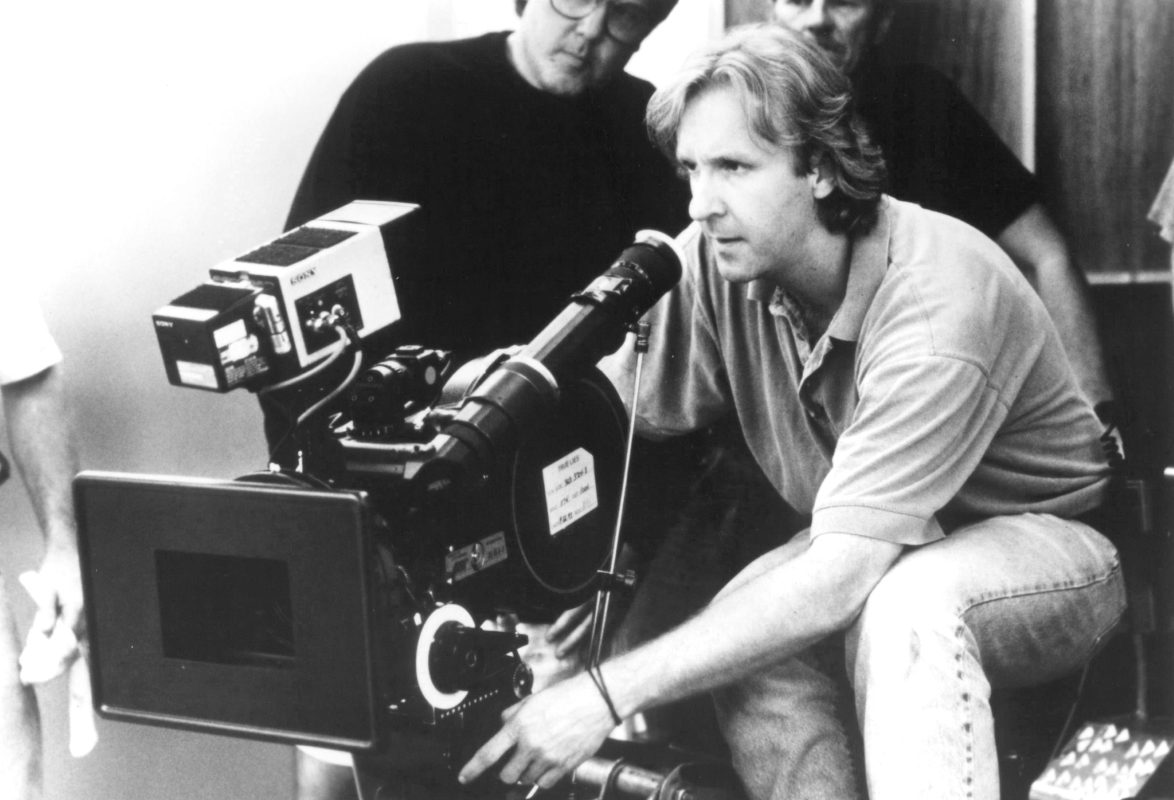
Cameron's filmography includes other generational touchstones—The Terminator (1984), Aliens (1986), The Abyss (1989), True Lies (1994). This piece isn't wide enough to cover them all. What follows is narrower and more personal: two films, two generations. The next film I want to talk about is the one closest to my heart—Avatar (2009), because my memories are tangled up in it unlike any of his other films.
If Titanic belonged to an era of communal domestic viewing, Avatar asked something different of its audience—total immersion. I felt this shift directly. Avatar was one of my father’s favorite films. He played it on DVD often enough that I must have rewatched it eight or nine times. My cousins and I also spent hours on Gameloft’s Avatar game on a first-generation iPad. We glided through bioluminescent canopies on a screen that made the alien world feel oddly close. For a generation raised on flat, fragmented digital media, the graphics felt startlingly real, at least by the standards of the time. We were slowly getting immersed in the universe of Avatar.
There was a real irony in this. Cameron was pushing hard for large-screen, stereoscopic theatrical presentation at the same time, helping drive cinemas worldwide toward upgraded 3D projection because he believed Pandora was best experienced at scale. Yet millions of us fell for that same universe on a 9.7-inch pane of glass held in our hands. It is a profound memory regardless.
Avatar’s depiction of human industry from a damaged Earth invading Pandora was not just another science-fiction story. The film imagined Pandora as an interconnected living system and framed the Na’vi’s resistance around Indigenous stewardship of the land. That fiction soon fed back into real-world activism. The Dongria Kondh struggle against mining in India was publicly compared to Avatar, while Cameron himself became directly involved in protests against the Belo Monte dam project in the Brazilian Amazon, where the film became an obvious cultural reference point for the defense of Indigenous land and the natural world.
Where earlier audiences fell for Jack and Rose’s earthly defiance, younger ones fell into the sensory pull of the Na’vi world itself. The uniqueness of Cameron’s four-decade career is that he is Hollywood’s most restless technical experimenter as well as one of its most retro storytellers.
While contemporary franchise filmmaking often drowns in recursive irony and perplexing multiverse lore, Cameron keeps staking historic, studio-breaking budgets on humane stories.
Cameron builds the future one film at a time, but what survives is never the technology or the story alone. It is the room you were sitting in when you first profoundly felt it. Strip away the studio-breaking budgets, and his filmography rests on one constant—emotional simplicity. He turns 72 this August 16th, still portraying the oldest emotions. Feelings over fact, a way back to what we've lost, a crisis that mirrors our own—Cameron has been telling the same story since before I was born. And every time, he finds a new room for someone to sit in and feel it for the first time.
Mohammad Tasawar Islam is a documentary photographer and visual artist based in Dhaka, Bangladesh.
Send your reviews, articles, and pitches for Cut to Cinema to [email protected]. Check out our submission guidelines for more details.