
Published: : July 26, 2026, 01:08 PM
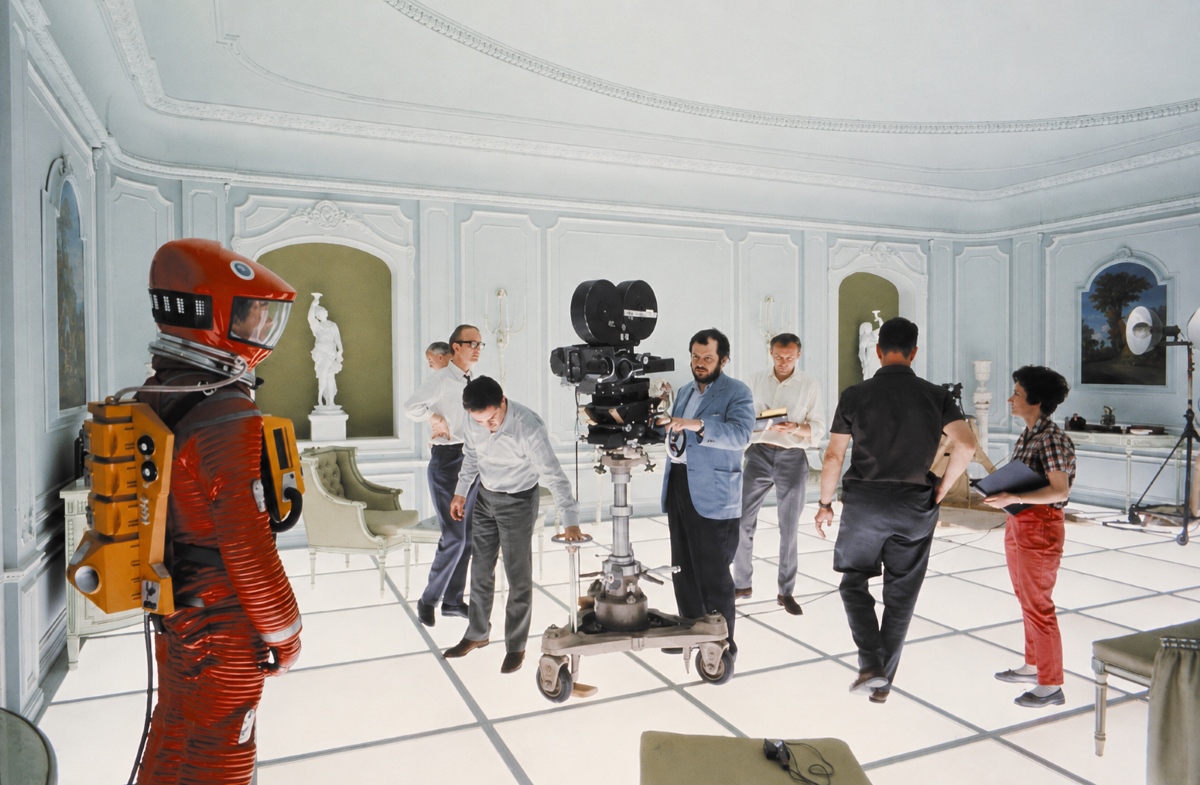
Stanley Kubrick would have turned 98 this July 26, yet his visual choices remain strikingly contemporary. The first film I ever studied closely was The Shining, as my photography mentor suggested that I deep-dive into this film back in 2019, essentially to understand composition and the play of light.
Kubrick's visual journey began at thirteen, when his father handed him a Graflex camera. By sixteen, he had sold his first photograph to Look magazine: a news vendor appearing grief-stricken, surrounded by headlines announcing President Franklin D. Roosevelt’s death. At seventeen, he joined Look as an apprentice photographer and later became one of its youngest staff photographers, capturing boxers, subway commuters, and street life across New York. His 1949 photo essay on middleweight boxer Walter Cartier became the basis for his debut short documentary, Day of the Fight. Working for Look taught Kubrick narrative sequencing through stills, practical problem-solving under ambient light, and complete experimentation through composition.
In Stanley Kubrick: A Life in Pictures, Steven Spielberg observes that while most artists approach a blank canvas with small, delicate pencil strokes, Kubrick conceived his films in large, primary-colored brushstrokes; bold, almost obvious concepts. In Paths of Glory, Spielberg notes, every sequence hammers its point home, yet within each sequence the filmmaking remains delicate, subtle, almost gentle.
Whenever I think about Stanley Kubrick’s work, one particular scene comes to mind: the Grady sisters sequence. The encounter with the Grady sisters in The Shining is a masterclass in spatial terror. Following young Danny on his tricycle, the camera glides at eye level, tracking the rhythmic shift from loud hardwood to silent geometric carpet. Kubrick completely rejects traditional dark horror tropes; the hallway is vast, pristine, and bathed in bright, even light.
As Danny turns the corner, two young girls in matching blue dresses stand dead center at the far vanishing point of a perfectly symmetrical frame. They speak in flat unison: “Come and play with us, Danny. Forever… and ever… and ever.” Kubrick instantly interrupts this quiet geometry with harsh flash cuts of the same corridor drenched in blood and the girls slain on the floor. When Danny uncovers his eyes, the hallway is empty again. The terror relies heavily on strict visual balance, central perspective, and the cold stillness of the frame. It always felt as though every single sequence was designed to give the ultimate experience.
Before Kubrick ever picked up a motion-picture camera, he spent years mastering the still photograph, and the rigorous discipline of the viewfinder never left his filmography. Nearly a century after his birth, what endures is not merely his body of work, but an uncompromising way of seeing.
Kubrick’s mastery lay in his conviction that meaning should exist within the physical boundaries of the frame rather than rely on dialogue. In Dr. Strangelove, the cavernous War Room, a set so strikingly convincing that US President Ronald Reagan reportedly asked to see it upon entering office, used light and architecture to mirror political madness. In A Clockwork Orange, the Korova Milk Bar weaponized furniture into visual ideology, while the Overlook Hotel’s hypnotic carpets in The Shining actively drove the narrative’s psychological collapse. Speaking on his philosophy, Kubrick noted that realistic drama should be a progression of moods and feelings, with explicit meaning emerging only later.
Kubrick approached cinematographic challenges by completely reimagining the craft. To shoot several of Barry Lyndon’s night interior scenes by candlelight, he tracked down three ultra-fast Zeiss Planar 50mm f/0.7 lenses originally developed for NASA’s Apollo program. He had them custom-modified to fit his Mitchell BNC camera, pulling off what many deemed impossible. On set, Kubrick carried his own light meter, at times taking readings personally. His photographic circle was equally telling: he hired legendary crime photographer Arthur “Weegee” Fellig as the set photographer for Dr. Strangelove, and Weegee’s presence on set reportedly influenced Peter Sellers’s accent for the manic title character.
No medium exists in isolation, a reality every artist understands. Kubrick’s vision was constantly fed by adjacent passions. His youth as a chess hustler in Washington Square Park taught him discipline, patience, and the ability to anticipate consequences several moves ahead. His teenage study of jazz drumming instilled an acute sense of rhythmic timing, evident in how seamlessly his cuts sync to classical scores. Meanwhile, his deep study of eighteenth-century painters like Gainsborough and Hogarth transformed Barry Lyndon into a moving art gallery. For Kubrick, these were not disparate hobbies; they were tools designed to sharpen his primary craft.
Kubrick leaves a precise lesson for storytellers: master one discipline so deeply that every other tool bends to its logic. Whether manufacturing artificial illusions or capturing genuine light, force the technical medium to create convincing spatial truth. Trust the physical composition to communicate emotion without relying on verbal explanation.
On the anniversary of his July 26 birthday, I return to that bright, symmetrical corridor in The Shining and think about the thirteen-year-old boy holding his first Graflex in the Bronx. Stanley Kubrick proved that when you master the camera, you have an unlimited capacity to reconstruct a reality that the world may never have witnessed before.
Send your reviews, articles, and pitches for Cut to Cinema to [email protected]. Check out our submission guidelines for more details.