
Published: : July 30, 2026, 12:08 PM
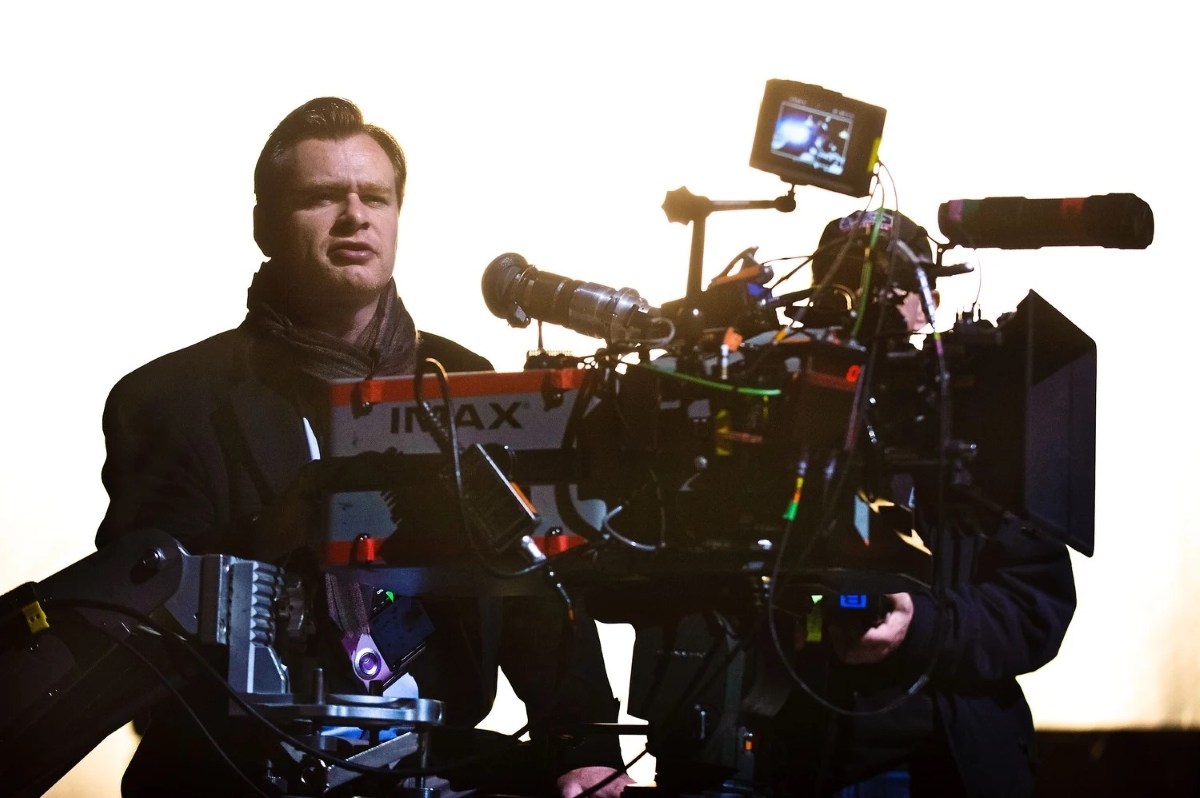
Christopher Nolan remains one of the few contemporary directors whose name alone possesses the pull of a public event. A new release does not simply debut; it incites speculation, critical debate, and fierce audience loyalty long before the initial teaser has finished its first run. This identity as a theatrical essentialist drives his latest feature, The Odyssey (2026). Released on July 17, the film became the first feature shot entirely with IMAX film cameras, representing the most ambitious expression yet of Nolan’s commitment to large-format theatrical exhibition.
From Following (1998) and Memento (2000), Nolan has built a body of work predicated on the belief that cinematic structure can function as a foundational source of drama. He does not simply depict psychological or conceptual boundaries; he compels the audience to inhabit them. The Dark Knight (2008) recast the superhero genre as a sprawling civic crisis, while Inception (2010) turned the subconscious into an overwhelming suspense apparatus. With Interstellar (2014), cosmic scale became an expression of profound grief; in Dunkirk (2017), he minimised dialogue and exposition, allowing intersecting timelines and mounting pressure to drive the experience. Even when his frameworks alienate, as in the unyielding design of Tenet (2020), they assert a fierce intentionality. This evolution reached a cultural peak with Oppenheimer (2023), demonstrating that even a dense historical biography could be staged as a communal event rather than a static piece of prestige consumption.
What Nolan understands is that anticipation is not merely a by-product of marketing; it has become an integral component of the cinematic experience itself. His films generate expectations that extend beyond promotional campaigns, turning the pre-release window into an extension of the event. With any Nolan film, many viewers assume more than just a plot; they expect formal control and the sensation that every frame serves a larger architectural purpose. This anticipation fosters a collective ritual. Even viewers who contest his creative choices may still fill seats because a Nolan release operates as a demonstration of the possibilities theatrical cinema still holds. In that sense, anticipation becomes part of the artwork; the event begins long before the house lights dim.
Yet Nolan’s cultural footprint transcends standard cinematic scale. His true distinction resides in preserving the communal gravity of the medium. In an era when moving images are often absorbed as disposable digital content, he safeguards the conviction that a film can remain a distinct civic occasion, worth the journey to the theatre, the price of a ticket, and a collective surrender of time. Nolan sustains this urgency not through hollow nostalgia, but through technical precision. His works are designed to resist divided attention, and it is this insistence on focus that renders his cinema vital rather than perishable.
This constitutes the core of his global resonance. He offers neither idle comfort nor easy passivity; instead, he provides staggering scale and the promise that the work before us will require more than observation. Nolan’s cinema remains resistant to viewing habits associated with streaming platforms. Home viewing can make movies modular—to be paused, segmented, or folded into the background of daily tasks. Nolan’s films move in the opposite direction. They reward sustained concentration because they are built on psychological accumulation: image after image, reveal after reveal, pressure after pressure. We do not simply watch these films; we follow them, attempting to assemble their sequences into lasting meaning.
This defence of exhibition places Nolan within a historical lineage defined by the union of popular appeal and formal ambition, prompting comparisons with Hitchcock, Kubrick, and Spielberg. Hitchcock’s command of audience perception, Kubrick’s architectural precision, and Spielberg’s ability to turn spectacle into emotional expression all find echoes within his work. Nolan’s achievement, however, is the reinterpretation of these traditions for a fractured era. In an AlterCine interview later quoted by the British Film Institute, Nolan argued that weakening the theatrical experience can also diminish our understanding of what a film is. For him, cinema reaches its fullest potential when narrative, image, sound, and exhibition claim sustained attention together.
His cinema therefore offers a counterargument to the assumption that attention has permanently splintered. It suggests that a substantial audience remains willing to engage with films requiring patience, focus, and emotional investment, transforming viewing from passive consumption into an active experience. The cultural and commercial footprint of Oppenheimer, which earned nearly $976 million worldwide, demonstrated that a three-hour historical film could still become a mass event. Its success had many causes, but it showed that audiences do not turn out only for superheroes, sequels, or familiar franchises. They may also turn out for an auteur who offers formal ambition, spectacle, cultural urgency, and a reason to experience the work in public.
The Odyssey extends that formula to its most ambitious technical limit. Universal and IMAX positioned it as the first feature shot entirely with IMAX film cameras, while selected venues presented it in IMAX 70mm film. The strategy produced measurable results: IMAX reported a record-breaking $52 million worldwide opening, representing 20 percent of the film’s global debut. Far from functioning only as an industrial gimmick, the project advances a career-long thesis that cinema can demand physical, communal, and psychological commitments unavailable in precisely the same form at home. Nolan is not making a hollow gesture towards a bygone era of moviegoing. He operates as if that theatrical ideal remains worth defending.
That defence has limits. Premium large-format screenings remain expensive and geographically inaccessible to many viewers, while home viewing is not automatically passive and theatrical attendance is not automatically attentive. The vitality of cinema also cannot rest on the shoulders of a single director. Yet Nolan’s body of work exposes a persistent truth about contemporary film culture: even within a fractured ecosystem, a substantial appetite remains for rigorous form and spectacle rooted in genuine consequence. Viewers still respond to works that do not merely enter distribution, but arrive as cultural events. By transforming that desire into cinematic architecture, Nolan reclaims the medium’s foundational promise—not through cheap nostalgia, but through the premise that cinema can remain an indispensable shared experience.
Send your reviews, articles, and pitches for Cut to Cinema to [email protected]. Check out our submission guidelines for more details.