
Published: : August 2, 2026, 10:20 AM
“The child is grown, the dream is gone.” The line is from Pink Floyd’s “Comfortably Numb,” on The Wall. I have been thinking about it since watching Spider-Man: Brand New Day, because Spider-Man has become one of the ways I measure time. I remember part of my childhood through a red-and-blue suit moving across a computer screen.
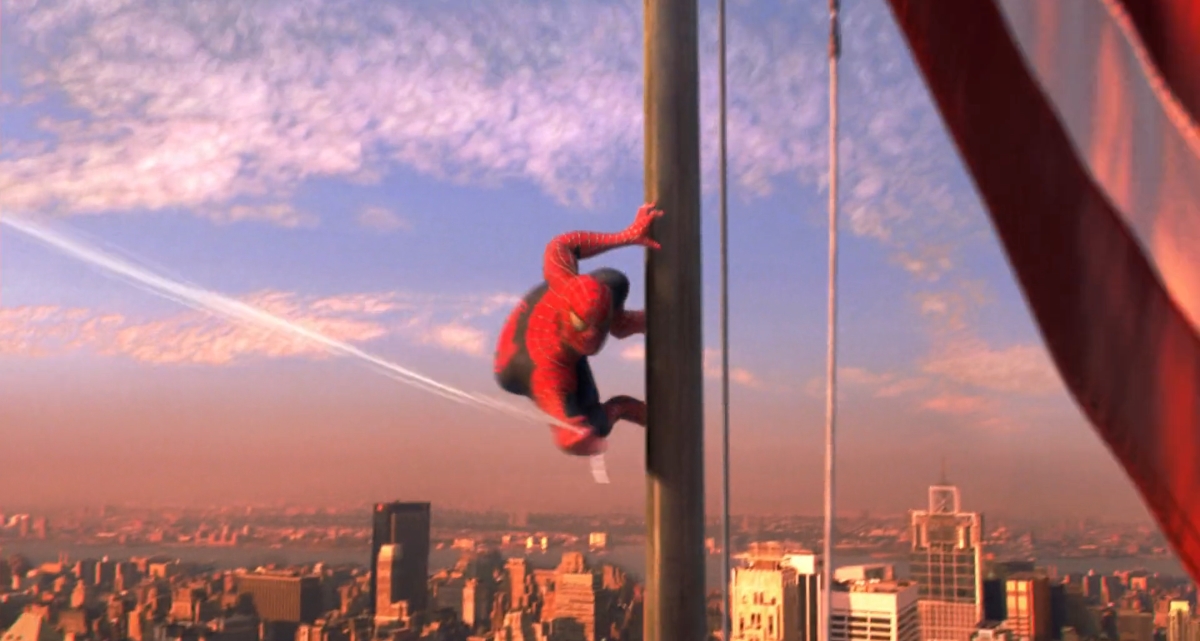
I first watched Sam Raimi’s Spider-Man around 2007. The details surrounding that day have blurred; the image has not. Tobey Maguire’s Peter Parker was bitten by a radioactive spider and discovered that his ordinary body could suddenly do impossible things. He could climb walls and swing above New York as though gravity were merely a suggestion. The film had been released in 2002, but I was too young to know that I was watching a film already five years old. To me, Peter Parker’s transformation was happening for the first time. What I felt was not simple admiration. I believed that something similar might happen to me.
This is awkward to admit as an adult, but awkwardness is often what remains when we look directly at childhood. I did not think of Spider-Man only as a fictional character. I thought of him as evidence that an ordinary boy’s real life might not have begun yet. Perhaps a spider would bite me. Perhaps I would wake up stronger. Perhaps school, homework and the repetitive business of ordinary life were only the opening scenes before the important part arrived. I copied the web-shooting gesture and looked at harmless spiders with an interest they probably did not deserve. Somewhere inside me, the transformation was still pending.
I am tempted to write that every South Asian child wanted to be Spider-Man at least once. It feels true, but it is impossible to prove. South Asia contains young people with vastly different languages, classes, cultures and childhoods; one cannot turn them into a single nostalgic child merely because the sentence sounds good. Still, the fantasy was recognisable. A cheap mask, a red shirt, a staircase pretending to be a skyscraper—very little was required. We supplied the rest ourselves.
The mask was part of the reason. Spider-Man disappears almost completely inside it. A child does not have to share Peter Parker’s face, accent or address to imagine wearing the suit. For a boy watching in Dhaka, Karachi, Mumbai, Kathmandu or Colombo, the distance between his own life and New York can briefly collapse. The person under the mask might be anyone. He might be us.
Yet the mask alone does not explain why Spider-Man stays with people after childhood. Peter Parker first appeared in Amazing Fantasy No. 15 in 1962, in a story written by Stan Lee and drawn by Steve Ditko. From the beginning, he was a socially awkward teenager whose powers arrived alongside anger, guilt and responsibility. Raimi’s 2002 film preserved that emotional structure: Peter becomes extraordinary, but his life does not become easier. Children notice the powers first. Adults notice the price.
Peter is always trying to live several lives at once: student, nephew, friend, worker and hero. Whenever he succeeds in one role, he seems to fail in another. This is not uniquely South Asian, but it can feel familiar here. A peer-reviewed 2021 study involving 38 undergraduates from seven Bangladeshi universities identified academics, family, employment and economic conditions among the important factors affecting participants’ mental health. The researchers explicitly avoided making broad causal claims, and such a small study cannot represent an entire generation. Even so, the pressures described by its participants are recognisable.
Spider-Man 2 gave those pressures a superhero costume. The 2004 film follows Peter as he struggles to balance college with his life as a crime-fighter. He is exhausted, late, broke and unable to satisfy everyone. His powers begin to fail while the rest of his life collapses. When I watched it as a child, I waited for him to fight Doctor Octopus. Watching it later, Peter missing classes, losing his job and disappointing the people around him felt almost as frightening. To a child, Peter’s problems are interruptions between action scenes. To a university student, they look suspiciously like burnout.
The actors changed as I changed. Andrew Garfield became Peter Parker in The Amazing Spider-Man in 2012. Tom Holland later brought Peter back to school in Spider-Man: Homecoming before No Way Home pushed him towards a far lonelier existence in 2021. These dates can be read as ordinary franchise history. To me, they are also a private calendar. Each Spider-Man belongs to a different version of my life.
This is why No Way Home affected audiences beyond the pleasure of seeing familiar actors return. It was carefully engineered nostalgia; studios understand the commercial value of memory. But calling it “fan service” and stopping there misses something. Tobey Maguire, Andrew Garfield and Tom Holland carried three periods of the audience’s life into one film. The child, the teenager and the young adult were briefly allowed to stand beside one another.
The attachment is visible in South Asia’s film market too, although India should never be treated as shorthand for the whole region. No Way Home earned approximately $36.9 million in India. Sony later released Across the Spider-Verse there in English and nine Indian languages, including Bengali, while the film featured Pavitr Prabhakar—Spider-Man India. Marvel identifies Pavitr as a character created by Jeevan Kang, Suresh Seetharaman and Sharad Devarajan. These facts do not prove the existence of one uniform South Asian response. They do show a large, multilingual audience for whom Spider-Man has become more than a distant American import.
Now there is Spider-Man: Brand New Day. The film released on July 31, 2026, with Tom Holland returning and Destin Daniel Cretton directing. Its official premise begins with Peter living alone in New York and fighting crime full-time in a world that no longer remembers his name. Four years have passed since No Way Home, and Peter is now an adult who has removed himself from the lives of the people he loves.
I watch this Peter while approaching my university graduation. The timing feels almost cruel. In 2007, I watched Spider-Man and thought my extraordinary life was waiting somewhere ahead. In 2026, I understand that no radioactive spider is coming. I will not wake up able to climb walls. I will not swing between buildings. The world has not secretly selected me for a destiny that will rescue me from being ordinary.
When I say the dream is gone, I mean exactly that. I do not mean that I have stopped hoping, planning or wanting things from life. I mean the sincere dream of the child in front of the computer, the child who believed he might really become Spider-Man one day.
It would be easy to rescue the sadness by saying that the dream merely changed, or that adulthood taught me to become another kind of superhero. There may be some truth in that, but it is not the truth I am trying to tell. Some dreams do not mature. They end.
Graduation is supposed to feel like arrival, but it often feels like a familiar structure being removed. Classes finish. Friends begin moving in different directions. Questions about work, money and responsibility stop being distant adult questions. The child who waited for superpowers becomes a man who must make decisions without them.
“The child is grown, the dream is gone.” What remains is the memory of having believed. Spider-Man can no longer convince me that I might become him. He does something sadder now: he brings me close to the boy who once thought it was possible. For two hours, the distance between a computer screen in 2007 and a cinema screen in 2026 becomes visible. I can see how much time has passed, and how quietly it passed. The child has grown. The dream is gone. Spider-Man remains and perhaps that is why seeing him still hurts.
Send your reviews, articles, and pitches for Cut to Cinema to [email protected]. Check out our submission guidelines for more details.