
Published: : August 31, 2026, 12:00 AM
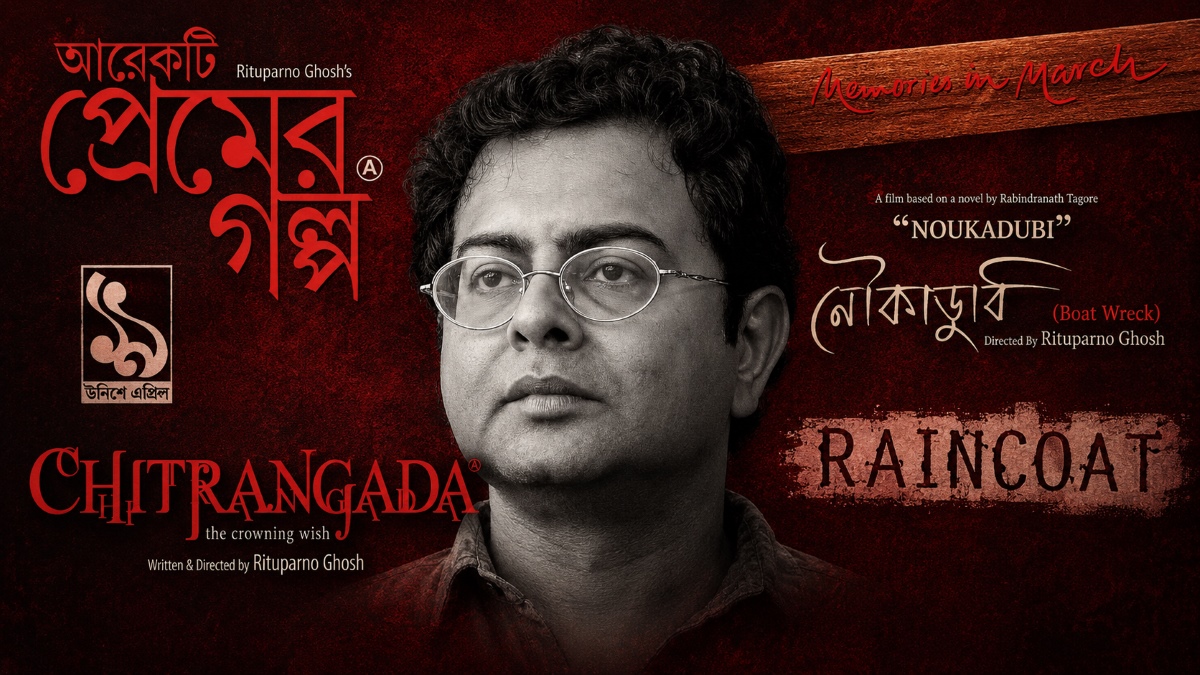
August 31st is the birthday of Rituparno Ghosh (1963–2013), one of the filmmakers who helped reshape contemporary Bengali cinema. In the 1990s--when Bengali cinema struggled to find a way between commercial drama and flashy mainstream ideas--Rituparno came with a special way of seeing things, deep kindness and a great sense of what people do not say. He made stories that were rich and full of thought. He made normal rooms look like pictures of the characters inside. He broke rules with his new ways of showing gender, who people are and how people connect.
Rituparno told stories that were about the moments between people--mostly in houses behind closed doors seen in mirrors. His movies focused on complicated and often silent details in how people feel. He told stories about how people connect. He used indoor spaces to show how close people can be and used mirrors, window covers and hallways as signs of deep feelings. Movies like Unishe April, Dahan, Bariwali, and Utsab did not use emotional scenes. Instead, they showed the feelings of women inside their homes, showing the loneliness, hidden choices and quiet sadness that live under polite society.
Unishe April (1994) is a Bengali movie that shows a tense emotional night between a famous dancer and her emotionally distant daughter. The movie changes what people think about motherhood and shows how two people can heal by finally telling the truth. The movie got two National Film Awards including the National Film Award for Best Feature Film, while Debashree Roy got the National Film Award for Best Actress for her acting.
In Dahan (1997), Rituparno shows how people treat a woman who survives an attack and the person who helps her. Instead of punishing the bad people, middle-class society cares more about reputation than doing what is right. The teacher who supports her faces more pain and judgment from others than from the people who hurt them. The movie also got Rituparno the National Film Award for Best Screenplay, showing how he could turn life into deep human stories.
The main idea of Rituparno’s movies was the use of homes. Rituparno turned the Bengali bari (family house) into a place that shows the hidden feelings and mental states of his characters. In movies like Bariwali (2000) and Utsab (2000), big houses and rooms show how lonely and trapped the characters feel. The places themselves show how the people inside feel. The houses feel quiet, old, and filled with memories, matching the sadness of the people living there. Society expects everyone to look happy and okay in the structure of the bari; trapped by these ideas, the characters hide their feelings.
Long before Indian cinema started to think about feminist ideas, Rituparno was already changing how men and women are shown. He did not make characters simple victims or perfect examples of good behavior. He made them real people with pride, jealousy, love, fear, and many feelings. Before modern movies started to look at ideas again, Rituparno turned literary books--like Rabindranath Tagore’s Chokher Bali and Noukadubi--into movies to show how women feel, think, and want to be free. His female characters were never just victims or perfect examples; they were real, complicated, not perfect, full of emotion, and very much human.
In Chokher Bali (2003), Rituparno had Aishwarya Rai play Binodini in a look at female desire and fighting against society. Binodini is a woman from the 19th century who is a widow. She has a lot of questions about the way society treats her. She refuses to live a colorless life and questions the unfair way people treat women in a society that stops them from being free and happy. The movie, based on a book by Rabindranath Tagore, became one of Rituparno’s important stories and looked at the complicated things about desire, how people act, and what society expects.
Then came Noukadubi (2011), another movie based on Tagore’s work, which asked questions about marriage, who people are, and what happens to people. Through mix-ups and emotional problems, the movie looked at how society makes people make choices and build relationships.
At the end of his career, Rituparno used the camera to show who he was and how he felt. At the time, he made people talk about gender identity by being open about being queer. He slowly started to wear clothes that were not just for one gender on television and in public. Through films like Arekti Premer Golpo (2010), Memories in March (2011), and Chitrangada: The Crowning Wish (2012), he brought queer life, gender change, and the right to be yourself into movies. These films looked at feelings, sadness, being yourself, and the struggle between what the world expects and who people really are.
Arekti Premer Golpo (2010), directed by Kaushik Ganguly with Rituparno as the actor, is about a queer filmmaker who goes to Kolkata to make a movie about a famous female impersonator from Bengali Jatra theatre. The journey makes him face his complicated feelings and the past of how society treats queer people. The movie came after a court decision that made it okay for people to be in love with the same gender, making the topic very important in the way people see queer life.
In Memories in March (2011), Rituparno tells the story of a mother who goes to Kolkata after her son dies in an accident. There she finds out about her son’s hidden life and deals with the truth about his relationship with a man. Through sadness, not wanting to accept, and finally understanding, the mother builds a gentle connection with her son’s partner. The movie shows how a parent moves from not accepting to understanding their child’s identity.
The last movie he made was Chitrangada: The Crowning Wish (2012), written, directed, and acted in by Rituparno. It is based on a play by Rabindranath Tagore. It has Rituparno as Rudra, a dancer who falls in love with a man. The movie looks at how people see themselves, how they feel, and how they grow through Rudra’s journey.
Outside of movies, his life as a queer person changed how people thought about conservative ideas in India. He did this in ways and with kindness long before the law changed about being gay. He used clothes that were not just for men or women on TV and in the media, making people think about freedom, how to act, and how people can decide who they are.
Rituparno’s life on stage was a part of his ideas. He did not just show ideas about gender and identity on the screen; he lived them in his life. His look, voice, and how he acted made people think about what it means to be a man or a woman at a time when such ideas were not common in the world.
Even though Rituparno died suddenly in May 2013 at age 49, he left behind a career. Rituparno Ghosh is still an important person in Indian movies that are not mainstream. His movies show how to care. They remind people that big problems often happen in the quietest parts of life.
Sanjida Parven Noishi is a student of Bangla Literature at the University of Dhaka.
Send your reviews, articles, and pitches for Cut to Cinema to [email protected]. Check out our submission guidelines for more details.