

Published: : March 30, 2026, 10:48 PM
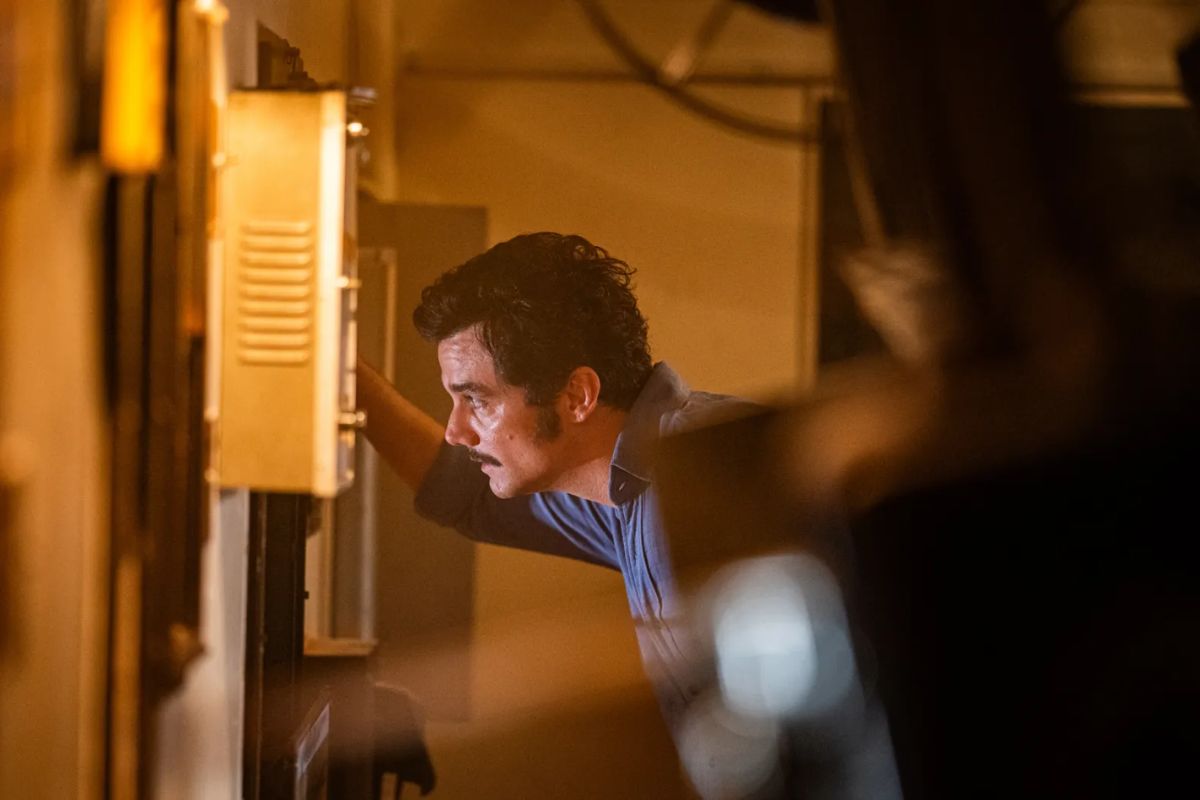
By the time this article reaches readers, “The Secret Agent”, the latest film by Kleber Mendonça Filho, may already have secured yet another historic achievement for Brazilian cinema. Winner of the Best Director award, Best Actor for Wagner Moura, and the FIPRESCI Prize at the most recent Cannes Film Festival, the film repeated a rare accomplishment previously achieved by Walter Salles’s “I’m Still Here”: a nomination not only for Best International Feature Film, but also for Best Picture in the Academy Awards’ main category. The feat underscores the remarkable moment Brazilian cinema is currently experiencing, with international recognition for films that—despite their distinct aesthetics—share a common engagement with the country’s Military Dictatorship (1964–1984), a dark chapter of Brazilian history that remains insufficiently known or openly denied by part of the population.
Wagner Moura stars as Armando, living under the alias Marcelo, a university professor and researcher who returns to his hometown of Recife only to discover that he has been marked for death by a powerful businessman in the energy sector with close ties to the government. Set in 1977, the film opens with Armando refueling his yellow Volkswagen at a roadside gas station, where a corpse lies covered in newspapers, surrounded by flies. A Highway Police patrol soon arrives, ignores the body, and focuses instead on extorting money from him. When all documents and equipment prove to be in order, the officers settle for the remains of a pack of cigarettes and drive away, leaving the decomposing body behind.
This prologue encapsulates recurring elements of Brazilian social experience—corruption, abuse of authority, and the normalization of violence—that continue to shape the relationship between the state and its citizens. Mendonça Filho consistently builds bridges between the dictatorship era and contemporary Brazil, whether through images of police dumping bodies into rivers or a scene in which a wealthy woman receives preferential treatment while testifying about the death of her maid’s child, who was under her care when he was fatally struck by a car. The reference unmistakably echoes a real and recent tragedy: the 2020 death of a young boy who fell from the ninth floor of a luxury building in Recife. The accused—his mother’s employer and the wife of an influential politician—remains at liberty.
A former film critic, Mendonça Filho never hides his cinephilia. Cinematic references permeate “The Secret Agent”, alongside an ongoing reflection on the cultural importance of traditional street cinemas, a theme previously explored in his documentary “Pictures of Ghosts”. In this new film, the historic São Luiz Cinema, located in downtown Recife and still in operation, functions as more than a mere setting for screenings of films like “Jaws” or “The Omen”: it becomes a character in its own right.
The inclusion of the urban legend of the “Hairy Leg”—a creature said to have attacked people in a public park at night, according to sensationalist newspapers of the time—opens a space for the director to incorporate elements of fantastic cinema, long present in his body of work. Beyond the gripping police-thriller narrative of a man persecuted by a dictatorial regime while attempting to reconnect with his past, “The Secret Agent” reveals an ambition to blend disparate genres and tones. Drawing on his intimate knowledge of Recife, the city where he was born and raised, Mendonça Filho once again demonstrates a rare observational acuity in portraying distinctly Brazilian traits. This is evident in details such as a violent police chief still bearing traces of confetti and lipstick on his body—remnants of Carnival, Brazil’s most iconic popular festival—or in the recurring imagery of sharks, a real and persistent threat along Recife’s coastline.
The period reconstruction is meticulous, faithfully evoking the visual and musical textures of the late 1970s. The film is anchored by a superb cast, led by Wagner Moura and supported by a rich ensemble of performances. Robério Diógenes, as the ruthless police chief Euclides, and Tânia Maria, as an elderly woman who shelters political fugitives—following a previous appearance in “Bacurau”—frequently steal the scene.
With or without an Academy Award, “The Secret Agent” has already surpassed two million admissions in Brazil, ranking among the country’s biggest box-office successes of the year. Its international reception leaves cinephiles wondering whether another Brazilian surprise may be on the horizon at festivals such as Cannes or Venice in the near future.
-20260429155704.jpg)
-20260521062414.jpg)

-20260423055424.jpg)
-20260413151600.jpg)