
Published: : August 18, 2026, 12:15 AM
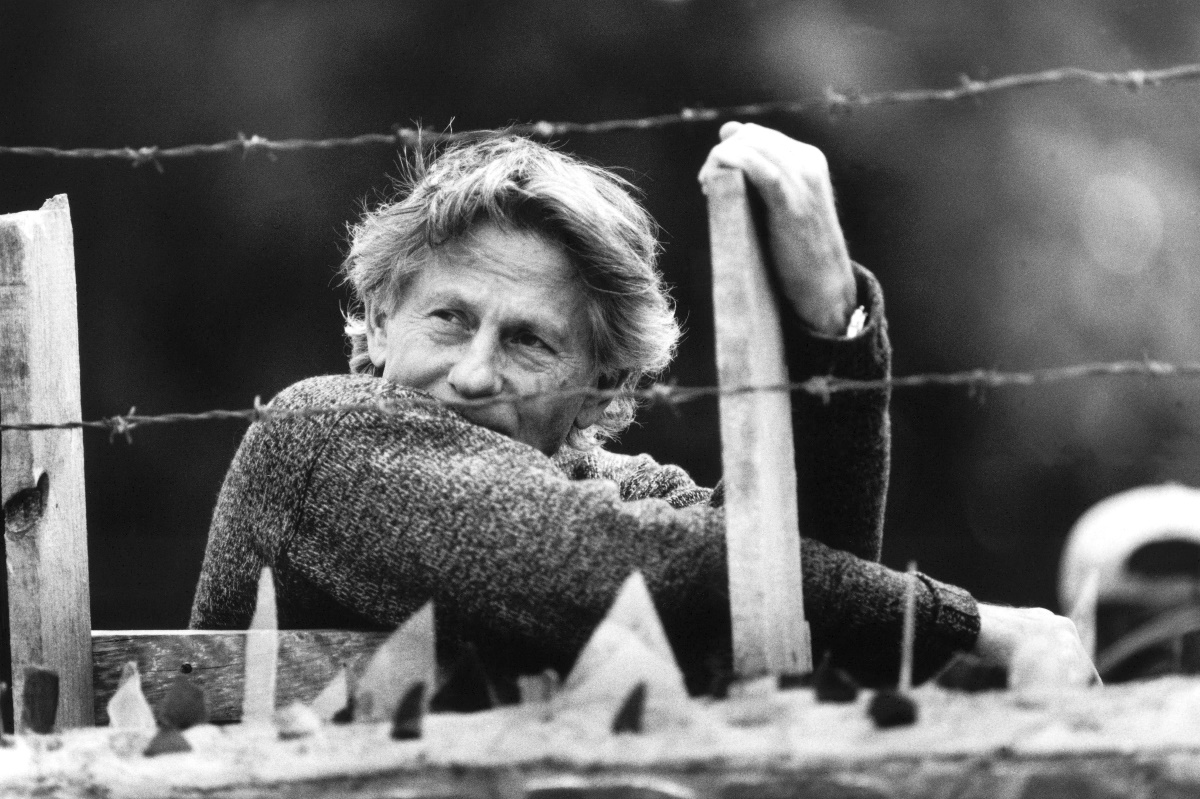
Roman Polanski’s cinema is full of characters who can see the world around them, but cannot always escape the frame through which they see it. I think I understand this because I remember a time when I could not escape the way I was seeing my own life. Ever since I began to understand auteurism, I have looked for recurring ideas and stylistic signatures across a director’s work, the things a filmmaker seems to return to again and again. That is how I came to Polanski and began asking what his films repeatedly make us feel. During my HSC examinations, I had just finished a Chemistry exam and knew I had done badly. At first, it was only an examination. But in my mind, it quickly became something much larger. I began thinking about not getting an A+, not being able to sit for the university admission tests I wanted, especially BUET, and perhaps damaging my future before it had even begun. Nothing had actually happened yet. But I was already living inside the consequences of something that had not happened.
I remember watching television reports about the examination. They had nothing to do with me personally, yet I watched them as if they were quietly confirming my failure, as if everyone had done well except me. Even ordinary things around me began to feel different. My mother called and asked whether I had eaten. It was a completely ordinary question. But at that moment, I did not hear it as one. I felt that she did not understand what I was going through, perhaps that she had never really supported me. Looking back, I realise that the world around me had not changed. The frame through which I was seeing it had. The examination was real. My fear was real. But fear was shaping the meaning I gave to everything around me. A news report became evidence. A simple question felt like rejection. One bad examination began to look like the beginning of the end of my life. At the time, I did not have the language to understand what was happening to me. Years later, I found that language somewhere I did not expect: in cinema.
Perhaps this is one reason Polanski’s films stayed with me. His characters often enter situations where reality itself becomes difficult to trust, but the frame surrounding them is rarely only physical. A room can become a mind. People can become a prison. A landscape can become a fate. This is where I began to see a connection between three very different films: Repulsion (1965), Rosemary’s Baby (1968) and Tess (1979). In each of them, Polanski creates a different kind of enclosure. In Repulsion, the frame begins inside the mind. In Rosemary’s Baby, it is built by the people around Rosemary. In Tess, it becomes much larger: family, class, society and circumstance. The frames do not look the same. One is an apartment. One is a community of people. One seems to stretch across enormous landscapes. Yet all three can create the same frightening feeling: there is nowhere to go.
At the beginning of Repulsion, Carol’s apartment is an ordinary domestic space. But as her psychological state deteriorates, the apartment seems to deteriorate with her. Walls crack. Corridors appear to stretch. Hands emerge from walls. She hears footsteps and experiences violent sexual hallucinations. The apartment gradually becomes a physical extension of her inner terror. What makes these moments disturbing to me is the way the film keeps us so close to Carol’s perception that ordinary space and hallucinated space begin to overlap. We know that some of what she experiences is not objectively happening, yet the film makes it immediate, physical and frightening. Carol’s fear does not simply change the meaning of real things; her psychological breakdown also produces things that are not there. But the deeper idea remains the same for me: once perception changes completely, even the most familiar world can become impossible to inhabit safely. Sometimes we too become trapped inside our own frame. By thinking about something over and over, we can take ourselves to an extreme place from which it is difficult to return. Like Carol’s apartment, the mind itself can slowly become a place we are afraid to live in.
If Repulsion traps Carol inside her own perception, Rosemary’s Baby places Rosemary inside a reality shaped by the people around her. Rosemary and her husband Guy begin a new life in the Bramford, an apartment building with a disturbing history. Their friend Hutch warns them about that history, but life initially appears ordinary. Rosemary meets Terry, a young woman living with their neighbours Roman and Minnie Castevet, and soon afterward Terry dies in an apparent suicide. Gradually, the Castevets become deeply involved in Rosemary and Guy’s lives. Guy grows increasingly close to them. After Rosemary becomes pregnant, her husband, neighbours and doctor begin making decisions around her while repeatedly assuring her that everything is normal. Hutch later becomes suspicious, but before he can fully explain what he has discovered, he falls into a coma and dies. After his death, Rosemary receives a book he intended for her and a clue that helps her connect Roman Castevet with witchcraft. This is what makes the film so unsettling: Rosemary slowly realises that what others call paranoia may actually be perception. Eventually, the film confirms that the people surrounding her have manipulated her pregnancy as part of a satanic conspiracy. In Repulsion, the terrible possibility is that the mind cannot be trusted. In Rosemary’s Baby, the terrible possibility is almost the opposite: what if your perception is right, but the world you trust is the real trap?
Then Tess expands the frame even further. Tess is not locked inside an apartment, and there are no neighbours closing doors around her. She moves through enormous fields, farms, roads and open landscapes. Yet somehow freedom remains out of reach. Her story begins when her father is told that the Durbeyfield family descends from the old d’Urberville line. Hoping to improve the family’s circumstances, her parents send Tess to seek work from a wealthy family using the d’Urberville name, although that family is not actually related to them. There she meets Alec, and that encounter changes the direction of her life. I especially keep thinking about the scene where Alec offers Tess a strawberry. On the surface, it is only a piece of fruit. But in the way he places it in her mouth, I read desire, temptation and power. The same object begins to carry another meaning because of gesture, context and the person controlling the moment. This is what I mean by frames. In Tess, Polanski’s landscapes often work almost like a language. White dresses, flowers, green fields and sunlight suggest youth and possibility, while later, harsher weather and winter landscapes accompany poverty, abandonment and judgement. The world remains physically open, but Tess’s choices become smaller. She is trapped by family need, class, poverty, gendered expectations, her past and the judgement of others. The frame has no visible wall. It is the life she has been given and the limits society has placed around it.
Perhaps this is why I keep returning to cinema, not only to follow a story, but to search for the way of thinking hidden inside it. I love looking for the philosophy of life, the way of seeing, and the questions a film quietly leaves behind. Through these three films, I began to feel that I am also somewhere inside the frames Polanski creates. Sometimes the frame is my own mind. Sometimes it is created by other people. Sometimes it is society, circumstance, expectation, or simply the way I have learned to look at the world. And perhaps the most frightening part is that sometimes I do not even know which frame I am trapped inside. Maybe there is no obvious door. Maybe I do not even know where the door is. But perhaps cinema can at least make us notice the frame. On 18 August, Polanski’s birthday, I find myself returning to these films and to the invisible enclosures they taught me to notice: a room becoming a mind, people becoming a prison, and an open landscape becoming a fate.
Omar Faruk Khan is a filmmaking student in the Department of Film and Television at Jagannath University.
Send your reviews, articles, and pitches for Cut to Cinema to [email protected]. Check out our submission guidelines for more details.