Published: : October 12, 2026, 10:24 PM
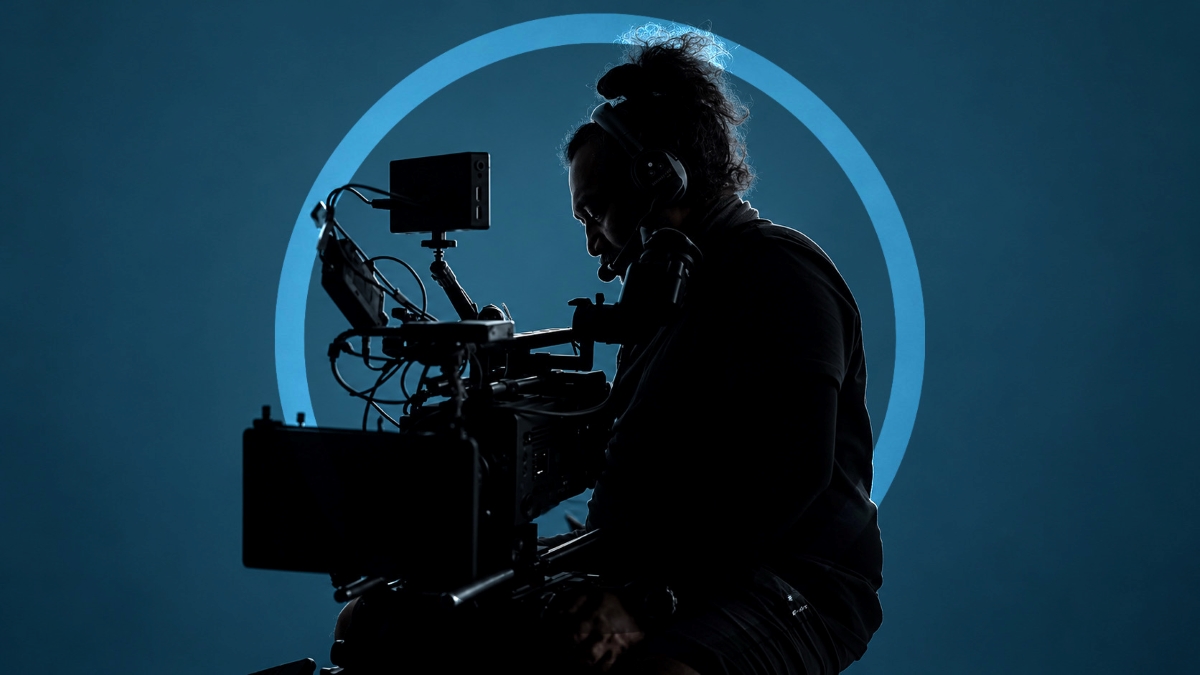
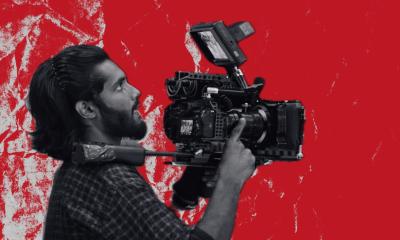
Award-winning Bangladeshi cinematographer Joaher Musavvir Jyoti is known for his work on Roid, Pressure Cooker, Jaya Aar Sharmin and A House Named Shahana. Having studied filmmaking and cinematography in Prague, he works across South Asia and Europe, bringing a distinctive sensitivity to light, landscape, atmosphere and human emotion. His work has reached international audiences through festivals including the International Film Festival Rotterdam (IFFR), SXSW London, Sitges, and Raindance. He received the Best Cinematography award for Roid at the 2026 Mosaic International Film Festival in Canada. In conversation with Md Rabbi Islam, Joaher Musavvir Jyoti reflects on his creative journey, visual storytelling, and the art of seeing beyond the frame.
You have studied filmmaking and cinematography academically. How has your formal education influenced your understanding of cinema and shaped your journey as a cinematographer?
I never really wanted to make films, to be honest. From an early age, I knew I was somehow a misfit in the world, and cinema was my escape. I thought that if I learned how films were made—if I knew the tricks—I might lose that magic. Cinema proved me wrong. Before filmmaking, there was photography, particularly street photography. Eventually, I found myself in Prague studying cinema. I had opportunities elsewhere, but something in me wanted to go as far away as possible from everything familiar. Looking back, I think I needed that distance. Formal education gave me grammar. It gave me a way of interpreting what I was observing. But I probably learned as much outside the classroom, walking through Prague, Berlin, Postogola or Hazaribagh, as I did inside it. The streets taught me to observe, anticipate and trust intuition. Film school also taught me something less romantic but equally important: how to hear “no,” how to take rejection and still continue.
You worked as the cinematographer for Roid and Jaya Aar Sharmin. What was your experience working on these two projects, and what were the key creative challenges you faced while creating their visual worlds?
Jaya Aar Sharmin came during COVID, when everything felt stagnant. Piplu Bhai—Piplu R Khan—asked me to jump in, and we just jumped. We were hungry to make films, and making one at that moment felt almost like an act of defiance. It was also my first Bangladeshi feature as a cinematographer. With Roid, I entered a universe Mejbaur Rahman Sumon had carried within him for years. I often felt I was in the back seat, watching a master at work, trying to listen, understand his rhythm and do justice to that universe. The films are very different, but both returned me to the same question: how do you photograph something intangible? How do you show an emotional shift without announcing it? Sometimes an inch of camera movement, a change of height or a slight shift in light can completely alter the emotional meaning of an image.
You have worked on projects outside Bangladesh as well. Could you share some memorable experiences from your international work and how those experiences influenced you as a filmmaker?
My journey outside Bangladesh began very simply. One of my earliest exercises in Prague involved a bench, a few people rotating roles and a film that could not be longer than one minute. Years later, the productions became bigger, the crews larger, but strangely, the essential experience remained the same: something is happening in front of the lens, and I am behind the camera trying to see it. What changed was what I was looking for. Earlier, I was busy finding beautiful frames. Slowly, the question became: why should the camera be here? In one room, there are thousands of places to put a camera. Why this position, this height, this distance? Somewhere along the journey, I became less interested in simply finishing on time and more interested in finishing in the right emotion.
After working both internationally and in Bangladesh, what differences have you observed between these filmmaking environments in terms of preparation, workflow, collaboration, and creative process?
Working internationally also introduced me to highly structured filmmaking systems. I value that discipline enormously, and I am grateful to the filmmakers before us who helped establish much of that production culture in Bangladesh. We need schedules, recces, call sheets and technical preparation. But I am increasingly conscious that production language should not become cinema language. For me, preparation can now also mean apparently doing nothing—being alone, spending time with the director, writer or actors, allowing something to reveal itself before trying to execute it. The technical preparation remains, but the intention behind it matters. I don’t want to manufacture images. I want to discover them. Perhaps all the films I make are really one film—an ongoing attempt to see life from different distances, different places and different gazes, while somehow protecting that childlike feeling I had before I knew how any of this was done.
When you start working on a new film, how do you develop the visual language of the story? What are the first things you consider before creating the look of a film?
I try not to begin with the image. I begin with trying to understand the film - its people, its world, its rhythm, and most importantly, its emotion. I spend a lot of time with the director talking about things that may have nothing directly to do with cinematography. Memories, paintings, music, places, sometimes just life. Slowly I begin to understand what the film wants to feel like. Then I observe the location, the actors, the natural light, the weather, the architecture. I try not to impose a visual language too early, because sometimes you arrive with a beautiful idea and discover that the film wants something completely different. Of course we discuss lenses, format, movement, color and lighting, but those are tools that come later. I am more interested in finding the internal logic of the film first. For me, the visual language is not really a “look.” It is a way of seeing that particular world. And ideally, once we find it, the cinematography stops announcing itself and simply becomes part of the film.
How do you build a creative relationship with a director and translate the director’s vision into visual storytelling?
For me, filmmaking is very much about dealing with people. So before camera, lenses or lighting, I need to understand the person I am making the film with. I don't necessarily want a director to explain exactly how something should be photographed. I would rather understand what they are feeling, what they are afraid of losing, what they love about the story, and why they need to make this particular film. Then it becomes a conversation. A good director-cinematographer relationship, for me, is not really about translating somebody’s vision literally. It is about creating a common intuition. Sometimes the director says something and I bring an image. Sometimes I suggest something that changes how the director sees the scene. We challenge each other, disagree, discover things, and slowly there is a third language that belongs neither entirely to the director nor to me - it belongs to the film. When that trust exists, you don't have to explain everything anymore. Sometimes you just look at each other and know.
Your filmography includes different types of projects, from realistic dramas to atmospheric stories. How do you adapt your cinematography approach according to the needs of each story?
I don't think I have one particular cinematographic style, and I hope I never do. Every film should somehow make me unlearn the previous one. One story may need the camera to breathe with the actors; another may need complete stillness. One may need darkness, another may need very ordinary daylight. Sometimes the image needs to be beautiful, and sometimes beauty can actually become a distraction. So rather than asking, “How should I shoot this?”, I try to ask, “What does this film need from me?” I carry my instincts with me, of course. I cannot escape who I am or how I see. But the technique should remain flexible. Handheld, tripod, anamorphic, spherical, available light, constructed light - none of these is a philosophy by itself. The philosophy is listening to the film closely enough to understand which of those tools it needs, and equally, which ones it doesn't.
Many of your works show a strong connection between characters and their surroundings. How do you decide the role of location and environment in telling a story?
I rarely think of a location as a background. A human being is constantly affected by the space around them - the temperature, humidity, wind, distance, architecture, sound, even how light enters a room. So when I photograph a character, I am also interested in photographing their relationship with that world. Sometimes the environment can hold an emotion that the actor doesn't need to express. A landscape can create loneliness. A tiny room can create intimacy or suffocation. Wind moving through a tree can sometimes tell me more about a moment than another close-up. This is probably why I am often reluctant to separate a character from their surroundings too quickly. I like allowing the world to remain present. For me, nature and location are not decorative elements. At their best, they become another character - sometimes observing the human beings, sometimes resisting them, sometimes completely indifferent to them.
With filmmaking technology changing rapidly, including AI tools and new production methods, how do you think the role of a cinematographer is evolving?
Technology has always changed cinematography. Film became digital, cameras became smaller, sensitivity changed enormously, LEDs changed lighting, and now AI is another major shift. I don't think resisting the tools is particularly interesting. We should understand them, play with them and know what they can do. But the easier image-making becomes, perhaps the more important it becomes to know why an image should exist. AI can generate an image. A camera can now produce a technically extraordinary image almost effortlessly. But cinematography isn't simply image production. We are dealing with a human being standing in a particular space at a particular moment. We are deciding whether to move closer or remain distant, whether to interfere or observe, whether to light a face or allow it to disappear. Those decisions contain emotion, ethics, intuition and our relationship with the people in front of the camera. So perhaps the cinematographer’s role will become less about mastering a machine and even more about developing a point of view.
Looking back at your journey so far, what is the most important lesson you have learned about cinematography, and what advice would you give to young filmmakers who want to tell stories through images?
I'm still learning it, but perhaps the biggest lesson has been to observe before trying to create. When I was younger, I think I was much more eager to make an image. You learn composition, lighting, lenses, movements, and naturally you want to demonstrate what you can do. Gradually I've become more interested in what is already there. A face changing when somebody stops speaking. Light disappearing from a room. The distance between two people. A tree moving outside a window. Sometimes cinema is already happening and our job is simply to recognise it. So I would tell a young cinematographer: learn the tools seriously. Learn exposure, lenses, light, color, movement, art, photography and cinema history. Then don't let any of that become a prison. Travel. Read. Fall in love. Get rejected. Meet people completely unlike yourself. Sit somewhere without a camera and observe. Because eventually your images will come not only from the films you have watched, but from the life you have lived. And I'm increasingly beginning to feel that cinematography is not really about learning how to make images. It is about learning how to see.
Send your reviews, articles, and pitches for Cut to Cinema to [email protected]. Check out our submission guidelines for more details.