
Published: : June 3, 2026, 10:28 AM
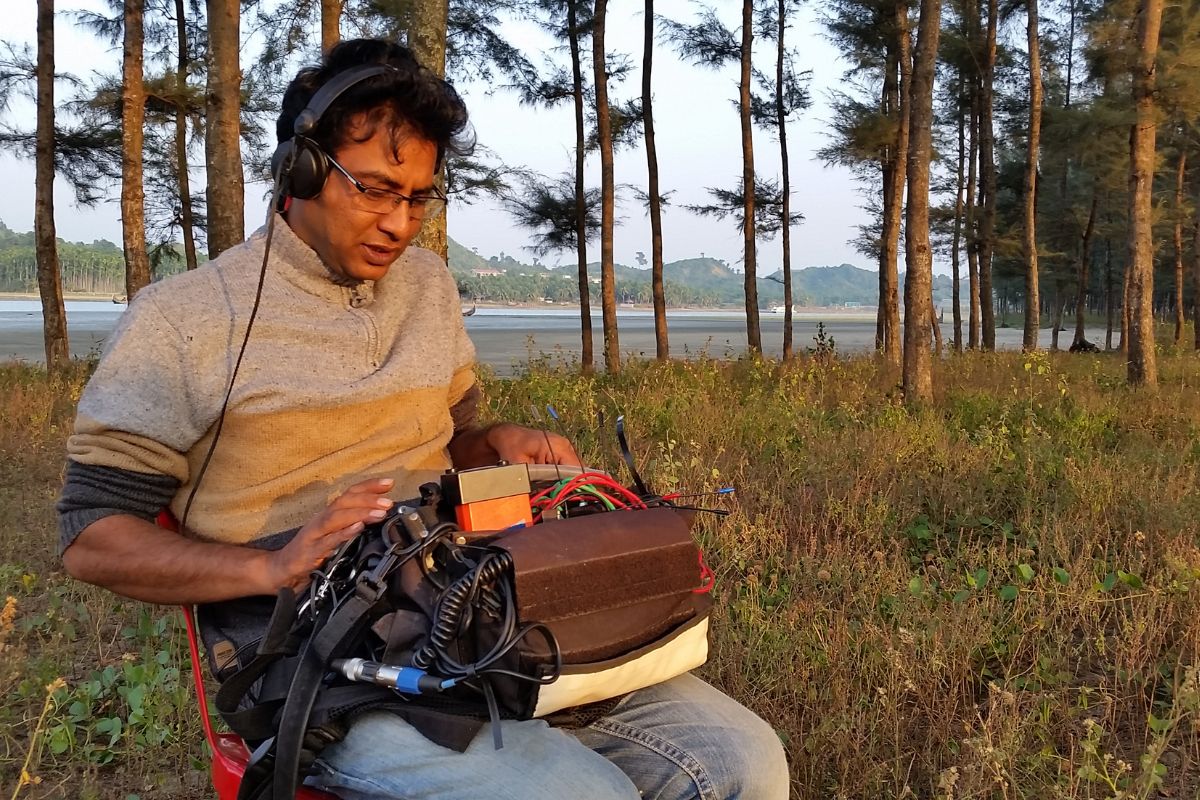
Nahid Masud is a Bangladeshi production sound mixer, sound designer, producer and educator known for his contributions to independent cinema. He has worked on acclaimed films such as Master, Ali , Prio Maloti, Saba, Boli, Barir Naam Shahna, Runway, Nona Joler Kabbo, and Meghmallar, along with the BBC Media Action series Bishaash and Ujan Ganger Naiya. His work is recognised for its technical and artistic depth in Bangladeshi cinema. Recently, he spoke with Md Rabbi Islam for Cut to Cinema.
1. Mr. Nahid Masud, do you remember when you first became truly aware of sound as something meaningful and expressive, rather than something we simply hear every day?
It’s difficult to point to a single moment, but your question brings back two memories I can tell you. Both were connected to my eldest brother, Tareque Masud, whose relationship with cinema deeply influenced the way I began to listen to the world around me for cinematic purpose.
The first memory goes back to around 1986-87, when Tareque and Catherine came to our village for a few days while working on the sound post-production of Adam Surat. They had brought a Sony portable tape recorder and a microphone to record ambient sounds at our village. One night, three of us walked to a quiet place to record night ambient where no human voices could be heard nearby. They carefully set up the recorder and asked me not to move because the microphone was very sensitive and if I make any sound that can make the recording unusable. To help me understand, they placed a pair of headphones over my ears. I had a completely new experience of the soundscape around me.
As a village boy, I had grown up listening to the sounds of crickets, frogs, and silence of rural nights. These sounds were always there, part of everyday life, so familiar that I barely noticed them consciously. The moment I put on the headphones, every tiny detail became vivid and immersive. It felt as if an invisible world had opened before me — a hidden orchestra of insects, frogs, winds and distant movements, and living textures that had always existed around me, yet I had never truly listened to before. That was my first active listening experience — realizing how the ambience around us can reveal what exists and what is happening in the world around us.
The second experience I like to mention is when Tareque and Catherine returned from the United States with Muktir Gaan. For our generation, this was an overwhelming experience. We had grown up hearing stories of the Liberation War from family members, but suddenly we were seeing and hearing 1971 unfold before our own eyes on screen. The songs of the Mukti Sangrami Shilpi Sangstha carried an extraordinary emotional force. They were not merely songs in a film — they felt like living history, filled with courage, grief, unity, and hope.
At that time, commercial cinema halls were not interested in distributing the film, so many young people, including myself, became involved in an alternative distribution of that film. We travelled from district to district, organizing screenings in auditoriums across the country. I worked as a projectionist, which meant I watched the film thousands of times. More importantly, I witnessed the audience’s emotional reactions again and again.
One song in particular still echoes in my mind:
যশোর, খুলনা, বগুড়া, পাবনা, ঢাকা-বরিশাল-নোয়াখালী তারা হিন্দু ও নয় মুসলিম নয় তারা শুধু বাঙ্গালী!
“Jessore, Khulna, Bogura, Pabna, Dhaka, Barisal, Noakhali…
They are neither Hindu nor Muslim — they are simply Bengali.”
I still remember the atmosphere inside packed auditoriums when this song played in the film. It had the power to shake our collective identity. In those moments, I realized how profoundly sound — especially music and the human voice — can affect the human psyche, awaken memory, and unite people through shared emotion.
2. What drew you toward sound recording as a profession, and what convinced you that this would become your life’s work?
I did not enter in film sound as a carefully planned career path. In many ways, the circumstances and environment around me gradually led me toward the profession.
Tareque had an unfinished film project whose working title was Hazrahati which he started working on 1992, named after a village that had once been predominantly Hindu. During the Liberation War of 1971 and the years that followed, many people from the village were forced to leave for India due to oppression and land grabbing. The village was located next to ours.
Tareque became fascinated by a local carpenter named Shantosh Da who lived in that village. Because of his sadhu-like character and habit of singing baul songs while working, the man inspired Tareque to imagine him as the protagonist of the film. Since I was living in the village and the shooting was taking place around our area, I became involved in helping the project and worked as a boom operator. But later when Shantosh Da also left that village and went to inda Tareque could not finish that film. Later when got involved in Muktir Gaan distribution I shifted to Dhaka, working as sound recordist for Tareque and Catherines documentary films. Over time, what started almost by accident slowly became the work I dedicated myself to.
3. You worked very closely with Tareque Masud as both his brother and creative collaborator. What did that journey teach you about cinema, and about the role of sound in storytelling?
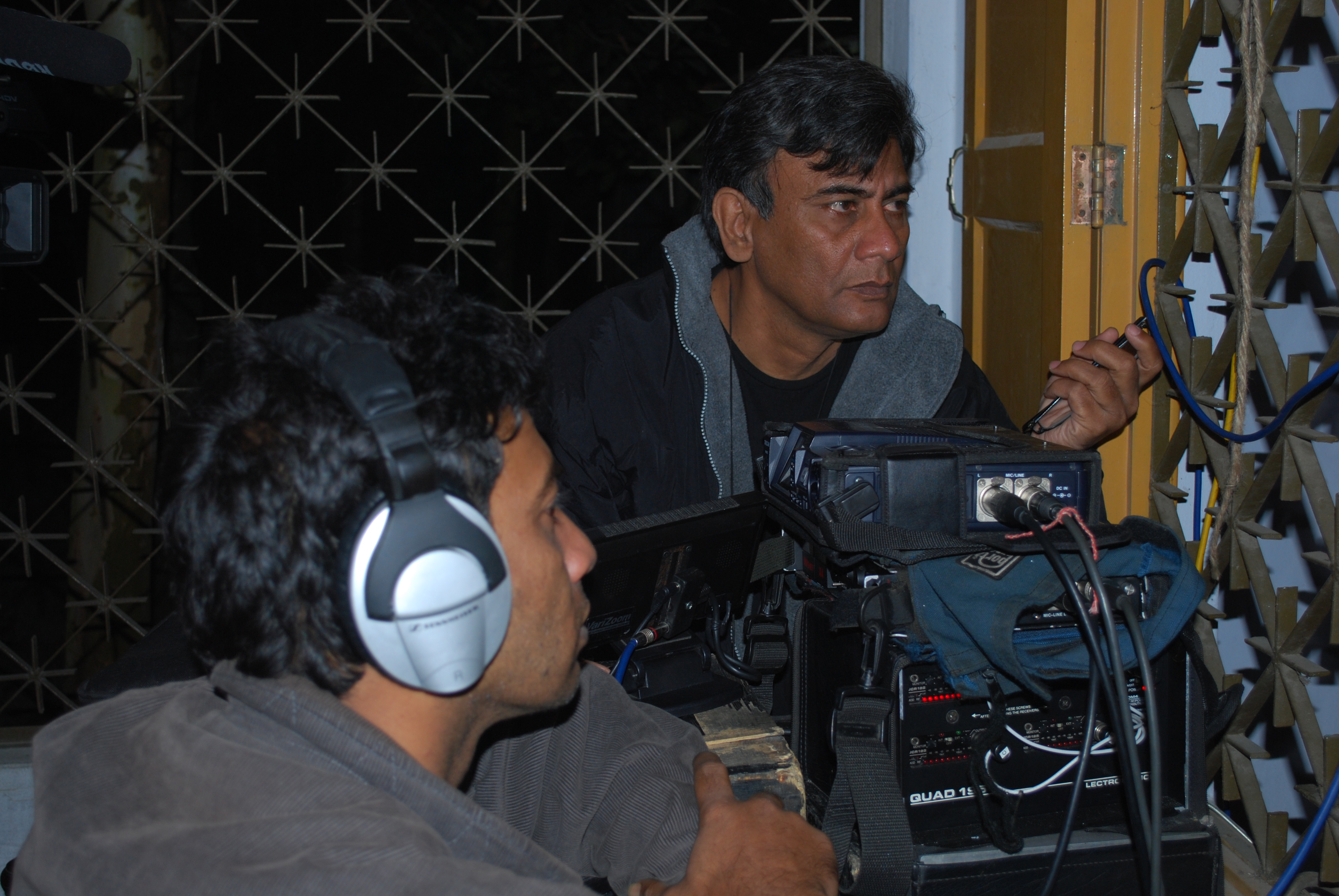
Tareque was always serious about location sound recording. During the making of Matir Moina, proper location sound recording equipment was not available in the country. As he did not want to compromise on sound quality, he decided to invest in a complete location sound recording setup himself, despite how expensive it was at the time. He purchased an Lectrosonics wireless system with four Tram lavalier microphones and a Tascam DAT recorder which was industry standard that time Also hired a location sound recordist from Bombay name Indrajit Neogi. Abdus Sattar Ripon and me assisted him that time.
Since Matir Moina was set in 1971, we had to be extremely careful about maintaining the authenticity of its soundscape. Any modern motor noise even from distant vehicles could disrupt the period atmosphere of the film. To manage this, we used four walkie-talkies to communicate with different points around the location and temporarily stop possible sound sources whenever necessary, often with the help and cooperation of local villagers.
Once in Kaliakair, the location we used as the backyard of the madrasa was actually a mango garden. On the day of the shoot, the sound of crickets continued nonstop all day making it impossible to record clean sync sound throughout the day. At first, it felt like a serious problem. But later, in post-production Tareque creatively used those persistent cricket sounds in post-production as a recurring sound-motif connected to Rokon’s psychological trauma. He always had the ability to think out of the box and transform practical difficulties into cinematic possibilities.
He always used to say that cinema is a very powerful medium because it can give us a deep experience of lives and realities, we may never personally go through, allowing us to understand what other people are going through.
4. After decades of working in this field, how would you define the relationship between sound and image in cinema?
Sound and image naturally complement each other, as we live in a world where our senses are filled with sound and image every moment. In Cinema when we can use them thoughtfully and creatively, they create a kind of chemistry. That relationship creates a powerful synergy that makes powerful cinematic moments. Sometimes people become very obsessed with image quality, but they forget that good-quality images also deserve good quality sound. Bad sound can destroy the beauty of an image, and once the sound feels unnatural or poor, the audience often comes out of the immersive experience of the film.
5. Many viewers focus primarily on what they see. Why do you believe sound is just as essential to the emotional and narrative power of a film?
Actually, the reason is that sound often works on audiences unnoticed, affecting them beyond their conscious awareness. For example, no one consciously pays attention to background music, but how you use the music can completely change the emotional experience of a scene. Ambience also can work that way. If you think carefully about the achievement or context of a scene before choosing the ambience, even a night ambience can become much more than just realistic background sound. When used thoughtfully, it can serve not only define time of the day but also play a narrative role, like an artistic storytelling tool to express fear or tension or romance may be.
6. As someone who has spent a lifetime listening carefully, what is the difference between hearing a sound and truly listening to it?
You see listening is very unique. It varies person to person how they listen. Hearing is all that comes through your hearing process but listening is when you pay attention to any source of the sound. Generally, we don’t listen all of the sources of our soundscapes, we filter out according to our desires and necessities consciously and subconsciously. But if you are a sound professional then you need listen to your around and other places to enrich your sound pallet to use them build your cinematic sound world.
In other way when you attentive to one source of sound then you missing another so there is a listening approach with choiceless awareness. Also, there is way call reduced listening, which is you are listening not the context or meaning but texture of the sound. I don’t know is this your answer or not.
7. In your view, what are the major shortcomings in the way sound is treated in Bangladeshi cinema today?
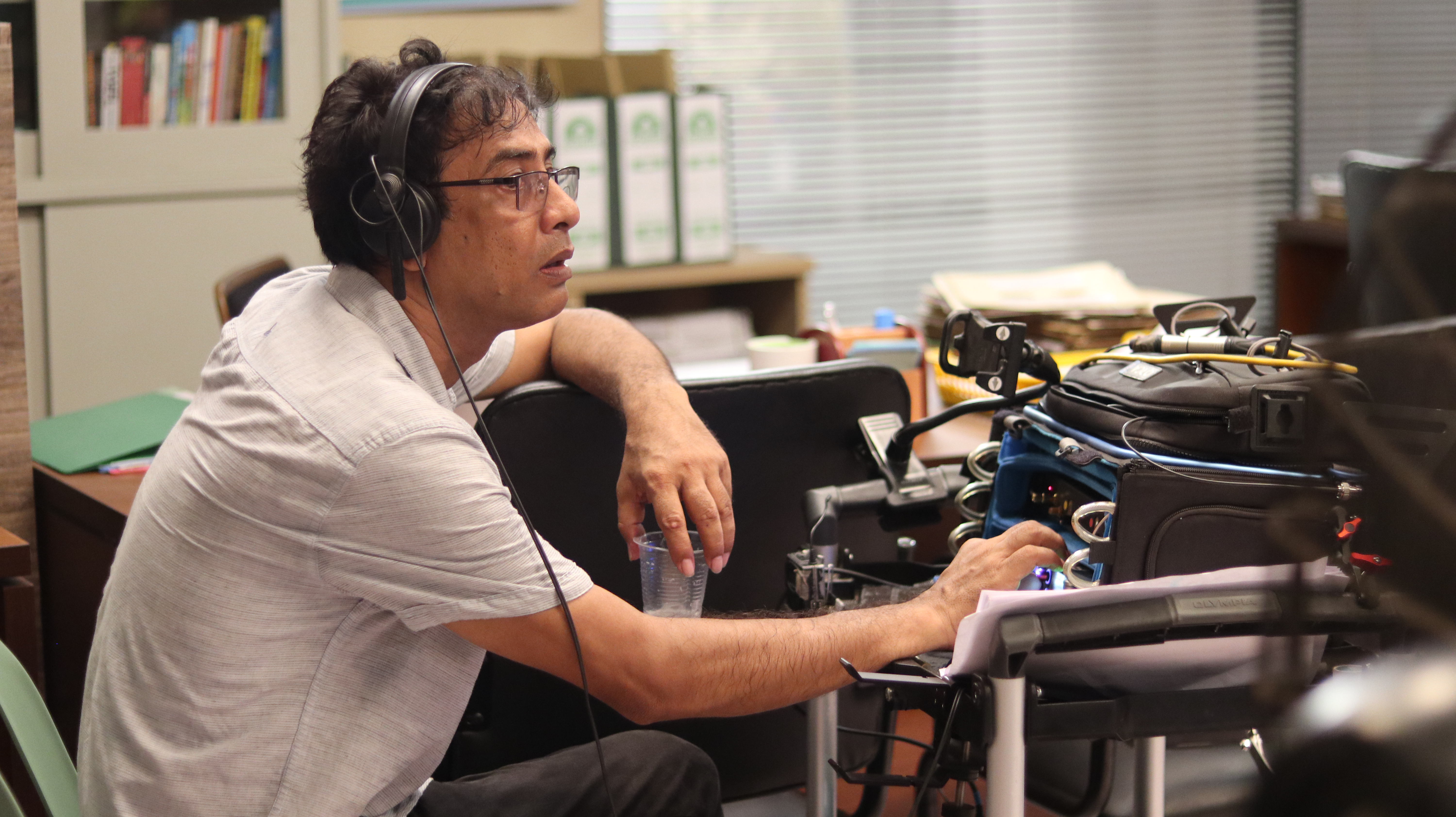
You know, our industry is actually far behind in many ways for a modern art form that is so heavily dependent on technology. In terms of budget, knowledge, skill, and equipment, if you ask me which is the weakest part of our film industry, my answer would be pre-production and production management. For that reason, we often cannot finish our work on schedule and have to continue late into the night. When time pressure increases, there is only one thing you can fix later in post-production — and that is sound. That is what often happens to our location sound recording, when artists are on location with costumes and props, interacting with co-artists and delivering their best performances, but we cannot use what is most authentic because of time pressure. If there is train, an airplane, or even an azan overlapping the dialogue in your sound recording, you cannot simply wait for those transient sounds to pass.
But why is location sound so important? You know, every space has its own sonic character. A narrow space has immediate reverb, while a big space has longer reverb, and our audience has real-life experience of that. So when you use studio dubbing with acoustically treated room sound and no sense of space identification, every place sounds the same. That feels unrealistic, and the audience cannot fully engage with the story if it does not feel believable to them. If you love your--as a film maker Dubbing should be the very last choice to struggle with. But If dubbing is necessary then you have to treat it correctly with adding proper reverb to the dialogue. Lastly to make film narrative complete with right sound at right place at the right time at right perspective and tone it takes huge time and effort but we don’t have that budget.
8. What practical changes in filmmaking practice, film education, and production culture are necessary to improve the quality of sound in Bangladesh?
You see, we don’t have any institution dedicated to teaching sound technology. We also don’t have a dedicated film institute. There are some universities with film departments where sound exists as a course, but most students aim to become film directors, so they rarely think seriously about becoming sound recordists or sound designers. But when I try to make their lessons more practical and engage them in class practice, they often become interested. But universities also don’t have enough equipment to properly support regular practice. Since film is a technical medium, they should have adequate equipment for students’ practical exercises.
9. As a teacher, what is the most important lesson you hope young filmmakers understand about sound?
It is difficult to say something like that in one line. If they listen Radio Drama then they will know that sound is a stand-alone media, it has the power to tell stories without image. So, use that power of sound as narrative tool to tell your stories.
10. Looking ahead, what are your personal aspirations, and how do you envision the future of Bangladeshi cinema?
I would like to see our filmmakers make films not only for international film festivals, but also for our own communities and local audiences. I hope audiences will once again return to cinema halls. Right now, we do not even have a proper Foley stage in Dhaka. I hope that in the near future we will be able to build that infrastructure as well. I also hope our industry will gradually move toward Dolby Atmos sound design and more advanced sound practices.