Published: : March 29, 2026, 04:43 PM
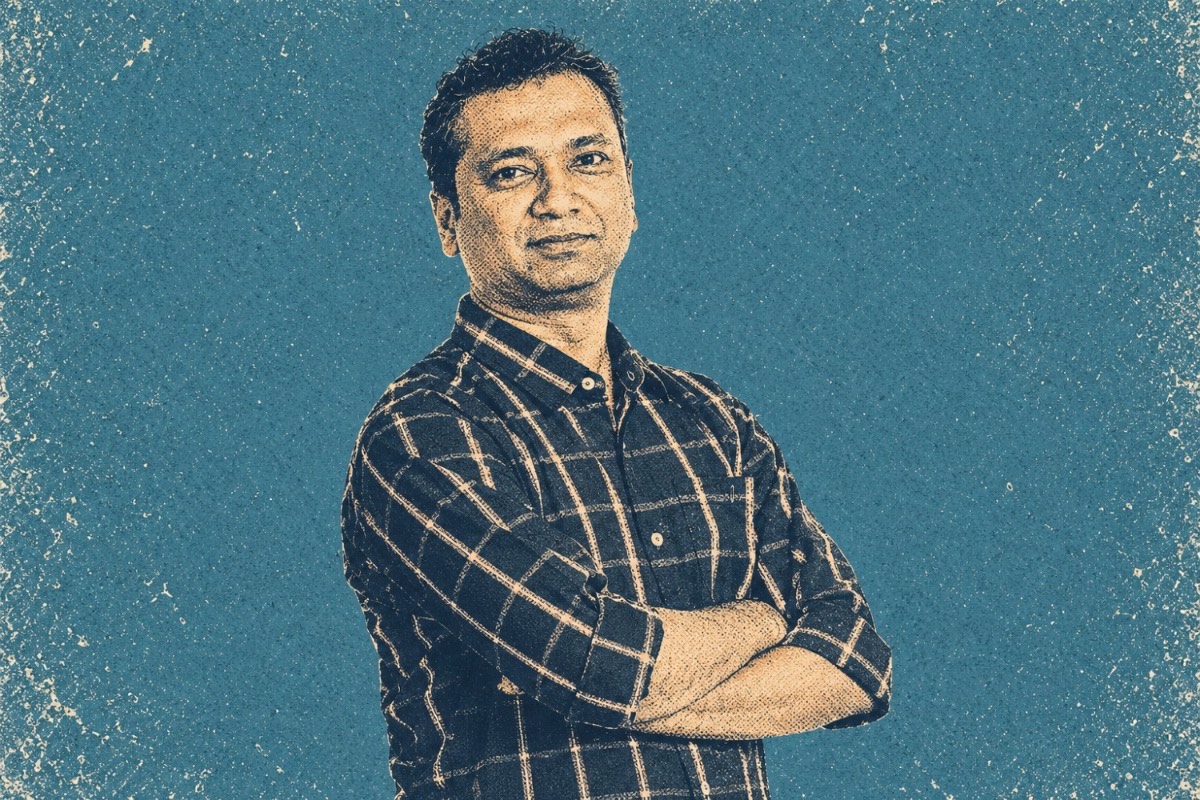
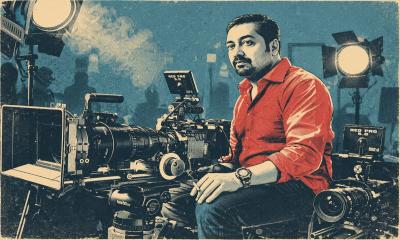
Filmmaker Tanim Noor gained notable success with Utshob, a film that connected with audiences through its honesty and relatability. His ambitious new project, Bonolota Express, released during the Eid vacation, is now running abroad and receiving a similarly strong response. In this exclusive interview for Cut to Cinema, conducted by Md Rabbi Islam, Noor reflects on storytelling and cinema.
Mr. Noor, before we talk about the “how,” let’s talk about the “why.” What is cinema to you? Is it a mirror to our world, or is it a way to escape it? What is the one philosophy you carry into every film you make?
To me, cinema is both a mirror and an escape; but never one without the other. A film must begin by reflecting something real: a truth, a feeling, a conflict that already exists within us. Otherwise, it becomes hollow. But if it only reflects reality as it is, then it offers no relief, no transformation. That’s where cinema becomes an escape not by denying reality, but by reshaping it, giving it meaning, sometimes even offering hope where none seemed possible.
I don’t believe in making films just to tell stories. I believe in making films to feel something honest. Because audiences may forget the plot, they may forget the characters but they never forget how a film made them feel. And if that feeling is real, then the film has done its job.
Both Utshob and Bonolota Express are rooted in existing literature. Why do you find yourself drawn to the classics? What is it about these “old souls” that makes you want to breathe new life into them?
I’m drawn to the classics because they’ve already survived time. That tells me there’s something deeply human inside them, something that doesn’t fade with trends or generations.
These works carry an “old soul,” not because they are outdated, but because they understand people at their core: love, loneliness, longing, identity. Those emotions don’t change, only the way we express them does.
In the end, I’m not trying to modernize a classic. I’m trying to rediscover it. What excites me is the tension between the old and the new. The story remains rooted, but its expression evolves.
In Utshob, you transformed a Victorian character like Scrooge into Jahangir, a grumpy businessman from Mohammadpur. How do you decide on those tiny, local habits—like his annoyance at neighborhood music sessions—that make a global story feel as if it were born in our own streets?
I grew up in Dhaka. The sounds of cassette players from next door, the constant presence of community, the small irritations and unexpected warmth of neighborhood life; these are not research materials for me, they are lived experiences. That nostalgia stays with you. It shapes how you see people.
This process is never mine alone. My core writers Ayman Asib Shadhin, Samiul Bhuiyan, and Susmoy Sarker bring their own memories, observations, and instincts into the room. Together, we unpack these shared experiences and rebuild them into something cinematic. It becomes a collective act of remembering.
So when I think of a character like Scrooge, I don’t try to “adapt” him in an abstract way. I ask: who is this person if he lived in Mohammadpur? What would bother him after a long day? Maybe it’s not Christmas Carols; it’s the loud music from a nearby cultural program, the same familiar annoyance we’ve all seen or felt.
Those tiny habits come from observing life very closely, especially the kind of life we grew up around. Because the truth is, global stories only feel real when they carry local textures.
And I feel these kinds of stories, the ones rooted in our cassette-era memories, our shared community life deserve to be on the big screen. Not just for nostalgia, but so that a younger generation can see it, understand it, and in some way, relive a world they didn’t grow up in but still belong to.
I am very curious about Bonolota Express, which we know is an adaptation of Humayun Ahmed’s novel Kichukkhon. As a filmmaking student, I study the theories of adaptation, and I want to know: what was the most challenging part of translating this story from literature to film?
Literature allows you to live inside a character’s mind. In Kichukkhon, so much of the story exists in pauses, in internal thoughts, in the quiet rhythm of observation. Cinema doesn’t give you that same access. You can’t simply “tell” the audience what a character feels; you have to make them feel it through images, sound, and performance.
That translation from inner voice to visual language is the real challenge. The most challenging aspect of adapting Kichhukkhon were the length and structure and of the main plotline. Again, my writers Shadhin, Samiul, and Susmoy came to the rescue. I trust them blindly when it comes to script structure. This is an ensemble film with 12 main characters. And my writers are the ones who are primarily responsible for the craftsmanship that went into building this behemoth of a narrative.
Then came the risk of not sounding Humayun Ahmed enough when it came to the dialogue. But interestingly, making it all sound and feel Humayun Ahmed-esque was the easiest part— because of how influenced we already are by his writing. Utshob was very much like a quasi-Humayun Ahmed natok for the big screen.
For me, adaptation is not about being loyal to every event in the book it’s about being loyal to its soul. That means sometimes changing structure, compressing moments, even inventing new visual beats, just to preserve the same emotional truth. Kichhukkhon was an 88-page-long novella, which is not nearly enough for a feature length film. We had to add stuff without straying far from the original plotline, and without making it feel long just for the sake of runtime.
When you are adapting a book, how do you decide which parts to keep literal and which ones to transform into purely cinematic images?
I don’t start by asking what to keep. I start by asking what the story feels like.
If a moment in the book already carries strong emotional weight through action or situation, I keep it close to the original. But when the story lives inside a character’s thoughts, I have to transform it into something visual through silence, framing, sound, or performance.
So the rule is simple: stay loyal to the soul, not the surface.
Some parts remain literal because they already work on screen. Others change because cinema demands a different language. In the end, the audience may not see every detail from the book, but they should feel the same truth.
Utshob was a hit without action stars or a massive budget. Do you think this is proof that our audience is finally shifting—that they are now more interested in “intelligent” storytelling than in big-budget spectacles?
I see it as a very positive shift. Utshob shows that audiences are ready to connect with stories that feel honest and relatable, even without big stars or large-scale spectacle. It is not that people have rejected big-budget films. They simply no longer depend on them alone.
What is changing is the audience’s expectation. They want something that speaks to them, something rooted in real emotion and lived experience. When a film delivers that, scale becomes secondary.
So yes, it is encouraging. It means there is more space now for thoughtful, character-driven storytelling. That is a good sign for where our cinema is heading.
What is the future of Bangladeshi cinema from your perspective? I personally think there is a “new wave” passing through our industry. What are your thoughts on this?
I also feel that something new is happening, and it’s very encouraging. There is a growing wave of talent across the industry. Writers, directors, actors, technicians, everyone is pushing themselves to tell better, more honest stories. The energy is different now. People are experimenting, taking risks, and trusting the audience more.
I feel proud of my own team, the way they bring dedication and sincerity into every project. At the same time, I genuinely admire the work coming from other productions too. There is a sense of collective growth, not just individual success.
If this continues, I believe Bangladeshi cinema will become more diverse, more confident, and more rooted in its own voice. That, to me, is the most exciting part of this new wave.
Md Rabbi Islam is a sub-editor of Cut to Cinema. He can be reached at [email protected].
Send your reviews, articles, and pitches for Cut to Cinema to [email protected]. Check out our submission guidelines for more details.