Published: : March 5, 2026, 11:01 AM
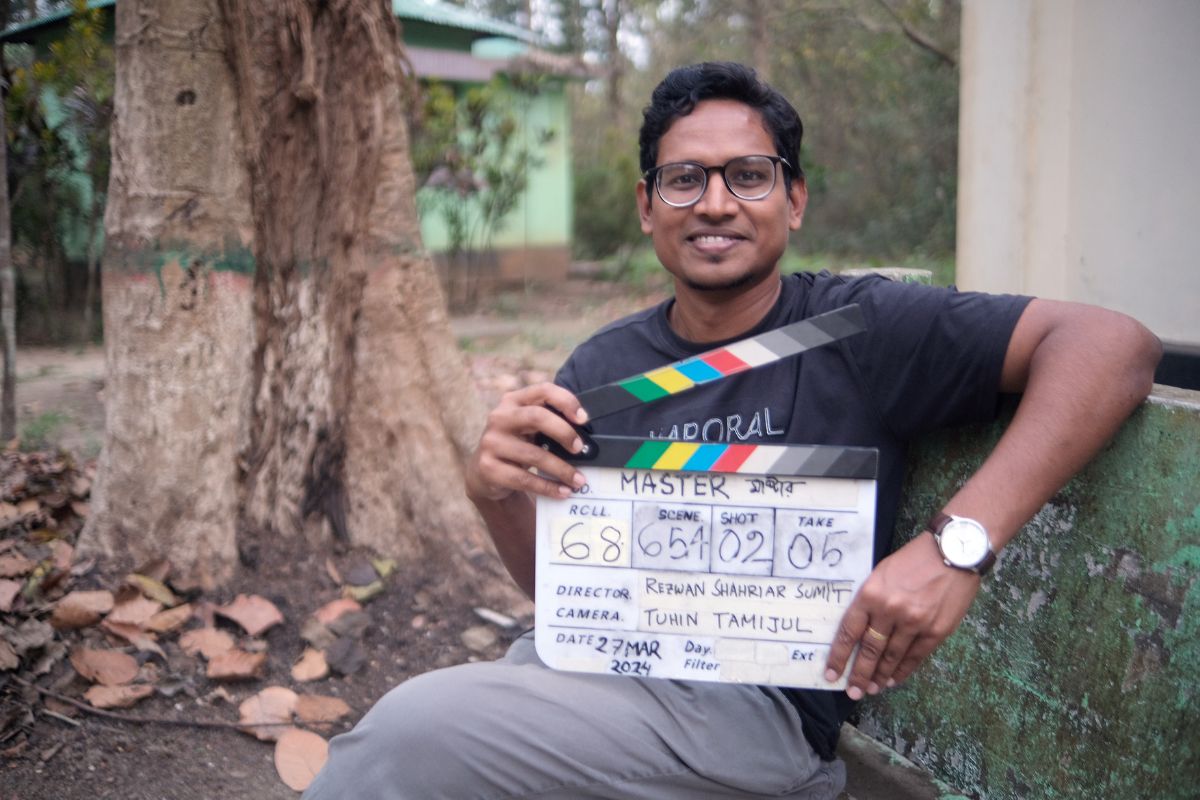
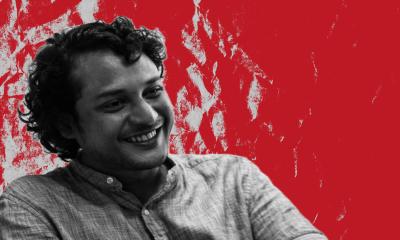
C2C recently spoke with award winning filmmaker Rezwan Shahriar Sumit, director of the political thriller Master. The film won the Big Screen Competition Award at the International Film Festival Rotterdam 2026, marking a significant achievement for Bangladeshi cinema. The interview was exclusively arranged for C2C by Md Rabbi Islam, and Sumit shares his thoughts on the film’s journey, its political undercurrents, and the response it has received internationally.
What was the biggest challenge you faced during the production, especially considering the safety risks and political pressure your crew had to manage?
Master is a big-canvas political thriller that asks difficult questions. It is an independent film, though not necessarily by choice; our lives would have been much simpler had we been backed by a major studio. I exhausted almost every traditional avenue in Bangladesh—OTT platforms, production houses, and private financiers—but no one was willing to risk being associated with a project of this nature.
The film critiques the bureaucracy, the political landscape, and the law enforcement mechanisms of Bangladesh. We live within systems that lack necessary fail-safes, managed by those who often lack the fundamental empathy the roles require. These systemic issues aren't hidden; they are the "part and parcel" of our daily lives. Yet, the studios decided it was neither wise nor safe to project these stories onto the silver screen. I don’t entirely blame them—I’m sure they have their reasons—but it made financing an immense challenge.
When developing Master, I made a conscious effort not to point fingers at a specific individual or political party. Instead, I wanted to interrogate the system that protects the status quo—the same system that feeds massive corporations. In Bangladesh, seismic events like the July-August uprising are not uncommon. Yet, almost invariably, we see the portraits on the wall change and new faces occupy the seats of power, while the underlying machinery remains intact. The cycle of injustice continues; only the victims change. The aftermath of the recent uprising has only validated my worldview. That is why I set out to render a world that is grey, fluid, and uncompromising—centered in the imaginary Upazila of Mohoganj, a place that feels eerily familiar to us all, yet exists nowhere on a map.
By nature, a political drama requires a massive arrangement. Our story opens with an Upazila election; to truly capture the 'theatre' of this event, the set pieces had to feel visceral and grounded. This demanded extensive world-building through realistic characters, sets, locations, costumes, and props. Casting secondary roles and managing the sheer volume of background actors was an extremely challenging task; every person within the frame had to look the part. Furthermore, our production spanned three seasons—the tail end of winter, the peak of summer, and the first hints of monsoon. We had to contend with fog, scorching sun, and sudden rain—elements that proved to be both a logistical curse and a cinematic blessing.
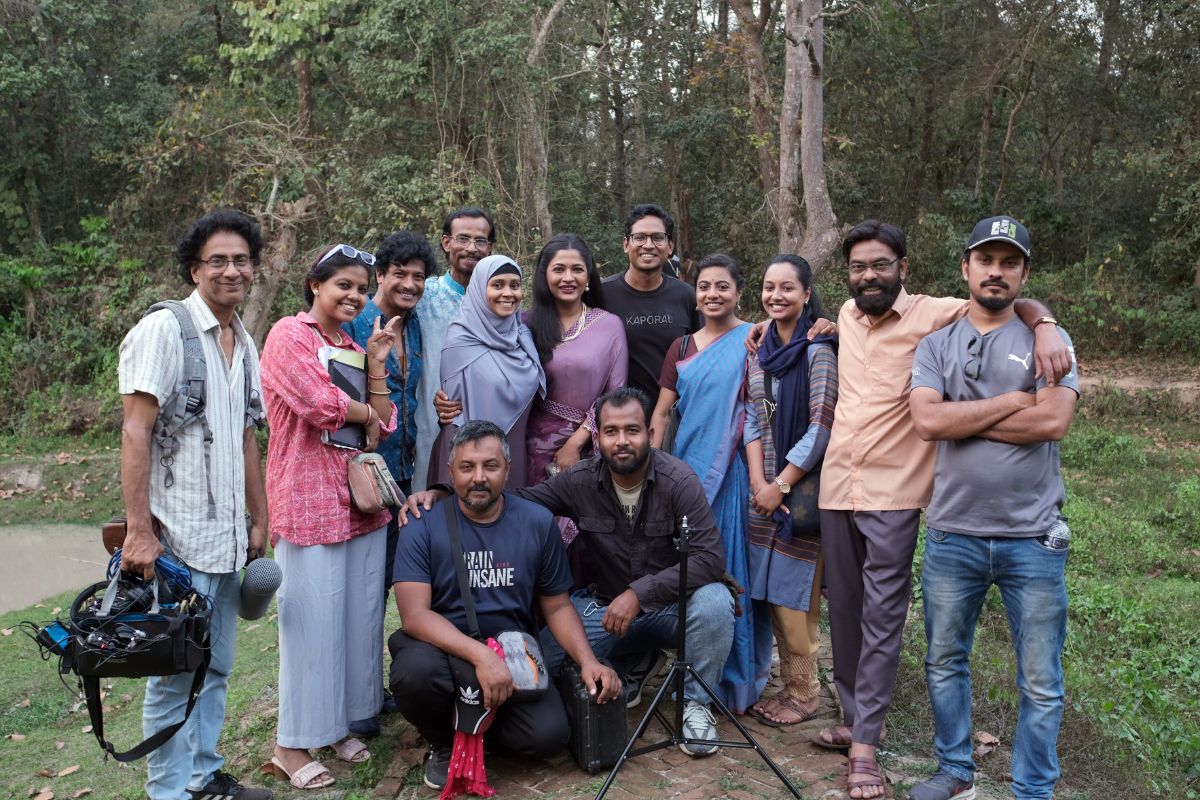
Winning the Big Screen Award at the Rotterdam Film Festival is a historic achievement for Bangladesh; how did it feel to see your work recognized on such a prestigious global stage?
I spent a magical two weeks in Rotterdam, soaking it all up: world premieres, talks, workshops, and networking—the whole nine yards. My debut feature, The Salt in Our Waters (Nonajoler Kabbo), had previously competed at BFI London, Göteborg, São Paulo, Seattle, and screened at Busan and Torino, but COVID-19 kept me from attending any of those screenings in person. My first live presentation was actually at UN COP26 in Glasgow, which draws a very different crowd—primarily climate policymakers. So, when Master premiered, it felt incredible to finally be in a theater filled with true cinephiles. The Dutch audience is exceptionally engaged and curious; the Q&A sessions were remarkably lively. By the time the festival drew to a close, I already felt a deep sense of satisfaction from the interactions I’d had, including intimate moments with filmmakers like Mohammad Rasoulof and Kleber Mendonça Filho.
When the awards were announced, we were over the moon. The video of our reaction went viral, and it’s as genuine as it gets. The Big Screen Competition was incredibly formidable; we were up against established directors like Ivo M. Ferreira, Isabel Sandoval, and Malek Bensmaïl. The category even featured A-list talent like Claes Bang (The Square), Peter Mullan (The Magdalene Sisters), and the currently Oscar-nominated Renate Reinsve (Sentimental Value). Unlike our peers, who were backed by major studios, financiers, and global PR agencies, we were as "indie" as it gets—an emerging voice from Bangladesh with almost no institutional backing.
That context makes this win feel truly special. My hope is that it opens new doors for my future projects, but more importantly, I believe it solidifies Bangladesh’s place on the global festival circuit. In a moment of pure adrenaline, I told the crowd: "Bangladesh is in the house, and we are here to stay!" The roar of the applause that followed is something I’ll never forget.
Audiences at home are very excited to see the film, when do you expect Master to be officially released in theaters across Bangladesh?
Master is centered on the intricate world of Upazila politics. The narrative revolves around the Upazila Chairman, the Upazila Nirbahi Officer or UNO, the local MP, the Commissioner, and the OC. These are deeply familiar roles in our society—positions whose actions, or lack thereof, directly shape or break the lives of so many. Because of this, I believe the film will resonate on a much deeper level with Bangladeshi audiences. They will grasp the stakes immediately and engage with the story emotionally, allowing the film perhaps to create a genuine, lasting impact. I am eager to see the dialogue it sparks. Currently, we are navigating the remaining bureaucratic, censorship, and logistical hurdles. Our goal is to bring this story to the local theaters as soon as possible, with an ideal release window targeted for mid-2026.
What is the core philosophy of the film, and what made you want to explore whether power corrupts the individual or if the system itself is the problem?
I set out to create a film that interrogates the inherent nature of politics and the paradox of authority: while one needs power to enact meaningful change on a grand scale, that very same power often erodes the person who wields it. The tragic arc of a leader who promises to dismantle the status quo, only to eventually be consumed by it, is a universal theme. It happens everywhere. I believe this is why the jury in Rotterdam was so moved; they felt the urgency of the topic as global power axes shift before our eyes. In the West, we see leaders preoccupied with consolidating power to serve their corporate overlords' interests. Rather than painting on a global canvas though, I chose to limit the scale to the Upazila—or sub-district—level. Mohoganj, the fictional setting of the story, serves as a microcosm of both Bangladesh and the world at large. I chose to focus on local textures: the rhythmic chaos of the bazaars, the tea stalls that become hotbeds of debate, and the domestic courtyards that transform into informal courtrooms. These are inherently Bengali scenarios, and by portraying them with honesty and authenticity, the film gained its strength. Ultimately, I offer no easy answers. There is no clear demarcation between good and evil. In that sense, Master shares a thematic kinship with The Salt in Our Waters (Nonajoler Kabbo).
Why was it important for you to show the leader's "moral drift" through his private life and dinner table conversations rather than just his public speeches?
I grew up in a politically inclined household; my father is a politician and my mother is a professor of political science. Both have been incredible supporters of my cinematic pursuits. You can imagine the atmosphere at our dinner table while I was growing up—it was a space for rigorous debate on the complex nature of politics in Bangladesh. I have always found the vulnerable, private reality of a leader far more fascinating than the carefully curated facade they present in public life. That was a perspective I decided to incorporate from day one of scriptwriting.
My writing process is generally backed by considerable primary research. This was especially true during the production of my third feature, Tide Is Rising (currently in post-production), where I spent significant time interacting with various Upazila Chairmen and UNOs. I witnessed firsthand how promises often went unfulfilled and how local fisherfolks remained voiceless in the face of authority. Yet, when you look at the hierarchy, an Upazila Chairman or a UNO is not a particularly senior official—they are essentially mid-level positions. This realization of how much power is concentrated even at that level was striking. My co-writer also comes from a political background, which allowed him to contribute deep, lived-in insights to our research.
As a filmmaker, how do you perceive cinema as an art form that can start necessary conversations about systemic injustice in society?
I believe cinema is a vital medium for addressing the uncomfortable truths we are often encouraged to sweep under the rug. I look to filmmakers like Ken Loach, Spike Lee, Hirokazu Kore-eda, and Ava DuVernay; the majority of their oeuvre is dedicated to stories with justice and human rights at their core. They don’t always spell it out or force a political agenda upon the viewer, but they are profoundly aware of their surroundings. They operate with their eyes wide open.
In many ways, all three of my feature films—including the one currently in post-production—speak to the circularity of injustice and the way power inevitably asserts itself. Yet, there are always sparks of hope; moments where people unite and ensure their voices are heard. I don’t view the worlds my characters inhabit as bleak. On the contrary, there is a great deal of "color" in these films. I want to capture the vibrancy of life that exists even within these rigid systems.

-20260429155704.jpg)