

Published: : August 14, 2026, 07:03 PM
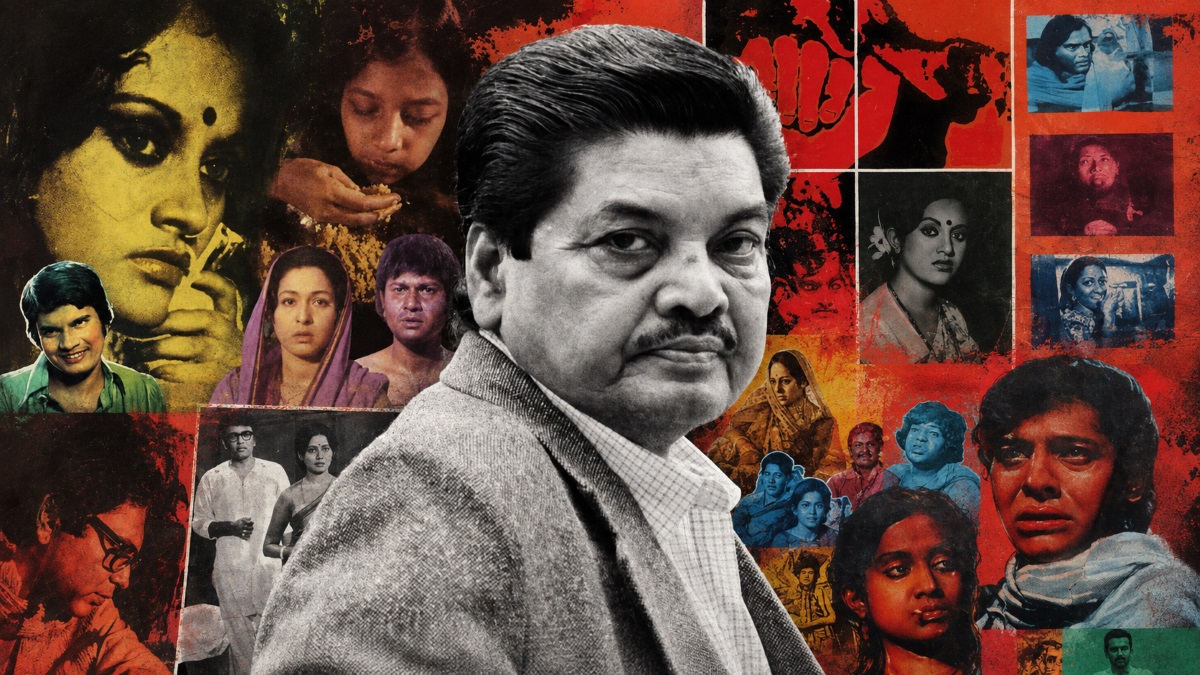
There is a scene in Golapi Ekhon Traine that I keep thinking about whenever Amjad Hossain comes to mind. Golapi enters a first-class compartment and the passengers tell her this is first class, meant for first-class passengers, not people like her. She does not apologise or leave. She looks at them and says there is no class in Bangladesh, everyone belongs to the same class here. Of course, we know she is not literally right. Bangladesh is divided by money, education, manners and access, and that compartment makes the division obvious. But Golapi is not teaching them about class. She is refusing the place they have chosen for her. That is what really makes the scene sharp. Hossain turns an ordinary train journey into an argument about Bangladesh.
What keeps pulling me towards Hossain’s work is the way he made room for people who were usually expected to stay quiet. Poor women, rural labourers, hungry families and villagers whose lives could be overturned by gossip or someone more powerful appear again and again. But he did not turn them into cardboard figures representing poverty. They had tempers, jokes, pride, bad judgement and desires. Hossain was more than a director. He acted, wrote screenplays, produced films, wrote lyrics, created television characters and published literature. The list of roles matters less than the thread connecting them. He listened to ordinary speech and found stories in people whose lives were usually considered too ordinary to matter. He gave them room to be messy, funny and painfully human.
Born in Jamalpur on August 14, 1942, Hossain entered cultural life through writing before cinema made him famous. He came to Dhaka and began working in films in the early 1960s. He acted, assisted, watched and learned. His association with Zahir Raihan was important. Hossain acted in and wrote for Behula and later worked with Raihan on the screenplay of Jibon Theke Neya. That film turned an authoritarian household into a political allegory. Hossain seemed to take a lesson from it: politics does not always need to announce itself. It can enter through a kitchen, a marriage, a family argument or the person who controls the keys. That understanding stayed with him. Even his most popular films often carried politics through people’s everyday struggles.
He rarely needed a character to stop and explain oppression in theoretical language. Instead, he showed a marriage breaking over dowry, a worker being underpaid, a woman being judged for leaving home or a hungry person being treated like a criminal. With Noyonmoni in 1976, he found the rural world that would define some of his strongest work. The village was never just a pretty backdrop. There were songs and romance, but also superstition, gossip, cruelty and local authority. The village watches, talks, and remembers. It can protect people or destroy them while claiming to protect tradition. Power does not always arrive wearing a uniform. Sometimes it sits in a courtyard, controls a marriage or decides whose story people believe. Hossain understood that power often becomes most visible in ordinary life.
Then came Golapi Ekhon Traine in 1978. The film deals with dowry, poverty, labour and the punishment directed at a woman who becomes visible in public. Golapi is pushed into work because the respectable structure around her has failed, yet the same society that depends on her labour is uncomfortable with her independence. She is needed, but she is not supposed to look powerful. The first-class scene says all of this without a lecture. Golapi cannot buy the status of the passengers around her, so she challenges their confidence in it. The film won 11 National Film Awards and became a major popular success, but awards do not explain why people remember it. They remember the language, the attitude and her refusal to be embarrassed. She is not asking for permission to exist there. She is simply refusing to be moved.
Hossain returned to women in Sundori, Koshai, Dui Poishar Alta and Jonmo Theke Jolchi. Again and again, his women are caught between family duty, economic dependence and public judgement. Rozina won her first National Film Award for Koshai and later remembered Hossain as a meticulous director who understood the camera and worked through scenes carefully. These characters could easily have become symbols of suffering. At their best, they did not. The performances gave them humour, stubbornness and unpredictability. Still, Hossain did not escape the limitations of his time. His films sometimes measure a woman’s strength by how much pain she can quietly endure. But he repeatedly made that suffering the moral problem rather than simply using it to glorify male heroism. That distinction matters, even when the films do not always get everything right.
Then there is Bhat De, the 1984 film whose title is almost painfully direct: give me rice. Not a grand speech about justice. Not sympathy. Rice. The film follows Jori, played by Shabana, through poverty and hunger. She tries to support her visually impaired father and enters a labour system where poor women are vulnerable. Hunger takes over everything. The film came a decade after the famine of 1974, but it does not become a history lecture. Hossain takes something huge and gives it a face, specifically a woman’s face. The rice mill is full of food, yet the worker remains hungry. That image says enough. Hunger is not only about whether food exists. It is about who gets to have it. There is something almost unbearable about how simple Hossain makes the point. He does not need to decorate hunger before asking us to look at it.
What I admire about Hossain is that he never seemed embarrassed about popular cinema. He did not believe serious subjects needed respectable packaging. He used stars, songs, humour, villains and tears. The excess can feel dated, but it explains his reach. He wanted difficult ideas to reach people who would never read an essay about class or labour. A first-class seat could explain hierarchy. A dowry demand could expose marriage economics. A bowl of rice could indict an entire social order. His songs carried those emotions beyond film. He wrote lyrics including “Hayre Kopal Mondo,” “Achen Amar Moktar,” “Keu Konodin Amare Toh Kotha Dilo Na,” “Ekbar Jodi Keu Bhalobashto” and “Baba Bole Gelo Ar Konodin Gaan Koro Na.” They dealt with bad luck, longing and sorrow. They often sound less like lines written to impress critics and more like things people might actually say when life corners them. That, too, was part of his popular instinct.
Television and literature widened his reach. Through Jobbar Ali, he brought vernacular speech and social comedy into people’s homes. He also wrote novels, plays, short stories and children’s literature, and several films grew from his writing. He also served as founding secretary general of the Bangladesh Film Directors’ Association. People remembered his discipline. Babita credited his hard work for the reception of Noyonmoni. Rozina associated him with an important stage, and Ilias Kanchan remembered his seriousness. Still, a tribute should not turn him into a saint. Some plots are schematic, some villains are too easy to blame and some women are defined through suffering. Yet within commercial cinema, he repeatedly put hungry people, working women and villagers at the centre. That achievement deserves attention because he did it in films designed for large audiences rather than a small circle of admirers. He trusted ordinary viewers to understand serious things.
Hossain died in Bangkok on December 14, 2018, after a career spanning more than five decades. Awards tell us the scale, but not the affection. I return to images. Golapi refusing to leave first class. Jori asking for rice. A village laughing at a joke with cruelty underneath. A song about misfortune outliving the film. The passengers believed civilisation belonged to them because they had tickets. Golapi knew better. Hossain knew better too, perhaps. He showed that dignity does not arrive with wealth, polished speech or a seat number. It exists in people society keeps trying to move elsewhere. He let them complain, joke, argue and answer back. That is why remembering Hossain feels less like revisiting a filmography and more like hearing Bangladesh speak in a voice it should never have forgotten.







-20260727193827.jpg)