Published: : October 4, 2026, 10:46 PM
The first time I properly watched Jeanne Dielman, 23 quai du Commerce, 1080 Bruxelles, I remember wondering when I would stop noticing the time. A woman was preparing food, clearing a table, moving through her apartment, doing things that most films would either cut away from or compress into a brief montage. Nothing, at least in the conventional sense, seemed to be happening. And yet after a while I found myself watching with an odd degree of attention. A small delay mattered. A gesture felt different. Silence became uncomfortable. It occurred to me that Chantal Akerman had somehow made ordinary time feel exposed. Once you notice that quality in her cinema, it becomes difficult not to see how closely it is tied to loneliness.
Loneliness in Akerman's films is rarely announced. Her characters do not usually tell us that they feel isolated, nor does the music arrive to instruct us when to feel sorry for them. More often, loneliness is simply there, sitting beside them. It exists in kitchens, hotel rooms, train compartments, anonymous streets, letters, phone calls and pauses in conversation. Someone may be surrounded by people and still appear unreachable. That, to me, is what makes her films feel so modern. She understood that being alone and being lonely are not the same thing, and that enormous emotional distance can exist even when another person is only a few feet away.
Jeanne Dielman is probably the clearest place to begin. Jeanne is a widowed mother living in Brussels with her teenage son. Her life follows a strict order: she cooks, cleans, shops, prepares dinner and receives male clients as part of a tightly regulated routine. Akerman gives these activities an amount of screen time that still feels unusual. We watch Jeanne perform domestic work rather than merely being told that she performs it. Ivone Margulies, writing for the Criterion Collection, describes the film's radical attention to duration and everyday domestic activity, while the BFI has similarly emphasized its importance within feminist film history. But what stays with me is not simply the political importance of showing the work. It is how lonely the work eventually feels.
Jeanne is not cut off from humanity. Her son comes home every evening. Clients visit her. She shops and walks through the city. Yet none of these interactions seems to offer much emotional shelter. Her routines appear to hold her life together, and for a while they do. Then very small things begin going wrong. Timing slips. Familiar gestures no longer feel automatic. On paper, these details sound almost insignificant. In the film they become disturbing because we have spent so much time learning the shape of Jeanne's days. Routine keeps disorder away, but it also reveals how narrow her world has become.
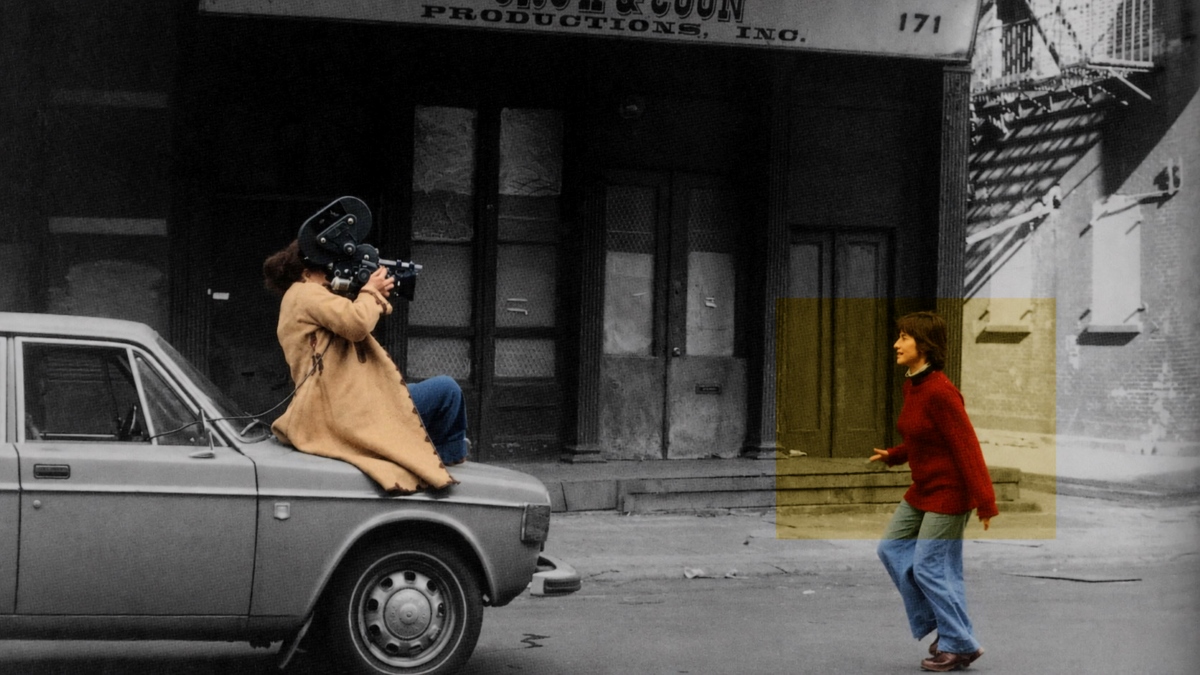
A different kind of loneliness appears in News from Home. Akerman films New York--its streets, subway platforms, passing cars and distant pedestrians--while reading letters sent by her mother from Belgium. The Criterion Collection and BFI both describe this basic structure: images of Manhattan are paired with her mother's letters, filled with family news, worry and requests for more communication. Meanwhile New York carries on. Cars pass. People disappear into stations. Trains make their enormous mechanical noise. Sometimes the city nearly overwhelms the voice. I find those moments particularly moving because the film never needs to say, "Look how far from home she is." The distance is already there, between what we see and what we hear.
There is something uncannily contemporary about News from Home, even though it was made decades before smartphones and video calls became ordinary. We now live with almost constant communication. A person can send a photograph across the world in seconds or see a parent's face on a screen from another country. And still, distance remains distance. The film suggests that communication can sometimes make absence more noticeable rather than less. A letter proves that someone is thinking of you, but it also reminds you that they are elsewhere. In News from Home, the mother's voice brings home closer while simultaneously making New York feel even farther away from it.
Travel offers no easy escape in Les Rendez-vous d'Anna. Anna, a filmmaker, moves through European cities while presenting her work, passing through trains, stations, hotels and brief encounters. She meets people constantly, yet seems to pass through places without fully arriving anywhere. Akerman's hotel rooms look temporarily like homes, but nobody really belongs to them; they are spaces built for departure. A related problem appears more physically in Je tu il elle and more disturbingly in La Captive, where intimacy, possessive love and surveillance suggest that closeness does not necessarily make another person fully knowable.
By the time we reach No Home Movie, this distance has become painfully personal. Akerman films her mother, Natalia, in her Brussels apartment and also speaks with her through Skype when they are apart. Natalia was a Holocaust survivor who had been deported to Auschwitz, a history that quietly sits beneath the film. Yet No Home Movie does not behave like a conventional historical documentary. Much of it consists of conversations, meals, rooms, pauses and ordinary exchanges between mother and daughter. That ordinariness is what makes the film difficult to shake off. Akerman is recording someone she loves while time is visibly running out.
It is hard not to think of News from Home while watching No Home Movie. In the earlier film, a young Akerman is away in New York while her mother reaches her through letters. Decades later, technology allows them to see each other on a computer screen. In one sense, the distance has shrunk enormously. In another, nothing essential has changed. The daughter is still somewhere else. The mother is still trying to remain close. Only now age and mortality sit inside the conversation too. Technology can carry a face across distance, but it cannot stop time.
In 2022, Jeanne Dielman topped Sight and Sound's critics' poll of the greatest films ever made, becoming the first film directed by a woman to reach number one in the poll's history. The ranking was an important moment in Akerman's reputation, but rankings tell us only so much. What matters more is what her films have taught viewers to notice. She gave screen time to things cinema routinely discarded: waiting, washing dishes, sitting alone, travelling without adventure and listening to someone who is not in the room. She understood that a quiet life is not an empty one.
Perhaps that is why Akerman's cinema feels unusually close now. Modern life has given us almost endless ways to avoid being technically alone, yet it has not made loneliness disappear. We live in crowded cities, send messages all day and maintain relationships through screens. Still, there are rooms in which silence feels heavy and conversations in which two people fail to reach each other. Akerman never offered a comforting solution to any of this. What she offered was attention. She stayed with people when another filmmaker might have cut away. She allowed their silence to remain silence. And in doing so, she gave loneliness something it does not often receive: not pity, not explanation, but time.
Md Rabbi Islam is a sub-editor of Cut to Cinema. He can be reached at [email protected].
Send your reviews, articles, and pitches for Cut to Cinema to [email protected]. Check out our submission guidelines for more details.