
Published: : January 28, 2026, 10:21 AM
In a year dominated by loss and death, amidst wars, conflicts, and genocides around the world, a clear preoccupation emerged in international cinema: the fear of loss and the struggle to preserve family and children.
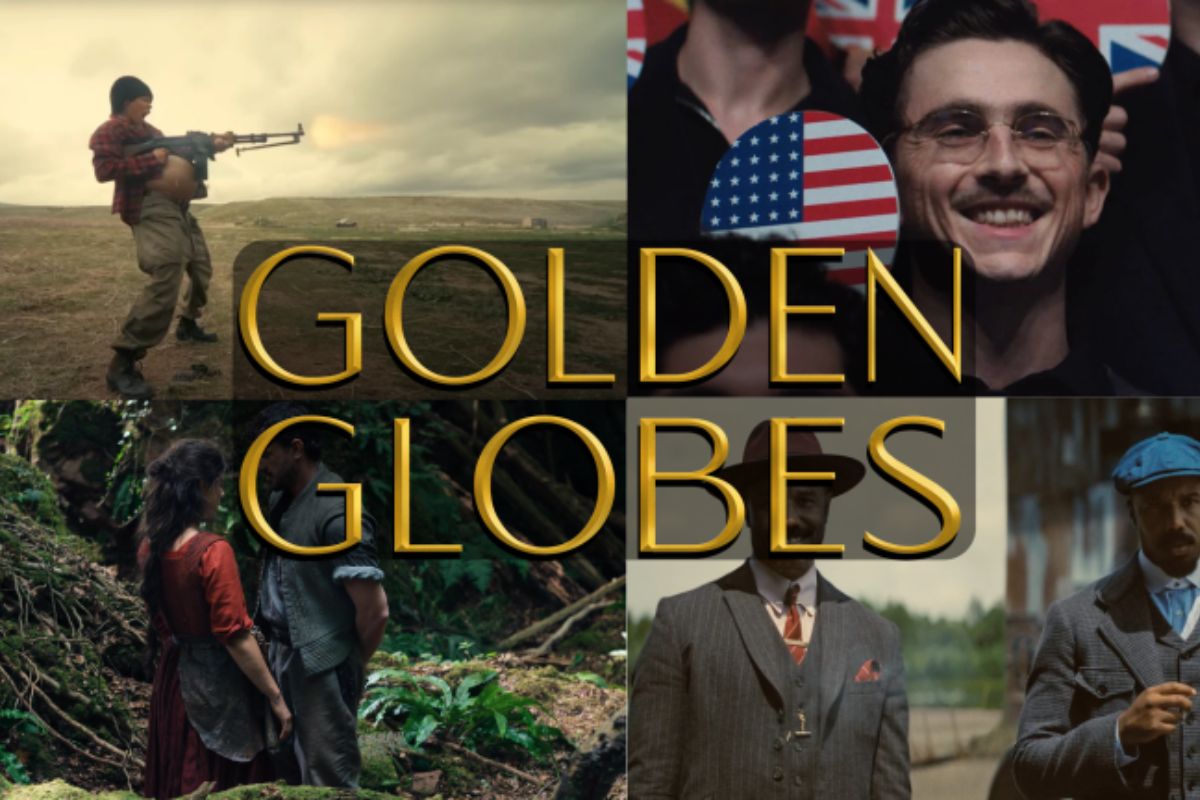
This preoccupation was clearly reflected in the results of the Golden Globes, voted on by a panel of international journalists and film critics. The Golden Globes represent the most important journalistic awards ceremony in the world of cinema and entertainment, in contrast to the Oscars, awarded by the Academy, which is primarily composed of filmmakers.
How can the stories of seemingly insignificant individuals create such a massive impact that they secure awards? How did the cultural and ethnic diversity of the voters influence their choices? And what will remain in the memories of viewers and critics from this year's films and series?
"Hamnet": The Year's Best Drama
Hamlet is perhaps the most famous literary work in human history, the crown jewel of William Shakespeare's play. In the film "Hamnet," directed by Chinese filmmaker Chloé Zhao and based on the novel by Irish author Maggie O'Farrell, the story unfolds in the backyard of the play's narrative.
We follow the circumstances that led Shakespeare to write his most important work, yet in the film, Shakespeare's wife and her son Hamnet become the central figures.
Many didn't expect "Hamnet" to be a hit; it emerged as a dark horse at the end of the year. However, it's a film characterized by its lyricism, profound sensitivity, and introspective nature, culminating in a stunning final act, both theatrically and cinematically.
The story here is one of a mother, a son, and an absent father -a recurring theme in most of this year's important films- but here it's presented in its most evocative and nostalgic form.
"One Battle After Another": The Best Comedy
Paul Thomas Anderson's "One Battle After Another" boasted a stellar cast, including Leonardo DiCaprio, Benicio Del Toro, and Sean Penn. It garnered four Golden Globe Awards, making it the night's biggest winner, including Best Comedy.
Based on the novel "Vinland" by Thomas Pynchon, the film follows the story of a father who was once a revolutionary in his youth. Amidst a series of conflicts, he tries to escape an old enemy and rescue his daughter.
The film delivers a series of comedic action sequences, with DiCaprio at the center, showcasing his distinctive physical comedy. However, the film's true heart and defining element lies in its exploration of the challenges of fatherhood and the attempt by a man who couldn't change the world to change himself and become a good father.
Acting: Mothers and Fathers in Memorable Roles
Irish actress Jessie Buckley won the Best Actress in a Drama award for her iconic performance in "Hamnet." She portrays a mother who appears charming, kind, and connected to nature in the first act of the story, but then transforms into a volcano of emotions, a volcano she expresses mostly without words.
This is an embodiment of strength and the fearlessness to show vulnerability, an embodiment of motherhood, the pain of childbirth, and the agony of loss. It is also an unusual portrayal of love. Jessie deservedly received this award for one of the most powerful performances of the last ten years, or perhaps since the beginning of the new century.
Another mother won the Best Actress in a Comedy award: Rose Byrne for her starring role in "If I Had Legs, I'd Kick You." The low-budget film relies heavily on Rose's performance. We follow a mother caring for her sick child in a highly stressful atmosphere, with the father absent. All of this is captured in close-ups, suffocatingly focused on the mother's face, and we don't see the child until the very end. The award for Best Actor in a Drama went to Brazilian actor Wagner Moura for his role in "The Secret Agent." The film follows the journey of a man who rejects corruption and rebels against a police state, turning his life into a constant escape.
But behind it all lies his main struggle: leaving his family and his memories behind. He is a father trying to see his son again. Moura's performance is understated and relies heavily on his expressive eyes.
In the Supporting Actor category, Swedish actor Stellan Skarsgård won the award for Best Supporting Actor for his role in Joachim Trier's "Sentimental Value."
Skarsgård portrays a father who has spent his life making films and, at the end of his life, tries to rekindle a strained relationship with his daughters, a relationship deeply affected by a family loss. In the Best Supporting Actress category, Tiana Taylor was crowned for her role in "Battle After Battle," portraying a rebellious woman who struggles to find her identity after becoming a mother.
Timothée Chalamet, who benefited from his collaboration with the talented director Josh Safdie, wasn't an exception, he won the best actor in a Comedy for his Role in “Marty Supreme:. Safdie, as usual, takes us on a journey through the life of a man chasing his passions and obsessions, and in the end changes only in the light of becoming a father.
Paul Thomas Anderson: The Biggest Winner
The biggest winner of the night was American filmmaker Paul Thomas Anderson, who won his first award for Best Screenplay, followed by his first for Best Director.
Many consider this year to be the year of "One Battle After Another" and also the year of honoring Anderson, one of the best living American auteur filmmakers.
Anderson excels at blending comedy, drama, and absurdity, but here he also delivered one of his most entertaining and successful action films. All of this unfolds against a backdrop that seems perfectly suited to the era of Donald Trump: we see revolutionaries attempting to confront the regime, even if it means resorting to arms, while the security forces appear as an armed gang controlled by madmen, with the only way to counter them being revolutionaries who are unafraid of death, even if that involves some foolishness.
What will remain?
The Golden Globes selections clearly demonstrate that the international voting body was able to show its appreciation for the art of cinema in its broadest sense, without attempting to create any kind of balance. Nevertheless, the results were authentic, reflecting global cinematic achievements created by people from diverse backgrounds and cultures.
We see a winner for Best Actor from Brazil, Best Supporting Actor from Sweden, and Best Drama, directed by a Chinese director and featuring an Irish cast. The Best Comedy Actress award went to an Australian, the Best Drama Actress award to an Irish actress, and the Best Supporting Actress award to an African-American actress. All of them deserved these awards.
At the end of this long journey following the television and film productions of 2025, the Golden Globes ceremony becomes a prelude to the Oscars, marking the end of the celebrations for the past year and the beginning of exploring what the new year holds.
What remains, then, is not necessarily who won the most awards, but rather who posed questions that compel viewers to rewatch, and who managed to influence their thoughts and touch their hearts. Thus, what will remain of this year’s cinema is the human obsession with family loss, the threat to life, and the end of love. This obsession clearly expresses that what we have experienced in terms of civilian losses in the genocidal wars in the middle east, and the continued rise of pro-war forces in America and Europe, has affected, consciously and sometimes unconsciously, filmmakers everywhere in the world.