Published: : December 16, 2025, 10:32 AM
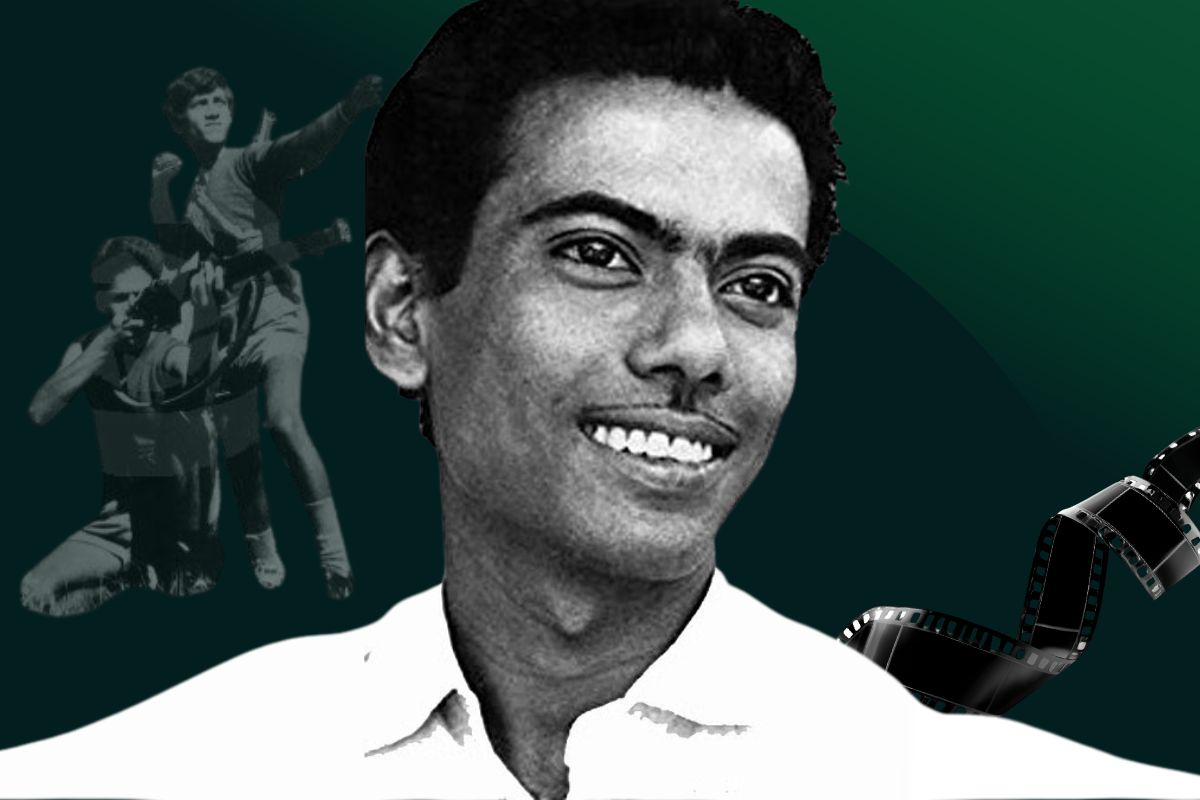
On December 16, as the flag flies high across Bangladesh, our thoughts naturally turn to the heroes of 1971. We remember the freedom fighters who charged through mud and rivers, rifles in hand. Yet, amidst the stories of armed resistance, there was one hero who fought a different kind of war. This man was Zahir Raihan, and his weapon was a camera. He was a freedom fighter on the cultural front who, instead of carrying a gun, ventured into conflict zones to document the history of a nation being born. Zahir Raihan’s journey as a filmmaker began long before the war. He started his career in 1959 as an assistant director on the film Jago Hua Savera. This was a rare neorealist production for its time, and the experience shaped his belief that cinema should be more than entertainment; it should mirror the struggles of real life. He wanted to use film to speak for the people of East Pakistan.
A year before the war, in 1970, Raihan released his masterpiece, Jibon Theke Neya (Glimpses of Life). This movie acted as a cinematic rehearsal for the coming rebellion. In a revolutionary move, Raihan mixed real documentary footage of street protests with his fictional narrative. This blurred the line between acting and reality, validating the people’s anger against military rule. Despite facing his own financial hardships, he donated the proceeds from the film’s international screenings to the government-in-exile’s war fund to support the liberation struggle. When the Pakistani military crackdown began in March 1971, Raihan went to Kolkata to join the resistance. He found that there were very few cameras or film reels available to record the massacres happening in Bangladesh, leading to a severe lack of visual documentation. He refused to let the world ignore the pain of his people. Responding with artistic stubbornness, he became determined to create visual evidence of the genocide.
His most notable work during this period was the documentary Stop Genocide. He worked furiously to finish it while the war was still raging. Adopting the style of “Third Cinema,” he combined newsreels, photographs, and statistics to craft a powerful argument against the brutality. The film became a scream that the whole world would hear, circulating internationally to build crucial support for Bangladesh. Beyond filming, Raihan was deeply involved in the intellectual resistance. He served as a key figure in the Bangladesh Liberation Council of Intelligentsia and ventured into active zones alongside guerrilla fighters. His immense patriotic spirit made him an integral part of the nation's cultural and political identity. Sadly, Zahir Raihan’s story ended in tragedy just as the nation achieved victory. The film industry of the new country was ready to grow, but it was shattered by his murder. He disappeared on January 30, 1972, while attempting to locate his brother, the writer Shahidullah Kaiser, who had been abducted by collaborators. It is believed Raihan was killed by armed anti-liberation forces during this search in Mirpur. Although he is gone, his spirit remains with us through his words. In his novel Arek Phalgun (Another Spring), a character speaks a line that predicts the resilience of the resistance: "In the coming Spring, we shall become twice as many" (আসছে ফাল্গুনে আমরা কিন্তু দ্বিগুণ হবো). This sentence reminds us that you can kill a man, but you cannot kill the ideas he fought for.
Today, on Victory Day, we remember the man behind the camera. Zahir Raihan gave us the visual memory of our independence. Because of his courage and his art, the history of 1971 will never fade away. He proved that in the fight for freedom, a camera can be just as powerful as a gun.
References
Mohaiemen, N. (2025). A Looking Glass War: Bangladesh’s Pendulum-swing Liberation War Cinema. BioScope: South Asian Screen Studies, 16(1), 48–77.
Raihan, Z. (1969). Arek Phalgun (Another Spring). “In the coming Spring, we shall become twice as many.” p. 116.


-20260413151600.jpg)