Published: : December 7, 2025, 11:27 AM
“There is a similarity somewhere amidst my films, a monotony. Muktir Gaan, Muktir Kotha, Narir Kotha, Matir Moina, Ontarjatra—in a sense, they are all the same film. It is the question of self-identity and self-realization. In every film, I keep hammering away at the same thing. Sometimes it is religious identity, cultural identity, sometimes personal identity.”
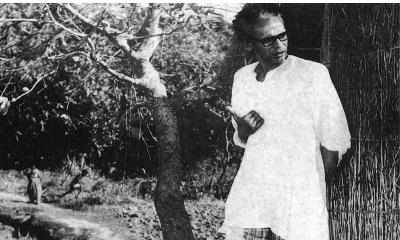
Tareque Masud was not just a filmmaker. He was a cultural architect who reshaped how Bangladesh saw itself. On what would have been his 69th birthday, we remember a man who bypassed the glossy escapism of commercial cinema to dig for truth in the dusty soil of history. He believed that cinema belonged to the people rather than the elites, and he spent his life proving it. His unique perspective came from a life lived between two worlds. Born in Faridpur, he spent his childhood in a madrasa where he memorized religious texts. He later transitioned to secular education and studied history at Dhaka University. This dual background allowed him to understand both the devout and the secular. It was a rare ability that defined his artistic voice and allowed him to bridge the deepest divides in Bengali society.
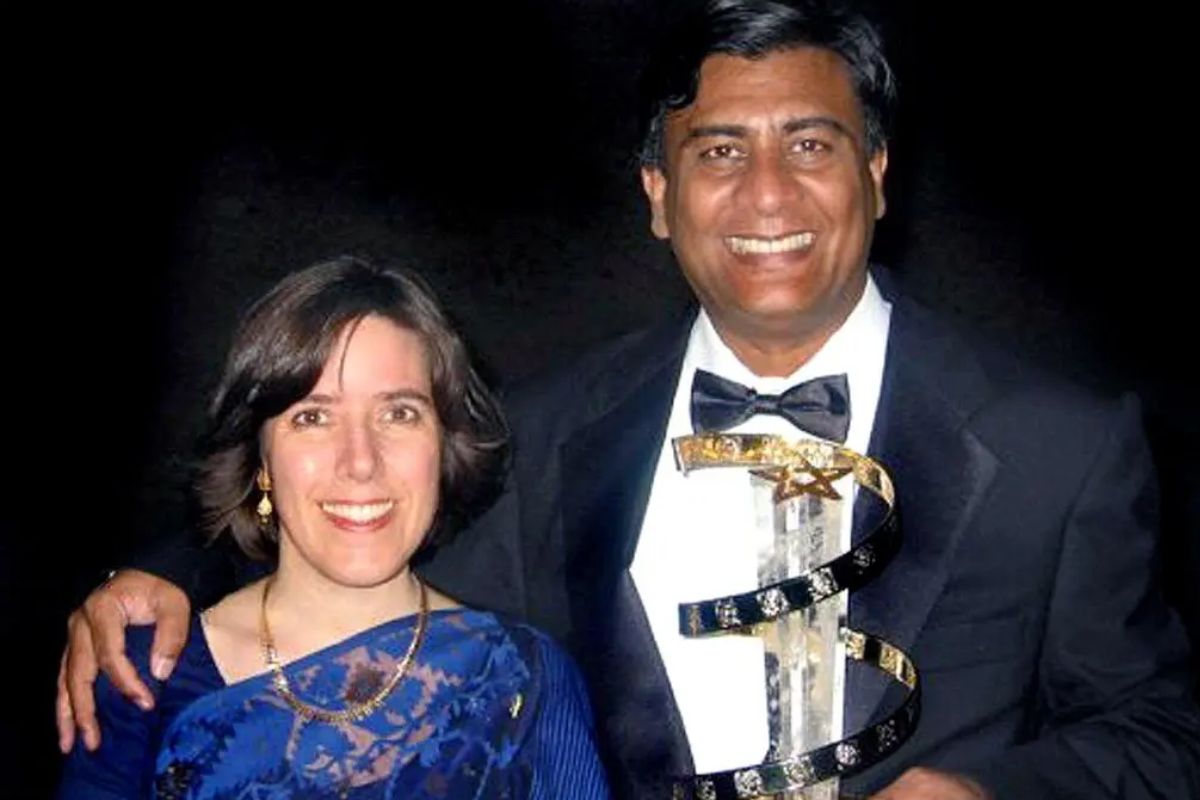
This upbringing birthed his masterpiece Matir Moina or The Clay Bird. The film captured the fragile years leading up to the Liberation War through the eyes of a young boy in a madrasa. It was the first Bangladeshi film to win the FIPRESCI Prize at Cannes. It showed the world that Bangladeshi cinema could be quiet, introspective, and profoundly universal without losing its local identity. Before he conquered international festivals, he conquered the villages of Bangladesh. Masud and his wife Catherine became known as "Cinema Feriwallas" or cinema peddlers. They took their documentary Muktir Gaan on the road with a mobile projection unit. They screened the history of the 1971 war for farmers and laborers who sat on the ground to watch their own stories unfold.
Masud rejected the artificial melodrama that dominated the local industry. He was interested in the texture of real life. He captured the sound of the wind, the specific dialect of a region, and the silence between words. His work was an act of preservation. He wanted to document the folk traditions and the Sufi philosophy that he felt were fading under the weight of modern radicalism. He was never stuck in the past. His 2010 film Runway tackled the immediate and uncomfortable realities of modern Dhaka. Filmed right next to the international airport, it explored the lives of people who lived in the shadow of globalization but could not participate in it. He examined youth unemployment and the rise of extremism with a compassionate but critical lens.
His journey ended too soon on August 13, 2011. Masud was killed in a road accident on the Dhaka-Aricha highway along with the renowned cinematographer Mishuk Munier. They were returning from scouting locations for Kagojer Phool, a film that was meant to be a prequel to Matir Moina. The loss left a void in South Asian cinema that has yet to be filled. Tareque Masud left behind a blueprint for the next generation. He taught us that a filmmaker’s job is not just to entertain but to witness. His films remain relevant because they do not preach. They simply ask us to look in the mirror. Even in his absence, he remains the conscience of Bangladeshi cinema.