
Published: : December 3, 2025, 01:10 PM
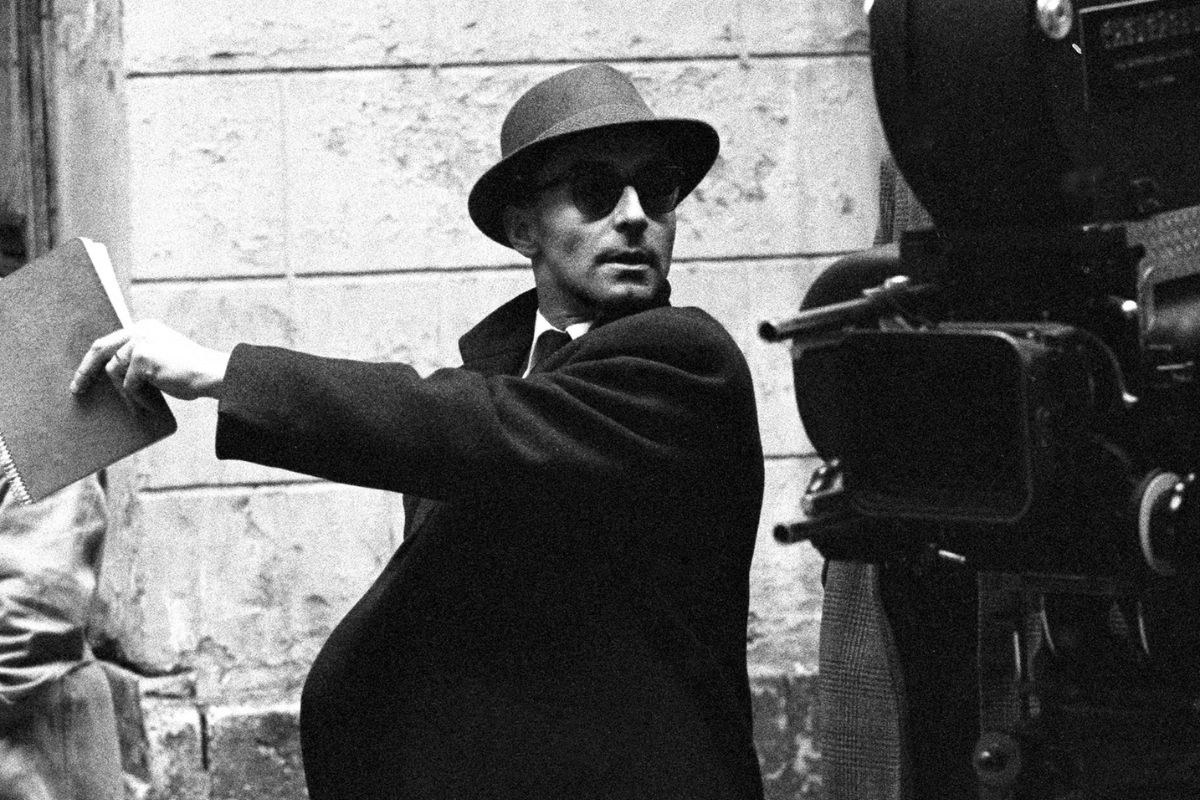
I am a painter with letters. I want to restore everything, mix everything up and say everything.
-Jean-Luc Godard
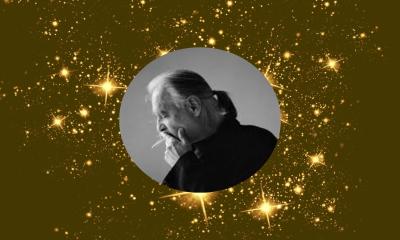
On this day, December 3, 1930, Cinema's Prometheus was born in Paris, France. To understand Jean-Luc Godard, we must view him through this specific myth. Prometheus stole fire from the gods to give it to humanity; Godard stole the heavy cameras from the rich studios and gave them to the artists so they could run down the street. He stole from the past, taking lines from old books and music from classical composers to create a collage of the world. He was a brilliant thief who took the machinery of filmmaking and handed it to the people, letting it burn until the very end.
“Photography is truth. The cinema is truth 24 times per second”
-Jean-Luc Godard
Godard wrote this famous line for his character Bruno Forestier in Le Petit Soldat, yet he spent his entire life trying to prove and disprove it at the same time. He knew that while the camera mechanically captures the physical reality of the world, editing is inherently a lie. Why is it a lie? Because the moment a filmmaker makes a cut, they interrupt the real continuity of time, forcing two images together that have no natural relationship. Godard did not try to hide this manipulation; he highlighted it. He treated the screen like a laboratory where he could cut up the history of the world to see if the jagged edges revealed more truth than the smooth, polished stories of Hollywood. This habit of theft began long before he picked up a camera. Godard grew up between the busy streets of Paris and the quiet waters of Lake Geneva. His life was comfortable, but he felt trapped by his family's demand for respectability. Desperate to escape, he made a mistake: he stole rare books from his grandfather's library, specifically first editions of Paul Valéry, and sold them just to buy cinema tickets. He wasn't a criminal; he was a young man trying to escape a perfect life that felt like a cage. He was not the fragile intellectual people often imagine; he was a skier who loved the snow and a tennis player with fast hands. This physical energy is vital to understanding his work. When you watch his camera race down a street in Breathless, you are seeing the energy of a young man used to racing down a mountain.
Cut off from his family’s money, he found a new tribe in the dark theaters of the Latin Quarter. Along with “brothers” like François Truffaut and Jacques Rivette, he formed a gang of obsessives who didn't just watch movies, but lived them. Writing for the yellow-covered Cahiers du Cinéma, Godard attacked the “Cinéma de papa”, the boring, polished French cinema of the time, calling it “canned theater”. They believed a director should be the true author of a film, and soon, the gang put down their pens and picked up cameras. In 1960, Godard shattered the rules with Breathless (À bout de souffle). The plot was simple, but the look was revolutionary. He shot without permission on the streets, pushing his cinematographer in a wheelchair because he couldn't afford a tracking rail. When the film was too long, he didn't delete scenes; he cut the middle out of shots, creating the “jump cut”. Time jerked forward nervously, matching the restless jazz energy of the youth. He famously declared, “All you need for a movie is a gun and a girl,” a quote he falsely attributed to D.W. Griffith to give it historical weight. For a time, the “girl” was Anna Karina. They were married and made seven films together, but the romance eventually turned into the chaos of Pierrot le Fou, a violent goodbye to the romantic hero.
By 1968, the romance was over, and the world was on fire. Students and workers paralyzed France with strikes, fighting against a system that treated people like machines. Godard felt ashamed making art while the streets burned. In May 1968, he traveled to the Cannes Film Festival to shut it down. He believed the festival was a celebration of rich people while students outside were fighting for their future. He and Truffaut stormed the stage. While Truffaut hung onto the red curtains to stop the film from playing, Godard screamed his famous defense at the angry audience: “I am talking to you about solidarity with the students and workers, and you are talking to me about tracking shots and close-ups!”. After this, the famous “Jean-Luc Godard” effectively died. He formed the Dziga Vertov Group, trying to work anonymously like a factory worker. He made a distinction: the goal was not to make “political films” (standard movies about politics), but to “make films politically”, refusing to tell smooth stories and treating the audience as active thinkers.
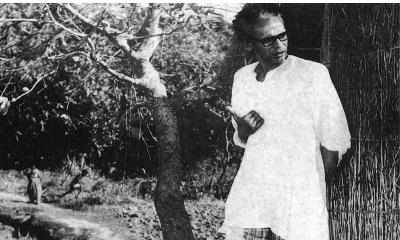
Godard’s influence rippled across the globe, but not everyone agreed with his methods. In his collection of essays, Our Films, Their Films, the great Indian director Satyajit Ray articulated a sharp concern. Ray argued that Godard was a “bad model for young directors” not because he lacked merit, but because his cinema demanded “craftsmanship of the highest order” and an intellectual equipment that imitators often lacked. Ray acknowledged Godard as a “thoroughgoing iconoclast” and an innovator “not far below D.W. Griffith” , but he warned that young filmmakers were copying the syntax, the jump cuts and collage style, without the necessary “modern attitude” to back it up. Ray felt that without this substance, the revolution degenerated into mere “gimmickry and empty flamboyance”. Godard himself actually agreed with this sentiment; he hoped the “Third World” would invent its own language rather than copying him. This hope was realized by the Senegalese director Djibril Diop Mambéty, whose masterpiece Touki Bouki is often called the “African Breathless”. Mambéty didn't just copy Godard; he mixed the New Wave style with the oral storytelling traditions of the Griots, proving that the revolution belonged to anyone brave enough to pick up a camera.
In his later years, Godard retreated to Rolle, Switzerland, reinventing himself as a historian. In his massive video project Histoire(s) du cinéma, he argued that cinema had failed its moral duty. He believed that while the “factory of death” operated in concentration camps during World War II, Hollywood simply created a “factory of dreams” to distract people. He used video editing to bring the dead back to life, creating a ghostly history of the 20th century. Even in his 80s, Godard remained curious. In Goodbye to Language (Adieu au langage, 2014), he used 3D cameras to create a shot where the image splits in the viewer's brain, illustrating the impossibility of two people sharing the same reality. He gave the starring role to his dog, Roxy, presenting the animal as the only witness not burdened by the failure of human language. When Jean-Luc Godard died in September 2022 by assisted suicide, he did not surrender to fate; he directed his own ending. He treated his life like a film reel and decided exactly where to make the final cut. In his final video essay, he looks into the lens and simply stops. It was the ultimate act of a cinema's Prometheus: he stole the fire, gave it to us, and then, on his own terms, simply walked out of the frame. Now, the camera is in our hands.
References
Articles & Web Resources